
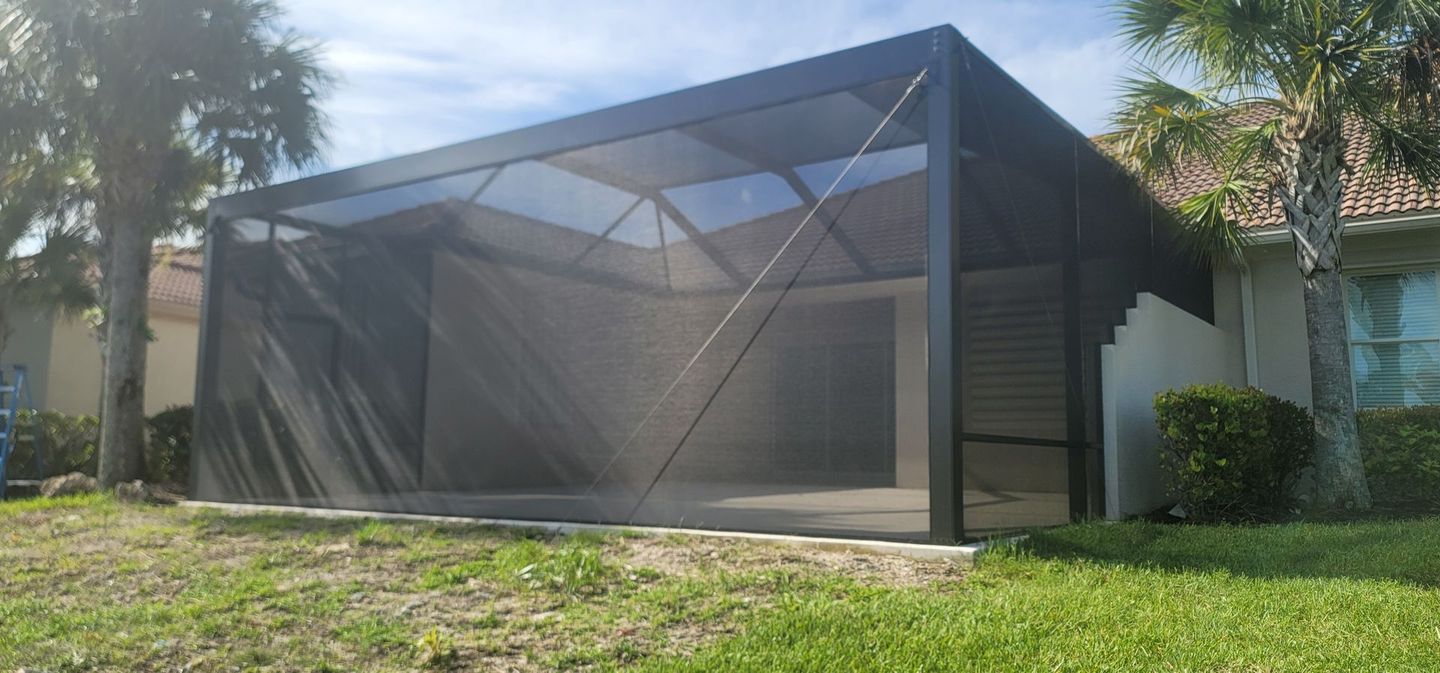
Quick Answer: do screen enclosures need gutters depends on how the enclosure ties into your roofline, how water currently drains around the structure, and whether runoff is splashing, pooling, or overflowing into the screened area. In many Florida homes, gutters are not automatically required on a screen enclosure, but they can be very useful when the enclosure sits under roof runoff, meets a patio or pool deck, or channels water toward areas you want to keep drier. The goal is simple: manage rainwater so it does not overwhelm the enclosure, stain surfaces, or create nuisance dripping where people walk and relax.
What Gutters Actually Do on a Screen Enclosure
A gutter collects rainwater from a roof edge or covered surface and carries it to a downspout or another drainage point. On a screen enclosure, that can help protect the space in a few ways. If your enclosure is attached to the home, the roofline above the screened area may send a lot of water toward the enclosure during heavy Gulf Coast rain. A gutter can reduce the amount of water that sheets off the edge and lands inside the screened space.
That matters because screen enclosures are often used to cover patios, lanais, and pool decks where dry footing is important. Less runoff usually means less splashing, less debris washed into the area, and less water landing in places that are hard to hose down afterward. If you are considering a lanai enclosure north port fl homeowners often ask about drainage early in the planning process because Florida rain can be intense and frequent.
A gutter is not a cure-all, though. If the slope, downspout placement, or surrounding grading is poor, water can still end up where you do not want it. So the question is not just whether gutters exist, but whether the whole drainage path makes sense for your property.
When a Screen Enclosure May Benefit from Gutters
Some screen enclosures function fine without gutters, especially if they are freestanding and not receiving roof runoff from the house. Others benefit from gutters because of the way they are built or the way water moves across the site.
Common situations where gutters may help include:
- Enclosures attached to the home under a roof edge
- Patios or lanais where roof runoff drops directly onto the screen structure
- Areas that experience frequent puddling or muddy splashback
- Pool cages where uncontrolled runoff creates debris and water spots
- Enclosures with roof panels or solid cover sections that shed water in a concentrated path
If water is already collecting at the base of the enclosure, a gutter alone may not solve the issue. The surrounding landscape, slab slope, and discharge location all matter. In some cases, the better answer is to combine gutters with downspouts, splash blocks, or other drainage adjustments so water moves away from the enclosure and foundation area in a controlled way.
Homeowners sometimes search for how to add gutters to a screen enclosure guide because they want to reduce dripping after storms or improve comfort around a patio seating area. That can be a good idea, but the right design depends on the enclosure style and the way the existing frame and roof are configured.
When Gutters May Not Be Necessary
There are also plenty of situations where gutters are optional rather than essential. A freestanding screened structure that is not under a roof edge may not create the same runoff problem. If rain falls straight through the screen walls or onto the deck in a fairly even pattern, a gutter may offer limited benefit.
You may not need gutters if:
- The enclosure is fully freestanding and not tied into roof runoff
- The surrounding grade already drains well
- The patio or deck is not bothered by normal rainfall patterns
- The main concern is insect control rather than water management
- The enclosure design does not create concentrated roof runoff
That said, “not necessary” is not the same as “never useful.” In Florida, a short burst of rain can become a heavy downpour, and wind can push water into places that seem protected on paper. If a screen room regularly feels wet, cluttered, or noisy during storms, drainage improvements may be worth exploring even if gutters are not strictly required.
Signs Your Enclosure Has a Drainage Problem
If you are unsure whether your screen enclosure needs gutters, look for practical signs after rain. You do not need a technical inspection to notice water behavior around the space.
Watch for these clues:
- Water pouring off roof edges in concentrated streams
- Mud splatter or staining near the base of the enclosure
- Pool deck areas that stay wet longer than the rest of the patio
- Water dripping where people enter or exit the enclosure
- Debris collecting in corners after storms
- Splashing that leaves screens, furniture, or flooring dirty
These signs do not automatically mean gutters are the only answer. Sometimes a small adjustment to drainage or a different gutter layout will make a bigger difference than adding more hardware. In other cases, the problem comes from a damaged or undersized gutter system, not the enclosure itself. Since every site drains differently, a written assessment from a qualified contractor is the best way to understand what is actually happening.
Florida Gulf Coast Considerations Homeowners Should Keep in Mind
Florida Gulf Coast properties deal with frequent rain, salty air, strong sun, and storm season conditions that can be tough on exterior materials. That makes drainage planning especially important. Gutters and screen enclosure components should be selected and installed with corrosion resistance and maintenance in mind.
In coastal areas, you also want to think about how water exits the system. A downspout that dumps onto a walkway or near a pool can create a new problem even if the gutter itself works fine. The same is true if water discharges too close to the enclosure footings or into a spot that tends to flood. Good drainage design is about the entire path from roof edge to final runoff point.
Because of those conditions, homeowners should avoid assuming that a one-size-fits-all solution will work. A screen enclosure near the coast may need a different approach than one farther inland. If your structure is already built, a contractor can often evaluate whether a gutter addition makes sense or whether another drainage fix would perform better. If you want a general overview of enclosure-related gutter retrofits, the how to add gutters to a screen enclosure guide can help you understand the basic concept before you request an estimate.
Installation and Maintenance Factors to Consider
Adding gutters to a screen enclosure is not just about hanging a trough along an edge. The system has to fit the enclosure frame, roof pitch, and water path. Materials, attachment points, downspout routing, and access for maintenance all matter.
A few practical considerations include:
- Matching the gutter style to the enclosure frame and roof edge
- Making sure runoff is directed to a safe discharge location
- Allowing for cleaning so leaves and debris do not clog the system
- Using materials suited to coastal exposure
- Avoiding interference with screens, doors, or access panels
Maintenance is part of the equation too. Even a well-designed gutter can overflow if it gets blocked by leaves, pollen, or roof debris. In Florida, that means regular cleaning matters, especially during storm season and after windy weather. If you do not want another exterior maintenance task, that should be part of the decision.
Cost also depends on site conditions. The total can be influenced by enclosure length, access, the number of corners, downspout routing, material choice, and whether the project is a new installation or a retrofit. Because those factors vary so much, a site-specific written estimate is the right way to understand scope and cost without guessing.
So, Do Screen Enclosures Need Gutters?
The most accurate answer is that screen enclosures do not always need gutters, but many benefit from them. If your enclosure is getting hammered by roof runoff, creating puddles, or making your patio uncomfortable during rain, gutters may be a smart improvement. If the enclosure is freestanding and drainage is already working well, you may not need to add them.
The best decision comes down to function: where does the water go, how does it affect the space, and what problem are you trying to solve? If you are unsure, a contractor who works with aluminum and screened outdoor structures can look at the site conditions and recommend whether gutters, drainage adjustments, or another solution makes the most sense. For homeowners comparing enclosure options and service areas, a lanai enclosure north port fl search is often a starting point for finding local help with drainage-aware design.
Final Thoughts
If you are planning a new enclosure or evaluating an existing one, start by watching how rain moves across your patio, lanai, or pool area. Notice where water falls, where it pools, and where it causes daily annoyance. That will tell you more than any generic rule.
For homeowners along the Florida Gulf Coast, it is especially wise to think about drainage as part of the enclosure design rather than as an afterthought. Gutters are often helpful, but they should be matched to the structure and the site. If you need a professional opinion, request a written estimate based on your specific enclosure and drainage conditions.