
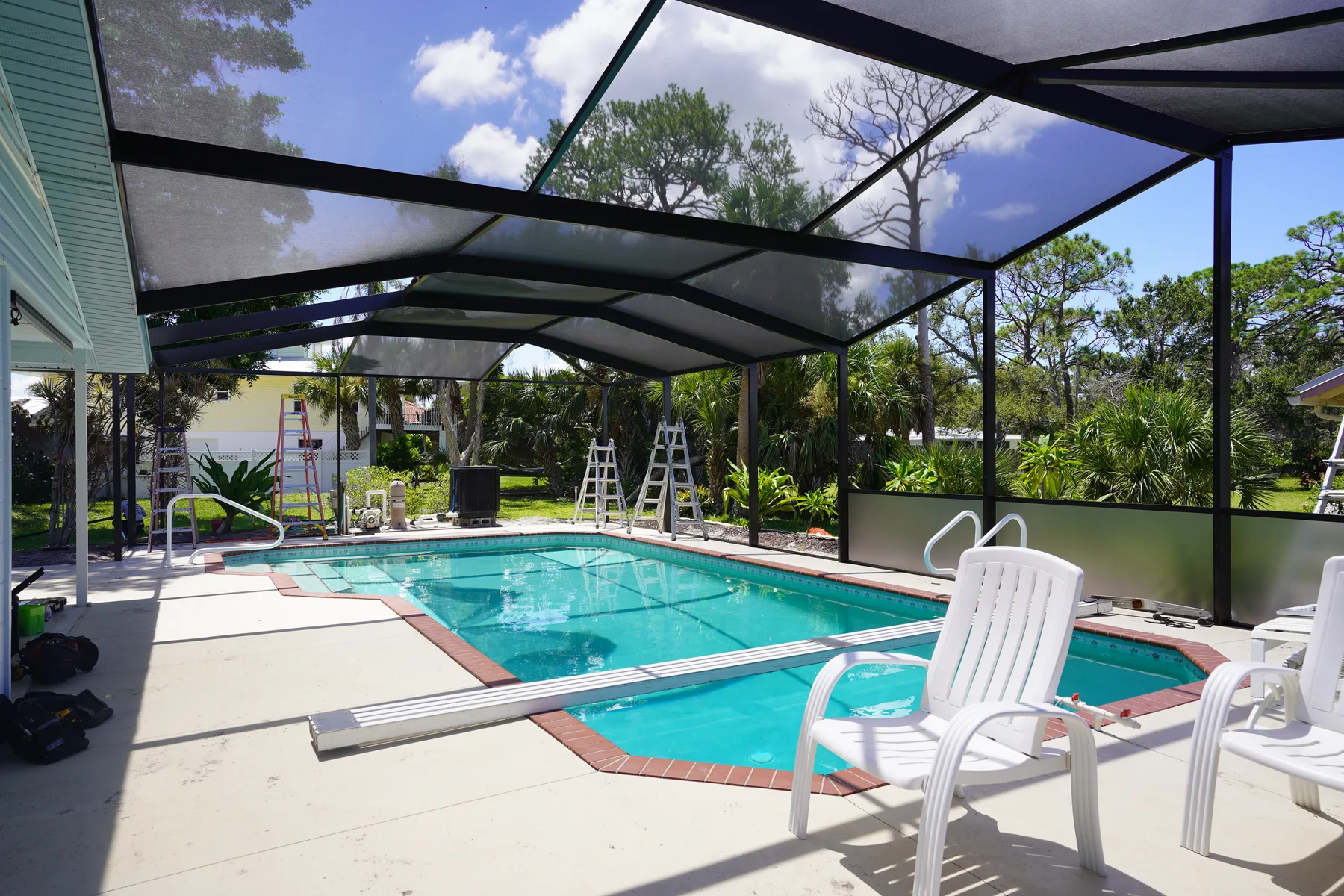
Quick Answer: Is no see um screen worth it? For many Florida Gulf Coast homeowners, yes—if tiny biting insects make time on the lanai, pool deck, or porch uncomfortable, the finer mesh can be a very practical upgrade. The real value comes down to how often you want to use the space, how intense the bugs are where you live, and how much airflow and visibility you’re willing to trade for better insect protection. If you’re weighing a new enclosure or a replacement panel project, a screen enclosure contractor punta gorda fl can help you compare mesh options in the context of your specific structure and exposure.
What No-See-Um Screen Is Designed to Do
No-see-um screen is a finer mesh than standard screen, made to help block very small insects that can slip through more open mesh products. Homeowners usually notice the difference most during warm, still evenings and in areas near mangroves, canals, ponds, wetlands, or other water features where tiny biting insects can be especially active.
The main reason people choose this screen is simple: comfort. If your outdoor space is getting used less because small insects are getting in, a tighter mesh may make the area far more enjoyable. That can matter a lot on the Gulf Coast, where outdoor living is a big part of everyday life and an enclosure is often meant to extend usable space beyond the house itself.
That said, no-see-um screen is not “better” in every situation. It is better at stopping small insects, but it can also reduce airflow more than standard mesh and may slightly dim the space. For some homeowners, those tradeoffs are minor. For others, they’re the reason a standard screen still makes more sense.
When It Is Worth the Upgrade
No-see-um screen is most worth it when your biggest frustration is insect pressure, not general debris or privacy. If you regularly avoid your screened porch because tiny bugs get through regular mesh, the finer weave can make the area feel useful again.
It is often a strong choice for:
- Homes near water, marshes, or dense landscaping
- Pool cages and lanais that get used in the evening
- Outdoor seating areas where food, drinks, or entertaining happen often
- Owners who want a more comfortable barrier without adding solid walls
If you are building or repairing a screen enclosure, the mesh decision should match how the space is used. A homeowner who mainly wants a breezy daytime sitting area may prefer a more open screen. Someone who wants to sit outside at dusk without getting swarmed will usually see more benefit from the finer mesh.
Florida Gulf Coast weather also matters here. Humidity, wind exposure, and salt air can all affect how an outdoor structure ages over time. While screen type is only one part of the project, it should be chosen with the full environment in mind.
Tradeoffs Homeowners Should Know
The biggest tradeoff is airflow. Because no-see-um screen has a tighter weave, it usually lets less air pass through than standard mesh. In practical terms, that can make a screened area feel a bit less open or breezy, especially on still, hot days.
Visibility can also be affected. Many homeowners still find the view perfectly acceptable, but the finer weave may be more noticeable than a larger-mesh screen when you are looking out toward a yard, water view, or landscaped area.
Other considerations include:
- More frequent cleaning in dusty or pollen-heavy settings
- Greater sensitivity to framing condition and panel tension during installation
- The need to keep the rest of the enclosure in good shape so the finer mesh performs as intended
It is also important to keep expectations realistic. No screen is a magic barrier against every nuisance. No-see-um screen helps with tiny insects, but it does not eliminate all outdoor pest issues. If your yard has standing water, heavy vegetation, or other attractants, the screen is only part of the overall solution.
Cost Factors and Project Scope
When homeowners ask whether no-see-um screen is worth it, cost is usually part of the answer. The right question is not just what the mesh costs, but what drives the total project scope.
A site-specific written estimate should reflect factors such as:
- Size of the enclosure or screened area
- Whether the project is a new build or a repair/re-screen
- Frame condition and whether any parts need replacement
- Number of openings, doors, and transitions
- Access challenges around the home or pool area
- The chosen mesh type and any matching hardware needs
Because every structure is different, it is not helpful to guess at a universal price. A written estimate based on an on-site evaluation is the most reliable way to understand the scope and compare screen options fairly.
If you are only replacing select panels, the decision may be more straightforward. If you are re-screening an entire enclosure, the mesh choice affects the experience of the whole space, so it deserves careful consideration.
Who Usually Benefits Most From It
No-see-um screen tends to make the most sense for homeowners who actually use their outdoor space at the times when small insects are a problem. If you mostly enjoy your lanai in the middle of the day and bugs are rarely an issue, the upgrade may not feel necessary.
It is often a strong fit for people who:
- Entertain outdoors in the evening
- Live near water or vegetation that attracts biting insects
- Want a more comfortable pool cage or porch for daily use
- Are already repairing or replacing screens and want to improve function at the same time
If the main goal is simply to restore a damaged enclosure, standard screen might still be enough. If the goal is to make the space more livable in the conditions you actually face, the finer mesh may be a worthwhile improvement.
For homeowners researching mesh options in more detail, what is no see um screen guide can help clarify how the material differs from standard screening and where it tends to perform best.
When Standard Screen Might Be Enough
There are also plenty of cases where no-see-um screen is not necessary. If your outdoor space is in a breezier location with fewer tiny biting insects, standard screen may already provide the balance you want between visibility, airflow, and basic insect protection.
Standard screen can be a sensible choice when:
- The area is used mostly during the day
- Bug pressure is low or seasonal
- Maximizing airflow is more important than extra insect control
- You are working within a straightforward repair and want to match existing materials
In other words, the best screen is the one that matches your actual use. A finer mesh is only “worth it” if the added protection solves a real problem for you.
Final Thoughts
So, is no see um screen worth it? For many Florida Gulf Coast homeowners, the answer is yes when tiny insects are making an outdoor space hard to use, especially around dusk, near water, or in buggy coastal settings. The upgrade is most valuable when comfort matters more than maximum airflow, and when you want to enjoy the space more often without constant annoyance.
If you are still deciding, think about when you use the area, how bad the insects really are, and whether you are replacing just a few panels or re-screening the full enclosure. The best next step is a site-specific evaluation and written estimate so you can compare screen options based on your home, your exposure, and your goals.