
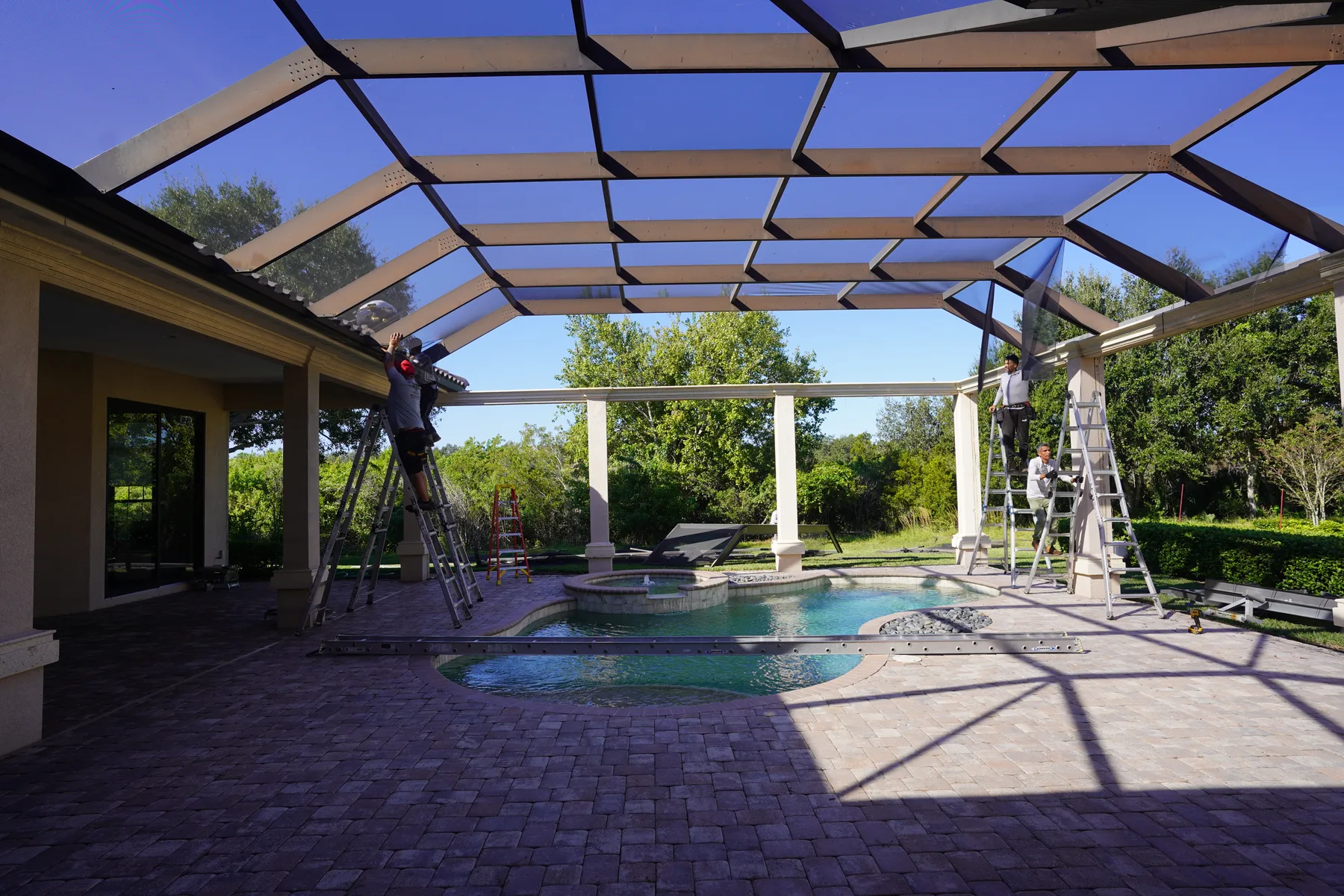
Quick Answer: A pool cage can sometimes withstand a hurricane, but no screen enclosure should be treated as hurricane-proof. Whether a pool cage can withstand a hurricane depends on its age, engineering, fastening system, condition, screen loading, nearby debris, and whether it was built and maintained for Florida wind conditions. In the Florida Gulf Coast, the safest assumption is that a pool cage may reduce wind and debris in everyday storms, but a major hurricane can damage or destroy it.
What a Pool Cage Is Designed to Do
A pool cage is meant to create a screened outdoor space, help keep out insects and debris, and provide a more comfortable pool environment. It is not the same thing as a hardened storm shelter or a building designed to be occupied during severe weather. That difference matters when homeowners ask whether a pool cage can withstand a hurricane.
Some enclosures are built with stronger frames, proper anchoring, and better connections than others. Older cages, loose fasteners, corroded hardware, damaged panels, and worn screen material can all reduce performance during high winds. Even when the aluminum frame remains standing, the screen fabric, doors, spline, and roof panels may fail first. Once sections open up, wind can enter the enclosure and create additional stress on the structure.
If you are comparing enclosure materials or planning updates, it helps to talk with an aluminum contractor north port fl who works with coastal outdoor structures and understands how salt air, storms, and everyday wear affect aluminum systems.
Why Hurricanes Put Pool Cages at Risk
Hurricanes challenge pool cages in several ways at once. Wind pressure does not just push on the outside of the enclosure; it can also create uplift forces on roof sections and lateral forces on the frame. If a single component fails, the load can shift quickly to surrounding parts.
Common causes of hurricane damage include:
- Loose or corroded anchors and fasteners
- Bent posts or braces
- Weak connections at beams, gutters, or roof joints
- Torn or loose screen panels
- Flying debris striking the enclosure
- Water intrusion that weakens surrounding components over time
- Objects stored near the cage that become projectiles
In coastal Florida, salt air can accelerate corrosion, especially near the Gulf. That does not mean every cage will fail early, but it does mean routine inspection matters. A frame that looks acceptable from a distance may still have hidden wear at connection points or base anchors.
Can a Pool Cage Withstand a Hurricane if It Is in Good Condition?
Sometimes, yes, a pool cage may survive a hurricane in part or even largely intact if the structure is well built, maintained, and not directly hit by major debris. But surviving one storm is not the same as being hurricane-proof. A pool cage can withstand a hurricane only to the extent that its design, materials, and installation are able to manage the actual conditions experienced at the property.
A few factors usually make a difference:
- Structural age and current condition
- Frame size and span layout
- Quality of connections and anchors
- Presence of rust, corrosion, or loose hardware
- Condition of doors, latches, and screen panels
- Whether the enclosure has already been repaired after prior storms
- Exposure to open water, wind corridors, or large nearby trees
The most important takeaway is that no homeowner should assume a screen enclosure will stay intact just because it has handled past storms. Hurricane conditions vary widely, and a cage that performed well in one event may not fare the same in another.
For homeowners considering repairs before storm season, it may also help to read how long does it take to rescreen a pool cage guide so they better understand how screen condition and scheduling can affect maintenance timing.
Signs Your Pool Cage May Be More Vulnerable Than It Looks
A pool cage often gives subtle warning signs before it has a serious problem in high wind. Homeowners should look for the following:
- Screen that flutters excessively in normal breezes
- Tears, sagging, or loose spline
- Doors that do not latch smoothly
- Bent tracks, beams, or braces
- White powdery corrosion on aluminum components
- Rusted screws or deteriorated fasteners
- Pool cage panels that have shifted out of alignment
- Gaps where panels meet the frame
If you notice any of these, the enclosure may be more vulnerable than it appears. A small maintenance issue can become a larger failure point when hurricane-force winds arrive. In many cases, routine repair work is less disruptive than waiting until after storm damage occurs.
What Homeowners Can Do Before Storm Season
There is no way to make a pool cage hurricane-proof, but there are practical steps that can improve its readiness and reduce preventable damage.
Start with a full visual inspection of the frame, roof sections, doors, screen panels, and hardware. Look for corrosion, loose fasteners, cracked components, and any sections that already flex too much in the wind. If you see active damage or significant wear, have it evaluated by a qualified aluminum enclosure professional.
You can also help by:
- Removing loose furniture, planters, and toys from the enclosure area
- Trimming nearby branches that could strike the cage
- Checking that gates and doors close securely
- Repairing torn or sagging screen sections before storm season
- Keeping gutters and nearby drainage clear so water does not pool around supports
- Documenting the cage’s current condition with photos for your records
If you are considering upgrades, ask a professional whether your existing frame is a candidate for reinforcement, partial replacement, or a targeted repair plan. The right answer depends on the cage’s age, configuration, and overall condition.
Repair, Rescreen, or Replace?
Homeowners often ask whether they should repair a damaged cage or replace it entirely after repeated storms. The answer depends on the extent of the damage and the condition of the underlying frame.
If the aluminum structure is straight, sound, and only the screen or isolated hardware is damaged, repair or rescreening may be the practical path. If posts are bent, connections are failing, or corrosion has compromised key structural points, replacement of larger sections may be more appropriate. A professional evaluation is the best way to sort out the difference.
A written estimate should be based on the actual enclosure, not a generic guess. Cost drivers usually include the size of the cage, the amount of screen or frame damage, accessibility, hardware condition, and any needed repairs to doors, braces, or related components. Because every enclosure is different, a site-specific written estimate is the most reliable way to understand the scope of work.
When to Call a Professional
If your enclosure has visible storm damage, recurring leaks, loose frame components, or screen failures after windy weather, it is time to bring in a qualified contractor. A seasoned aluminum and screen professional can identify whether the issue is cosmetic, maintenance-related, or structural.
That distinction is important because not every repair is simple, and some problems can only be safely addressed by someone with the right experience. For project-specific questions involving structure, wind resistance, electrical issues around lighting or fans, fire safety, or permitting, homeowners should contact the appropriate licensed professional or local authority.
Final Thoughts
So, can a pool cage withstand a hurricane? Sometimes it can survive parts of one, but it should never be relied on as a hurricane-proof structure. The real answer depends on the cage’s design, age, condition, maintenance history, and exposure to wind and debris. For Gulf Coast homeowners, the best approach is to treat a pool cage like any other exterior structure that needs inspection, upkeep, and timely repairs before storm season.
If your enclosure is showing wear, has loose screen sections, or has already taken a hit from past storms, do not wait until a weather system is approaching. A professional assessment can help you decide whether simple repairs, rescreening, or more extensive work makes sense for your home.