
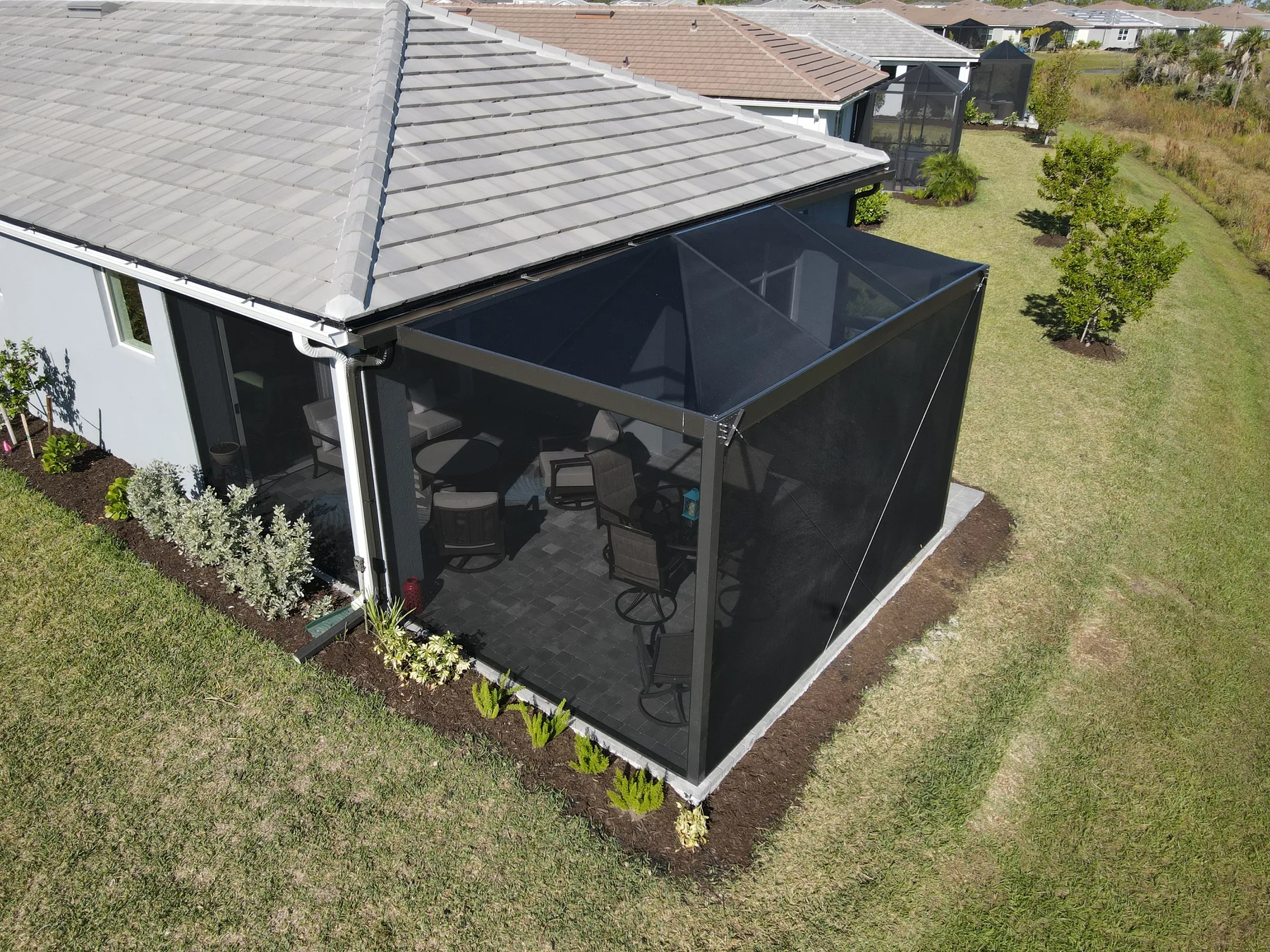
Quick Answer: can you repair a bent pool cage frame? Sometimes, yes—but it depends on how badly the aluminum is bent, where the damage is, and whether the frame has also been loosened, cracked, or distorted at the connections. Minor bends in non-critical members may sometimes be corrected during a repair, but a frame that has been twisted by wind, impact, or corrosion-related failure may need member replacement or larger structural work instead of a simple bend-back fix.
What a Bent Pool Cage Frame Usually Means
A pool cage frame is designed to stay straight and square so the screen stays tight and the enclosure remains stable. When a frame member bends, it usually signals that something pushed, pulled, or overloaded the structure. In Florida Gulf Coast communities, common causes include storm wind, falling branches, ladder impact, pressure from damaged screens, or corrosion at fasteners and connections.
A bent member can sometimes look minor from the ground but still affect the rest of the enclosure. Aluminum frames rely on alignment. If one post, beam, or brace is out of line, nearby panels can loosen, doors may stop closing properly, and screens can tear prematurely because the frame no longer supports them evenly.
It is also important to distinguish between a cosmetic bend and a structural issue. A slight ripple or dent may be mainly visual, while a visible bow in a post, rail, or truss member can indicate the frame is carrying load in a way it was not meant to. That is one reason homeowners should not assume every bent piece can simply be pushed back into shape.
Can It Be Straightened or Repaired?
In some cases, a bent pool cage frame can be repaired. The repair method depends on the specific part that is bent and whether the aluminum has been weakened. A technician may determine that a limited section can be straightened, reinforced, or replaced while keeping the rest of the cage in service.
Repairs are more likely to be possible when:
- The bend is small and localized
- The metal is not cracked, split, or heavily creased
- The surrounding posts and connections remain square
- The damage is isolated to a non-primary component
Repairs become more complicated when:
- The bend is severe or spans a long section
- The frame has twisted, not just bent
- Fasteners, anchors, or brackets have been stressed
- The structure shows signs of broader storm damage
- Corrosion has already reduced the strength of the aluminum
Sometimes the best repair is not to bend the same piece back, but to replace the damaged extrusion and resecure the affected section. That approach can preserve the overall enclosure while addressing the compromised component more reliably.
For homeowners trying to decide whether to repair or replace damaged sections, our pool cage repair or replacement guide is a useful starting point.
Why “Bending It Back” Is Not Always the Right Fix
Aluminum pool cage members are engineered for shape and load distribution, not repeated reshaping. Once metal has been bent, its strength and geometry may change. Even if a piece looks straighter afterward, it may no longer perform the same way it did before the damage.
That is especially important in coastal Florida, where salt exposure, humidity, and storm-driven movement can make an already stressed enclosure more vulnerable. If a bent frame member is forced back into position without checking the surrounding structure, the repair may hide a deeper issue rather than solve it.
Common concerns with a quick bend-back approach include:
- Creating small cracks that are hard to see
- Weakening a member that already lost strength
- Transferring stress to neighboring joints
- Leaving the frame slightly out of square
- Causing screens to wear unevenly after reinstallation
A safe repair usually starts with a full inspection of the affected area, not just the visibly bent spot. That helps determine whether the damage is isolated or whether the enclosure has shifted enough to require more than a patch.
Signs the Damage Is More Than Cosmetic
Some bent frames are obvious after a storm, but others reveal themselves through smaller warning signs. Homeowners should look for:
- Doors that rub, stick, or no longer latch correctly
- Screen panels that sag, flutter, or pull loose at the corners
- Gaps between frame members that were not there before
- Wobbling posts or rails when lightly pushed
- Visible cracks near corners, fasteners, or brackets
- Sections that appear bowed compared with the rest of the cage
If several of these symptoms appear together, the problem may be bigger than one bent aluminum piece. In that case, the cage may need targeted structural repair, replacement of damaged members, and re-screening once the frame is stabilized.
Homeowners in areas such as North Port, Port Charlotte, Punta Gorda, Cape Coral, Fort Myers, and nearby Gulf Coast communities often see this kind of damage after strong weather or a hard impact. If you are comparing options after a storm or accident, a written inspection is often the most practical next step. If you are already planning screen work, pool cage rescreening north port fl can be discussed after the frame condition is evaluated.
What a Repair Process Typically Involves
While every enclosure is different, a bent pool cage frame repair usually begins with locating the damaged section and checking how that damage affects the rest of the structure. The technician may assess:
- How far the member is out of alignment
- Whether adjoining joints are loose or pulled apart
- Whether screen panels need to be removed first
- Whether the damaged extrusion can be repaired or should be replaced
- Whether hardware, anchors, or brackets also need attention
If the frame can be repaired, the work may involve removing adjacent screen material, replacing bent pieces, re-securing connections, and then reinstalling screens or damaged panels. If the section cannot be safely restored, replacement of that frame component may be recommended instead.
Cost depends on the extent of the bend, the number of affected members, access to the damaged area, screen removal and reinstallation needs, and whether other enclosure components also need repair. Because each cage is built and damaged differently, the most reliable way to price the work is with a site-specific written estimate after inspection.
When Replacement Makes More Sense Than Repair
Repair is not always the most practical answer. Replacement of the bent section or additional frame components may be the better option when:
- The damage is severe or widespread
- The aluminum is creased, cracked, or deformed beyond correction
- Multiple members are out of square
- The enclosure has repeated storm damage in the same area
- The cost and complexity of repair outweigh a sectional replacement approach
This does not automatically mean the whole enclosure has to be rebuilt. In many cases, a targeted replacement of damaged members can extend the life of the pool cage and restore function without disturbing the entire structure.
The key question is not simply whether the frame is bent, but whether it can be returned to a reliable shape without leaving weak points behind. That is where an experienced aluminum and screen contractor can be helpful.
Homeowner Safety and What Not to Do
If you notice a bent pool cage frame, avoid climbing on it, leaning ladders against it, or trying to force it straight with improvised tools. Aluminum screen enclosures can shift unexpectedly when stressed, and a damaged section may not support weight the way it once did.
It is also wise not to patch over obvious frame deformation by reinstalling screens first and hoping the issue disappears. Screens do not correct structural misalignment. They may actually make it harder to see ongoing damage until the problem gets worse.
If electrical fixtures, fans, or lighting are mounted near the damaged area, or if the enclosure is attached to another structure, those concerns should be evaluated separately by the appropriate licensed professional. Structural damage, electrical issues, and any permit-related questions should be handled through the proper local or licensed channel.
Final Thoughts
So, can you repair a bent pool cage frame? In many cases, yes—but only if the damage is limited enough that the aluminum can be safely restored or replaced in sections. A bent frame is more than an appearance issue; it can affect the enclosure’s alignment, screen life, and overall stability.
For Florida Gulf Coast homeowners, the smartest approach is to have the enclosure inspected before assuming the bend is minor. A careful assessment can show whether the best fix is straightening, member replacement, partial rebuild, or a combination of repairs. If you need a practical answer for your specific cage, a written on-site estimate is the right next step.