
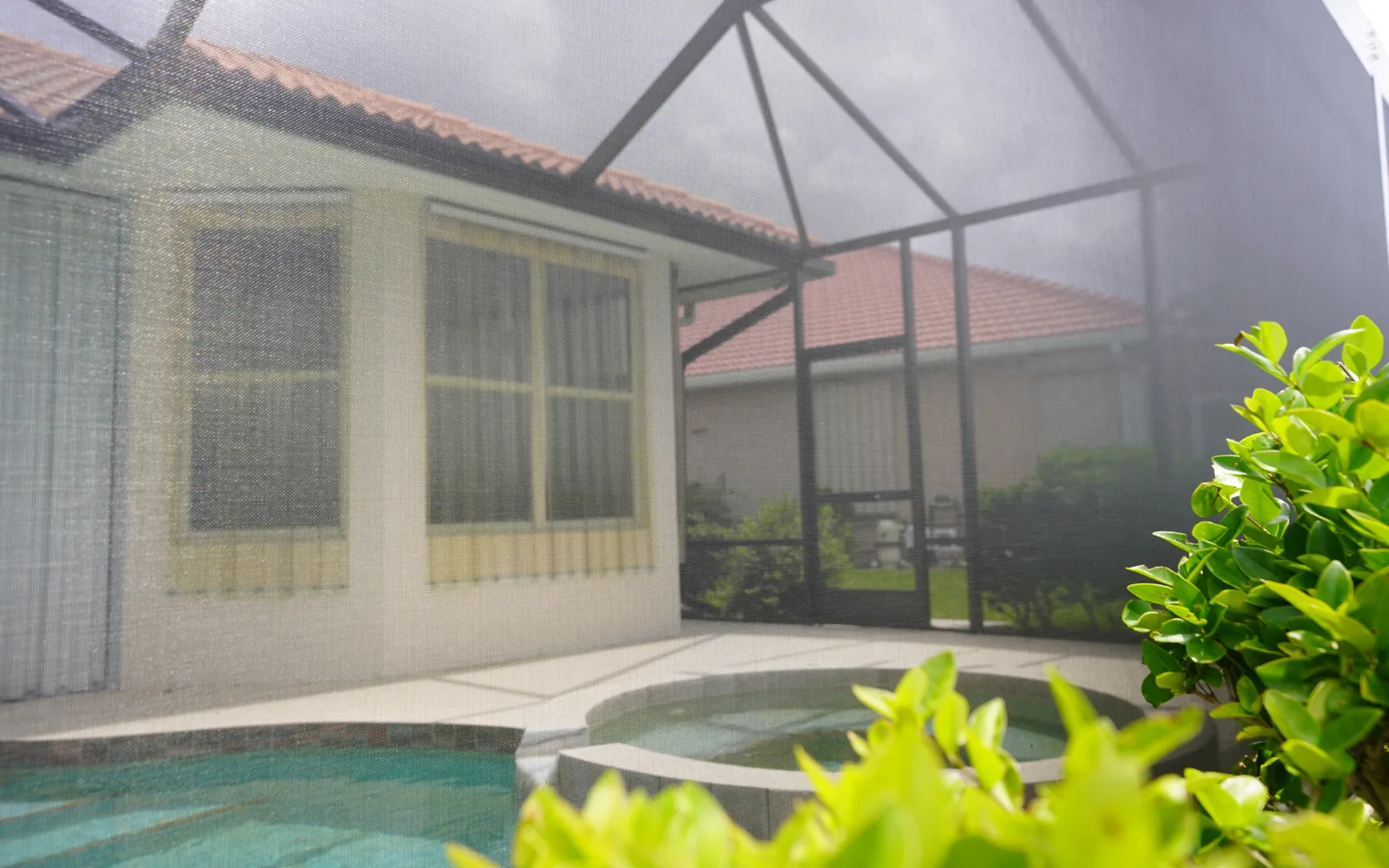
Quick Answer: pool cage repair or replacement is usually the right conversation when your screen enclosure has torn screens, bent aluminum members, loose fasteners, damaged doors, or corrosion that is spreading beyond a small area. In many Florida Gulf Coast homes, a pool cage can often be repaired when the frame is still structurally sound and the damage is limited to screens, hardware, or isolated components. Replacement becomes the better option when the enclosure has widespread wear, repeated storm damage, extensive corrosion, or a frame layout that is no longer performing the way you need it to.
How to Tell Whether Repair Makes Sense
The first step is looking at the condition of the enclosure as a whole, not just one bad panel. A single torn screen, a sagging door, or a few rusted screws can often be handled without major work. If the frame is straight, the connections are stable, and the issue is isolated, repair is usually the practical starting point.
On the other hand, if you are seeing repeated screen blowouts, warped framing members, loose connections at multiple points, or corrosion that has spread through several sections, the repair approach may become temporary rather than truly effective. A pool cage that has been patched many times may still keep needing attention if the underlying structure is aging out.
In Florida’s coastal and near-coastal environment, salt air, wind exposure, and heavy rain can accelerate wear on fasteners and aluminum components. That does not automatically mean replacement is needed, but it does mean owners should pay close attention to signs of ongoing deterioration. If you are uncertain, a qualified enclosure contractor can inspect the frame, screens, doors, and attachment points and explain whether the problem is localized or systemwide.
Common Pool Cage Repairs Homeowners Request
Many pool cage issues are straightforward to address when caught early. Screen replacement is one of the most common services, especially after storms, pet damage, landscaping contact, or age-related brittleness. Door repairs are also common, including adjustments to latches, closers, hinges, and sweeps so the door opens and closes properly again.
Other repair needs may include reattaching loose members, replacing damaged kick plates, fixing leaking or deteriorated fasteners, or correcting small areas of frame movement. In some cases, hardware upgrades are worthwhile when original parts have corroded or no longer operate smoothly. If the cage is otherwise in decent shape, targeted repair can restore usability without taking on the scope of a full rebuild.
If the issue is mostly screen wear, you may also hear the phrase lanai rescreening north port fl in local service conversations, especially when homeowners are comparing repair options for an aging enclosure. That kind of work is often appropriate when the frame is still serviceable but the screen material has reached the end of its useful life.
When Replacement Is the Better Long-Term Choice
Replacement deserves serious consideration when the enclosure has more than surface-level wear. A full or partial replacement may be the better answer if the aluminum frame has widespread corrosion, if multiple bays are failing, or if the structure has taken enough storm impact that repairs would only address the visible damage.
Homeowners also choose replacement when the current layout no longer works well. For example, the enclosure may feel too worn to justify repeated service calls, or the frame may have design limitations that make maintenance difficult. In those cases, replacement can create a cleaner starting point for the next phase of ownership, while still staying within the scope of a screened enclosure rather than moving into other types of construction.
Another reason replacement may make sense is cumulative repair history. If the cage has had repeated screen tears, recurring leaks, door issues, and multiple damaged sections over time, the cost and disruption of continuing repairs may outweigh the benefit. A site-specific evaluation helps determine whether the frame is still a good candidate for continued maintenance or whether a larger project is more practical.
What Affects the Cost of Repair or Replacement
For pool cage repair or replacement, cost depends on the scope and complexity of the work. A simple screen panel replacement is very different from a structural repair involving damaged framing, major hardware replacement, or a larger enclosure overhaul. The size of the cage, the number of damaged sections, the type of screen material, and the condition of the existing frame all affect the final estimate.
Access can matter too. If the enclosure is tall, has multiple roof sections, or includes hard-to-reach corners, the labor involved may increase. Existing damage also influences the plan: a frame that looks fine from a distance may reveal hidden corrosion, loose connections, or alignment issues once work begins.
Because these details vary so much from one home to another, a written estimate after an on-site review is the most reliable way to understand scope and cost. That is especially important when deciding between repair and replacement, since the right choice depends on the actual condition of the enclosure, not just the age of the structure.
How Florida Gulf Coast Weather Changes the Decision
Florida Gulf Coast homeowners deal with conditions that are tough on exterior structures. Sun exposure can age screen material and finish surfaces. Humidity and salt air can speed up corrosion on fasteners and fittings. Wind events can loosen screens, distort panels, and reveal weaknesses that were already forming.
Because of that, the decision between repair and replacement should account for more than the immediate damage. A cage that has been through several storm seasons may still look acceptable in places while hiding wear in connections, anchor points, and other components. That is why local experience matters. Contractors who work in this region understand the kinds of wear that show up again and again and can help homeowners focus on the parts of the enclosure that affect performance most.
If you are comparing options for a damaged enclosure and want a straightforward local review, how long does it take to rescreen a pool cage guide can help set expectations for the general process. It is useful for homeowners trying to understand whether a repair-focused path fits their timeline and goals.
What to Ask During an Estimate
A good estimate should explain what is being repaired, what is being replaced, and what is being left in place. Ask whether the frame is sound enough for repair, whether there are signs of corrosion or movement that could affect future performance, and whether any doors or hardware should be adjusted at the same time.
It also helps to ask whether the work is limited to screens and hardware or whether the enclosure shows signs that a broader replacement plan may be more sensible. If you are trying to compare options, ask for the practical difference between a targeted repair and a larger enclosure project so you can make an informed choice.
Homeowners should also be clear about any additional concerns, such as drainage around the cage, contact from trees, or recurring damage in the same area. Those details can influence whether the problem keeps coming back. If the job involves more than basic enclosure work, the contractor should explain what belongs in the scope and what should be handled by another licensed professional or local authority if needed.
Final Thoughts
Pool cage repair or replacement comes down to the condition of the frame, the extent of the damage, and how much life the enclosure realistically has left. Small problems often justify repair, especially when the structure is otherwise solid. Broad corrosion, repeated failures, or extensive storm damage may point toward replacement instead. The smartest next step is a site-specific evaluation and a written estimate based on what your enclosure actually needs, not a guess from a distance. For homeowners on the Florida Gulf Coast, that practical approach usually leads to a better long-term decision and a safer, more usable outdoor space.
For homeowners who want help sorting out a repair-versus-replacement decision, lanai rescreening north port fl is a good place to start a local conversation about the condition of your enclosure and the best next step.