
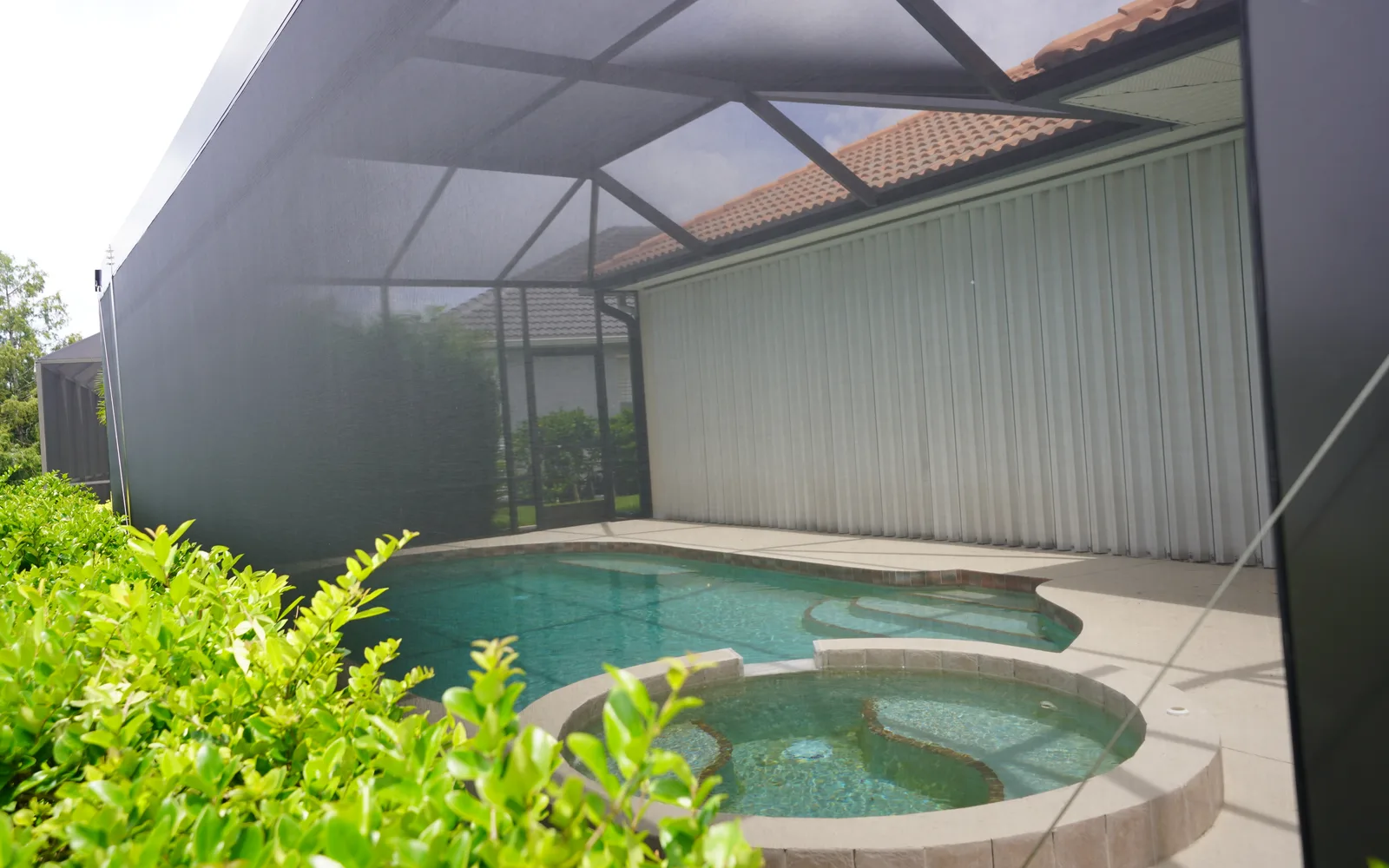
Quick Answer: how much does it cost to rescreen a pool cage depends on the size of the enclosure, the type of screen you choose, the condition of the frame and fasteners, and how much labor is involved in removing and replacing the old mesh. For Florida homeowners, the best way to get a reliable answer is a site-specific written estimate, because pool cages can vary widely in age, layout, roof height, and access. A simple rescreen can be straightforward, while an enclosure with storm wear, rusted hardware, damaged spline channels, or difficult roof panels can require more time and more materials.
What “Rescreening” a Pool Cage Usually Means
Rescreening a pool cage generally means replacing the existing screen fabric while leaving the aluminum frame in place. It may involve all screen walls, roof panels, door screens, and sometimes kick plates or privacy panels if those are part of the enclosure. In many cases, homeowners ask for a full rescreen because the mesh has become brittle, torn, sun-faded, or loose over time.
A full rescreen is different from a spot repair. If a few small tears are the only issue, a repair may be enough. But when the screen has aged across the whole enclosure, patching usually becomes a short-term fix. That is why homeowners often search for how much does it cost to rescreen a pool cage instead of asking about individual repairs.
The answer also depends on what else needs attention. If the frame itself is structurally sound, rescreening is mostly a materials-and-labor project. If there are concerns with corroded fasteners, bent framing, damaged doors, or deteriorated spline channels, the scope can expand. In Florida’s Gulf Coast climate, salt air, sun exposure, wind, and storm debris can all shorten screen life and affect the condition of the enclosure.
Main Factors That Affect the Price
Several variables influence the final cost more than most homeowners expect:
Size of the enclosure. Larger pool cages require more screen material and more labor. Tall enclosures, wide roof spans, or multi-section designs take longer to complete than a basic lanai.
Screen material selected. Standard screening is one option, but homeowners may also choose upgraded mesh designed for better durability, improved visibility, or greater resistance to tears. Heavier-duty materials usually cost more because they are tougher to install and may require more careful handling.
Condition of the frame. If the aluminum frame is in good shape, the job is simpler. If the frame has corrosion, loose connections, or old hardware that needs replacement, the project may take additional time. Rescreening does not fix structural frame problems, so any frame concerns should be assessed separately.
Roof panels versus wall panels. Roof sections can be more labor-intensive than vertical walls because of height, access, and safety requirements. Steep, high, or hard-to-reach roof areas can increase labor time.
Spline and channel condition. The spline holds the screen in place. If the spline is brittle or the channels are worn, the installer may need extra prep work or replacement materials to complete the job properly.
Access around the pool cage. Landscaping, decking, outdoor furniture, pool equipment, and tight clearances can slow the work. Clear access helps the crew work more efficiently.
Doors and accessories. If the project includes replacing door screens, closers, handles, or hardware, the scope grows accordingly.
Because each enclosure is different, a contractor usually has to inspect the pool cage before giving a precise estimate. That is especially true for Florida homes where weather exposure and age can vary greatly from one property to the next.
When a Full Rescreen Makes More Sense Than Patching
A full rescreen often makes sense when the screen fabric is aging across the enclosure rather than failing in just one spot. Signs that it may be time include:
- widespread brittleness or cracking
- torn screen in multiple areas
- sagging or loose panels
- discoloration from sun exposure
- recurring tears after small repairs
- roof screens that are thinning or splitting
If you are seeing repeated failures, a complete rescreen can be more practical than paying for ongoing patchwork. It can also improve the overall appearance of the enclosure and restore a tighter, cleaner look.
That said, not every screen issue means the whole pool cage needs attention. A small tear from a branch or pet may only require a targeted repair. The right choice depends on the age of the enclosure, the extent of damage, and whether the existing screen still has useful life left.
For homeowners comparing screening-related projects, it can help to look at broader enclosure goals as well. For example, if you are thinking about expanding or adding a new screened area, resources like screen room installation north port fl may help you understand how a new screened space differs from rescreening an existing one.
What a Contractor Looks At During an Estimate
A site visit is the most reliable way to determine cost because an estimator needs to see the actual enclosure. During an assessment, a contractor may look at:
- the total square footage of screening
- the height and layout of the cage
- the condition of frames, beams, and connections
- the type and age of current screen material
- door operation and hardware condition
- roof access and safety needs
- any visible storm wear or corrosion
The contractor may also ask whether you want to upgrade the screen material or stay close to the original setup. Those choices can change the labor approach and the final estimate.
This is why a written estimate matters. It should clearly define what is included, such as removal of old screen, replacement of screen panels, door screen work, and any additional repairs discussed during the inspection. Homeowners should also ask whether the estimate covers cleanup and disposal of old materials.
If your backyard plans are broader than one enclosure, it may be useful to compare screening work with other outdoor living projects. For example, if you are weighing a lanai expansion against other patio upgrades, how much does a covered patio cost guide can help frame the differences in scope and construction type.
Florida Gulf Coast Considerations Homeowners Should Keep in Mind
Along the Florida Gulf Coast, pool cages face conditions that can shorten the life of screen fabric. Strong sun exposure can make mesh brittle over time. Humidity and salt air can affect fasteners and hardware. Wind events can loosen panels or reveal hidden weaknesses that were not obvious before the storm season.
Because of that environment, homeowners often want screen materials that are appropriate for local conditions and long-term use. The right choice depends on your priorities. Some homeowners want basic function and a clean look. Others prefer a tougher mesh that may hold up better under everyday wear. A contractor familiar with Gulf Coast homes can explain practical options without overselling what a screen can do.
It is also important to remember that rescreening is not the same as reconstructing a damaged enclosure. If the aluminum structure has significant frame damage, or if there are concerns beyond the screen itself, those issues may require separate evaluation by the appropriate professional. Structural, electrical, and permitting questions should always go to the right licensed professional or local authority.
How to Get an Accurate Written Estimate
To get the most useful estimate, give the contractor clear information about the enclosure and what you want done. It helps to mention:
- approximate size of the pool cage
- whether you want a full rescreen or partial repairs
- any visible tears, sagging, or roof damage
- whether doors or hardware need attention
- whether you want standard or upgraded screen material
- any access issues around the enclosure
If possible, share photos before the visit. That can help the contractor prepare for the appointment, but it should not replace a physical inspection. A site visit is still the best way to confirm scope.
Homeowners should also compare more than just the bottom line. Ask how long the estimate is valid, what screen type is included, and whether the price reflects any special access or repair needs discovered during the inspection. A careful written estimate is more useful than a quick verbal quote because it reduces confusion later.
Final Thoughts
So, how much does it cost to rescreen a pool cage? The honest answer is that it depends on the size, condition, material choice, and labor involved, which is why a written site-specific estimate is the best next step. For Florida Gulf Coast homeowners, weather exposure and age-related wear often make enclosure condition just as important as screen material.
If your pool cage is showing widespread wear, a full rescreen may be the right way to restore function and appearance. If the damage is limited, a smaller repair may be enough. Either way, the most reliable pricing comes from an on-site evaluation that accounts for the actual enclosure, not a one-size-fits-all number.