
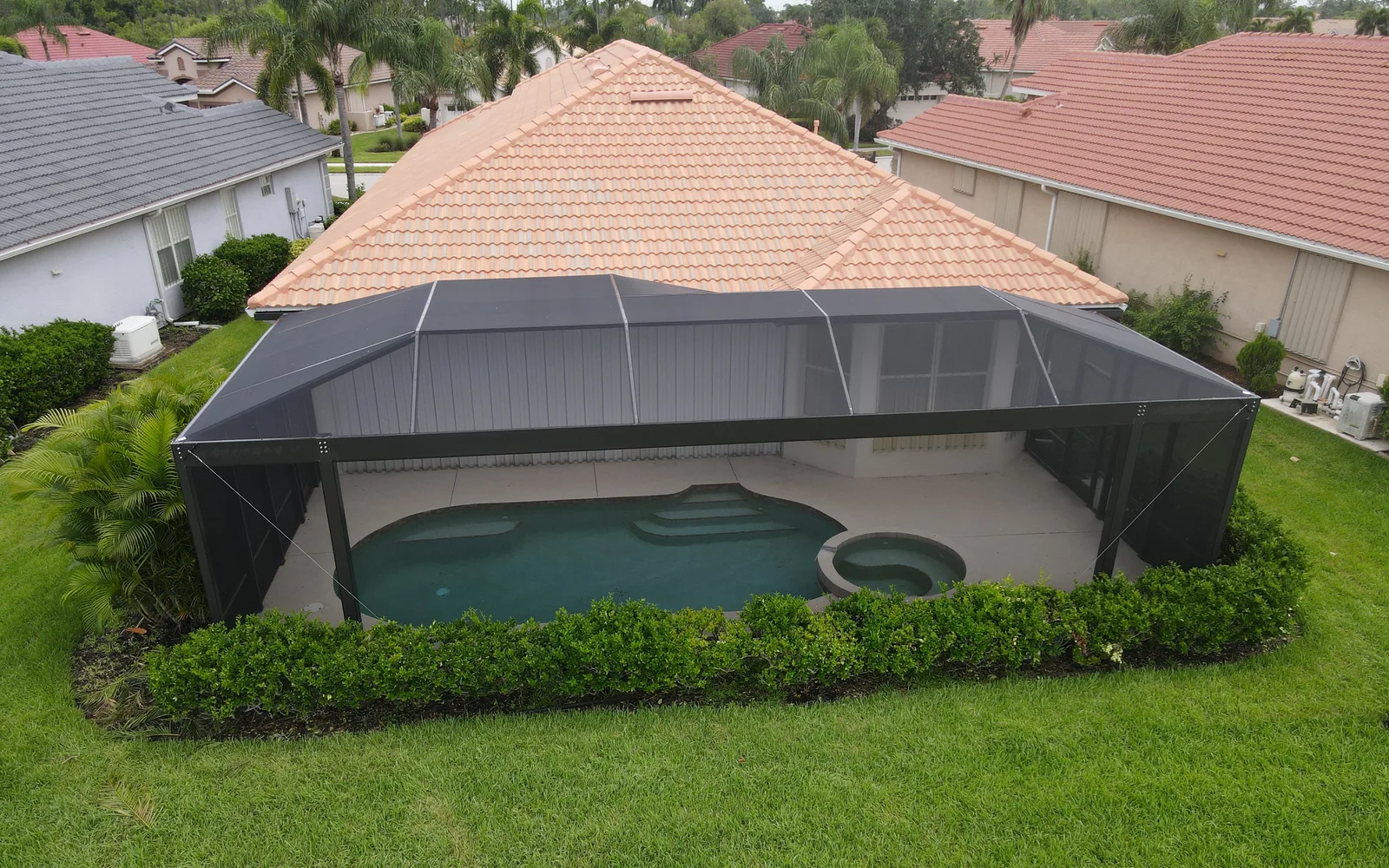
Quick Answer: Rescreen a pool cage when its mesh is torn, brittle, sagging, stained beyond cleaning, or no longer keeps insects and debris out; timing depends on the screen material, sun, wind, salt air, and maintenance rather than a fixed calendar. In Florida’s Gulf Coast climate, inspect the seams, corners, and fasteners regularly because a cage can show wear before it looks damaged from a distance.
What Rescreening Actually Means
Rescreening is the process of replacing the screen fabric on a pool cage while keeping the aluminum frame structure in place. It is different from frame repair or rebuild work. If the frame is still sound, rescreening can restore the enclosure’s function and appearance without changing the overall structure.
Homeowners often ask how often should you rescreen a pool cage because there is no single schedule that fits every home. The answer depends on how much wear the enclosure has absorbed over time. A cage in a shaded inland yard may age differently than one facing the coast with stronger wind, salt exposure, and intense sun. Even within the same neighborhood, one side of the enclosure may deteriorate faster if it takes the brunt of afternoon sun or wind-driven rain.
Signs It Is Time to Rescreen
Instead of counting years, look for clear signs of wear. If you notice several of these at once, the screen likely needs replacement soon:
- Tears, holes, or cuts that continue to spread
- Loose or sagging panels
- Screen that feels brittle or cracks when touched
- Frayed spline areas or screen pulling away from the frame
- Staining, mildew, or buildup that no longer cleans off well
- Visible gaps that let insects, leaves, or small debris through
- Edges that flutter excessively in wind
A single damaged panel may only need repair, but widespread wear usually points to a full rescreen. If your enclosure has repeated patchwork repairs, it may be more practical to replace the full screen field so the appearance and tension are more consistent.
It also helps to inspect the enclosure after major weather. Strong storms, flying debris, and repeated pressure from wind can shorten the life of the screen even when the frame remains intact. In coastal and Gulf Coast areas, airborne salt and humidity can accelerate corrosion and fabric breakdown, so a screen that seemed adequate a year ago may age faster than expected.
Factors That Affect How Long Screen Lasts
Several variables influence when a pool cage should be rescreened.
Screen material
Different screen products wear differently. Standard fiberglass mesh, pet-resistant mesh, and tighter weave insect screens all have different durability and visibility characteristics. A heavier-duty mesh may resist damage better, while a finer mesh may provide better insect control but show wear more quickly depending on conditions. The best choice depends on your priorities, usage, and environment.
Sun exposure
Constant UV exposure can make screen fabric dry out and become brittle. A cage that receives long hours of direct sun may need rescreening sooner than one with more shade.
Wind and weather
Frequent wind movement stretches the screen over time. Gusts can loosen seams and fasteners, especially if the enclosure has already aged. Heavy rain, storm debris, and seasonal weather swings also contribute to wear.
Salt air and coastal conditions
For homeowners near the Gulf Coast, salt air is a genuine factor. Salt can be hard on metal components and can also make maintenance more demanding overall. That does not mean every coastal enclosure fails on a predictable schedule, but it does mean regular inspections are especially worthwhile.
Maintenance habits
Cleaning the enclosure gently and keeping nearby vegetation trimmed can help reduce wear. Vines, branches, and constant rubbing from plants or patio items can damage the mesh over time. Avoid harsh cleaning methods that can weaken the fabric or hardware.
If you are comparing enclosure options for a new or updated outdoor space, it can help to look at a screened lanai in North Port as one example of how screen structures are used in Florida-style outdoor living.
How Often Homeowners Typically Inspect a Pool Cage
The question how often should you rescreen a pool cage is best paired with how often you should inspect it. A quick visual check every few months is smart, especially before and after storm season. You do not need to wait for obvious holes before taking action.
During an inspection, walk around the enclosure and look at:
- Panel edges and corners
- Door screens and door closers
- Any place where the screen meets the frame tightly
- Areas with visible sun fading, brittleness, or sagging
- Bottom rails where debris and moisture collect
You can often spot early damage from the pool deck or patio without using tools. If the screen is starting to lose tension, that may be your early warning sign that a full rescreen is approaching.
When a Full Rescreen Makes More Sense Than Repairs
Small isolated tears can sometimes be patched or repaired, but that is not always the best long-term answer. A full rescreen is usually the better option when:
- Multiple panels are damaged
- The screen has widespread brittleness
- The enclosure has uneven aging across several sections
- Repairs are becoming frequent
- The screen is no longer holding proper tension
If only one or two areas are affected, a targeted repair may be enough. But if the material is broadly aged, patching one spot often does not solve the larger problem. The surrounding screen may fail soon after, which means you are still dealing with an enclosure that is not performing well.
This is also where a site visit matters. An experienced screen contractor can check whether the issue is limited to the mesh or whether there are frame, hardware, or attachment concerns that should be addressed at the same time. If you want to understand the other side of the decision, see how much does it cost to rescreen a pool cage guide. For any quote, the real answer should come from a site-specific written estimate based on your enclosure’s size, condition, screen type, and any needed repairs.
What Homeowners Can Do to Extend Screen Life
You cannot stop sun and weather, but you can help the screen last longer with basic care.
Keep shrubs, palms, and branches trimmed back so they do not rub the enclosure. Clean the screen gently with water and mild soap when needed, and avoid pressure washing too aggressively, since too much force can damage the mesh or loosen fasteners. Watch for standing water, clogged gutters, or debris that repeatedly collects at the base of the cage, since moisture and buildup can contribute to wear.
Also pay attention to doors and latches. If doors slam or scrape, they can damage adjacent screen panels over time. A small hardware issue today can become a screen problem later.
If your enclosure is older, it is worth checking the spline and frame attachment points as well. Even when the screen fabric fails first, aging hardware can influence how well the new screen will hold up after replacement.
Final Thoughts
There is no exact number that answers how often should you rescreen a pool cage for every Florida homeowner. The practical approach is to inspect regularly and rescreen when the screen shows widespread wear, not just when it has obvious holes. For many homes, that means waiting until the fabric is brittle, loose, damaged, or no longer doing its job well.
In Gulf Coast conditions, sun, salt air, wind, and storm exposure all matter, so a yearly visual check and a closer look after severe weather are smart habits. If you are unsure whether your enclosure needs a repair or a full rescreen, a qualified screen professional can evaluate the condition and provide a written recommendation based on your specific pool cage.