
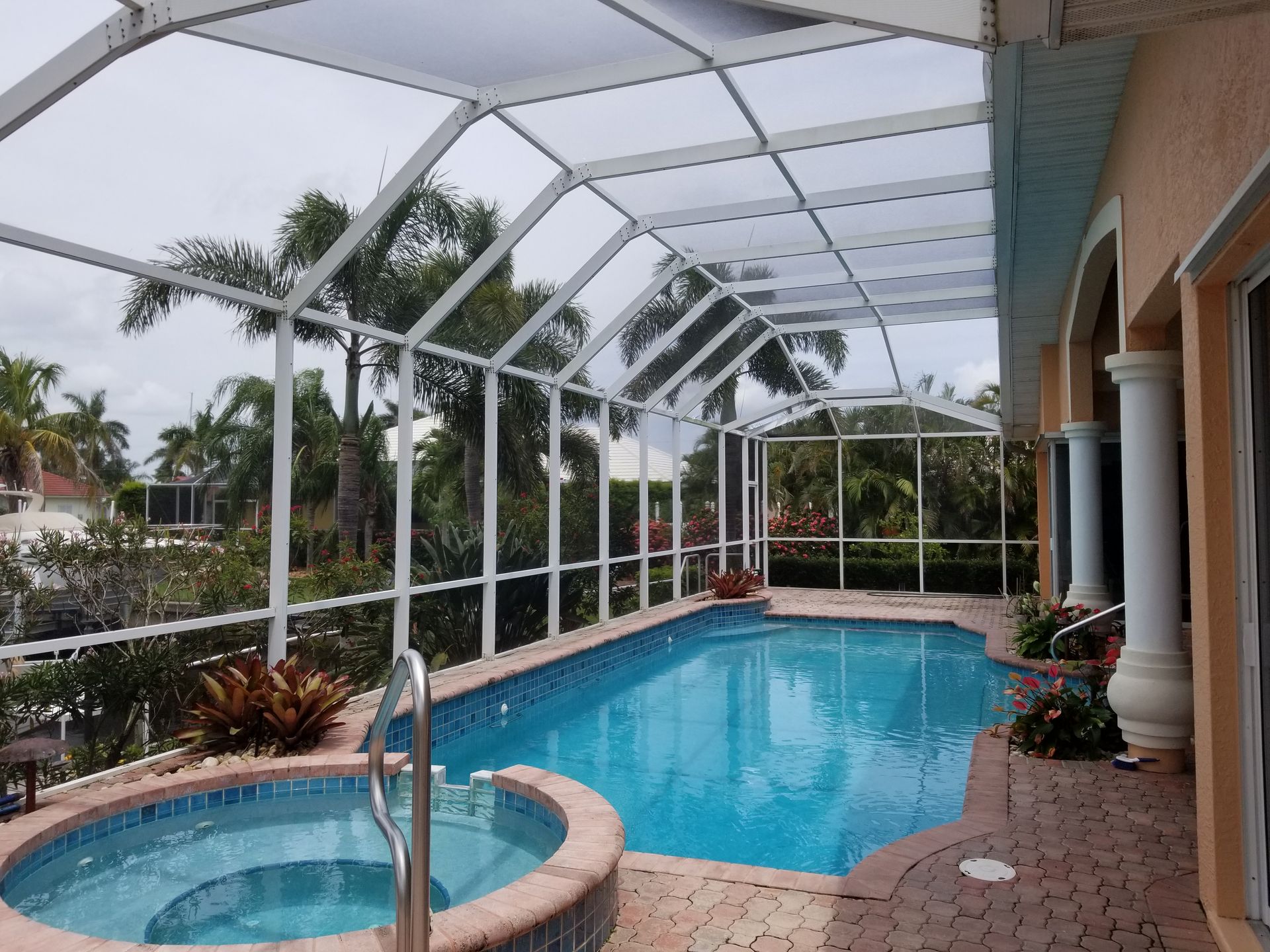
Quick Answer: When homeowners ask how to choose pool screen mesh, the best approach is to match the mesh to the way you use the pool area, the amount of debris you deal with, how much airflow and visibility you want, and how long you want the screen to hold up in Florida’s sun, wind, and humidity. In practical terms, that means weighing stronger mesh for durability, tighter weave for smaller debris, and more open mesh for better airflow and clearer views.
Start With How You Use the Pool Area
The right mesh depends less on a single “best” product and more on your priorities. A family that uses the pool every day may care most about visibility and airflow. A homeowner near trees or landscaping may care more about keeping out leaves, seed pods, and insects. If your enclosure gets a lot of sun exposure, you may also want a mesh that is chosen for durability rather than just appearance.
In Florida Gulf Coast communities, pool screen enclosures have to cope with heat, salt air, afternoon storms, and plenty of pollen and debris during certain seasons. That makes it important to think about the conditions around the enclosure, not just the pool itself. A mesh that seems fine in a shaded backyard may not hold up as well on a wide-open lot with strong wind or constant sun exposure.
If you are planning a repair or replacement, a screen enclosure contractor cape coral fl can help evaluate the existing frame, spline condition, and screen type before recommending a new mesh option.
Understand the Main Mesh Choices
Most pool screen projects come down to a few common mesh styles, and each one serves a different purpose.
Standard fiberglass mesh is a common choice because it balances cost, visibility, and airflow. It is often used when the main goal is simply to keep out insects and larger debris without making the enclosure feel closed in. Many homeowners like this option because it maintains an open look and lets breeze pass through well.
Heavier-duty polyester or stronger reinforced mesh is often selected when durability is a bigger concern. This type can be a good fit for homes exposed to more wear from pets, wind, or frequent maintenance needs. It may also be considered when the homeowner wants a screen that feels more robust over time.
No-see-um mesh has a tighter weave that helps block very small insects. That can be useful in some Florida locations where tiny biting insects are a nuisance, especially during certain times of year. The tradeoff is that tighter mesh usually reduces airflow somewhat and can make the enclosure appear slightly darker.
Florida Glass, sometimes used in specific lower-wall areas, is not a full replacement for standard screen mesh but can help block splash, debris, or privacy concerns in certain sections. It is often chosen for targeted areas rather than the full enclosure.
The key is to avoid choosing mesh based only on one feature. A tighter weave may help with small insects, but if airflow and light are more important to you, it may not be the best fit for every panel.
Match Mesh to Durability, View, and Airflow
A good way to choose pool screen mesh is to rank your priorities.
If durability is at the top of your list, look for a mesh designed to better handle wear and environmental exposure. That can matter if your enclosure gets regular storm-driven debris, pet contact, or lots of direct sun. Durability is also worth considering if you want fewer service calls for tears or sagging panels.
If visibility matters most, a more open mesh may be preferable. Homeowners often want to preserve the view of a pond, preserve landscaping sightlines, or keep the enclosure from feeling boxed in. A less visible screen can make a pool area feel more like an outdoor room without changing the structure itself.
If airflow matters most, especially during warm Gulf Coast weather, choose mesh that allows more air movement. Better airflow can make the screened area feel more comfortable during daytime use and can reduce that “stuffy” feeling some people notice with tighter weaves.
In many cases, the best option is a compromise. A homeowner may choose a stronger mesh on the most exposed wall and a more open mesh where the view matters most. A qualified screen professional can discuss those options, but the decision should still reflect how you actually use the space.
Consider Florida Conditions Before You Decide
Florida’s climate changes what “best” means. Strong sun can age materials faster, humidity can make maintenance feel more demanding, and wind can test both the screen and the frame. That is why homeowners in coastal and Gulf Coast areas should think beyond appearance.
If your home is near mangroves, water, or dense vegetation, smaller insects and fine debris may be a bigger issue than they are inland. On the other hand, if your lot is open and breezy, too-tight mesh may reduce comfort more than it helps. Salt air can also be part of the conversation for homes closer to the coast, because exposed exterior components may need more attention over time.
There is no one mesh that solves every Florida problem. Instead, choose based on the conditions your enclosure actually faces. If you are unsure, it can help to compare the existing screen’s performance to what bothers you most now: bugs, debris, view, or wear.
For homeowners thinking about replacement timing, this how long does pool screen last in florida guide can be a useful starting point for understanding why some screens age sooner than others.
Think About Maintenance and Repairability
Mesh choice also affects upkeep. A stronger or tighter screen may resist damage better, but if a repair is needed later, the cost drivers can include the size of the enclosure, the condition of the frame, the type of screen selected, access to the work area, and whether multiple panels need replacement at once. Because every enclosure is different, a site-specific written estimate is the best way to understand the work involved.
Homeowners should also consider how easy the screen will be to live with over time. Some meshes are easier to keep looking clean because they show less dirt, while others may be more prone to visual darkening depending on placement and exposure. If you have trees shedding pollen, needles, or fine debris, mesh that is too open may require more frequent cleaning, while tighter mesh may trap material differently.
If you already know you need more than just mesh replacement, such as repair of framing or other enclosure components, a contractor can inspect the full system and recommend the correct scope. The best mesh choice may not solve a problem caused by damaged spline, bent framing, or worn hardware.
Common Mistakes to Avoid
One common mistake is choosing the tightest mesh available because it sounds like the best barrier. In reality, tighter is not always better. If it makes the enclosure feel too hot, dark, or still, you may be less happy with it over time.
Another mistake is picking mesh only for appearance without thinking about where the enclosure sits. A screen that looks great in the showroom may not be ideal for a windy corner lot, a heavily landscaped yard, or a house near the coast.
A third mistake is assuming every panel should use the same material. In some cases, different mesh types can be used strategically in different parts of the enclosure, depending on exposure and function. That is a practical way to balance airflow, visibility, and durability.
Finally, do not overlook the frame and surrounding structure. Even the best mesh will not perform well if the enclosure has underlying issues that need attention first.
Final Thoughts
Choosing pool screen mesh is really about choosing the right balance for your home. Start with what you want most: better airflow, clearer views, more bug protection, or stronger long-term durability. Then factor in Florida conditions, your landscaping, and how much maintenance you want to take on. If cost is part of the decision, remember that it depends on the enclosure’s size, access, mesh type, and overall condition, so a site-specific written estimate is the most reliable way to compare options. If you are replacing or repairing a pool enclosure, the right mesh should fit your lifestyle first and your structure second.