
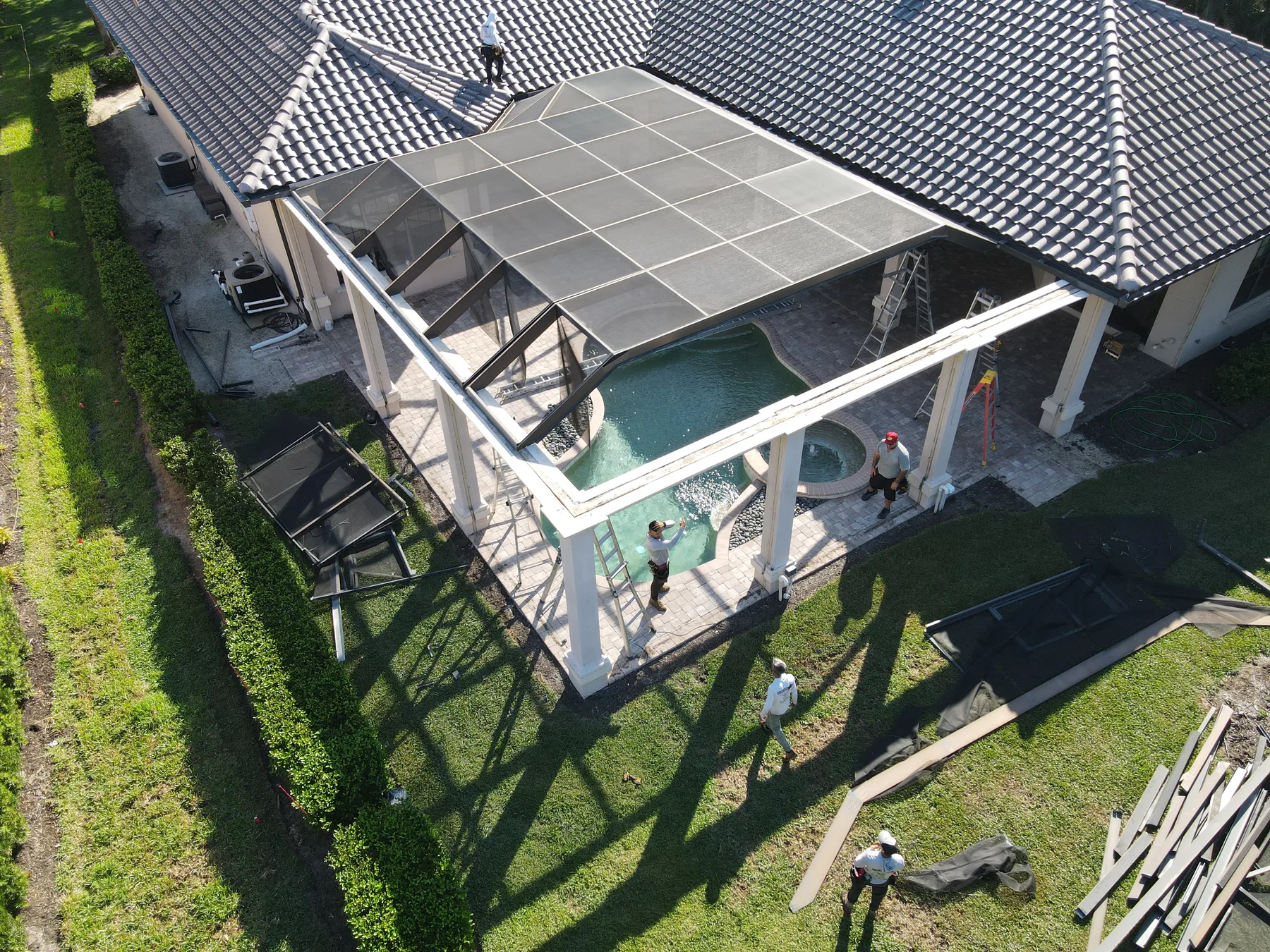
Quick Answer: How to clean a pool screen enclosure starts with a gentle rinse, a soft-bristle brush, and a mild cleaning solution that removes dirt, pollen, mildew, and salt without damaging the screen, aluminum frame, or fasteners. For most Florida Gulf Coast homeowners, the safest approach is to work from the top down, clean one section at a time, and avoid high-pressure washing that can stretch screening material or force water into joints. A routine cleaning schedule helps the enclosure look better, last longer, and stay more enjoyable through humid weather, afternoon storms, and coastal exposure.
Start With the Safest Cleaning Method
Before you begin, inspect the enclosure for loose screen panels, bent frame members, corroded screws, or torn spline. Cleaning is easiest when the structure is already in good condition, but you do not want to scrub aggressively over a damaged area. If you notice broken fasteners or loosening around corners and seams, address those issues first so the cleaning process does not make them worse. In some cases, issues like worn fasteners may pair with pool cage screw replacement north port fl needs, especially in coastal environments where corrosion can progress faster.
For the cleaning itself, use a garden hose with a spray nozzle, a bucket of warm water, and a mild soap or enclosure-safe cleaner. A soft brush on a long handle is helpful for reaching upper panels without climbing on furniture or leaning hard on the screen. Start by rinsing away loose dust, cobwebs, leaves, and sand. Then wash the screens and frame in sections, working from the top downward so dirty water does not drip over areas you already cleaned.
The goal is to lift grime, not scrub it into the mesh. Light, repeated passes are better than one forceful attempt. This is especially important on older enclosures or on screen panels that have already been weathered by sun and wind.
What to Use and What to Avoid
A simple soap-and-water mix is usually enough for routine maintenance. For mildew or organic buildup, a cleaning product that is safe for aluminum and screening material may help, but always test it in a small inconspicuous spot first. Florida humidity encourages algae and mildew growth, especially on shaded sides of the enclosure and along lower rails where splashback from the pool can collect.
Avoid harsh chemicals that can discolor aluminum, weaken screen fibers, or damage powder-coated finishes. Bleach-heavy solutions can be too aggressive if used carelessly, and anything abrasive can leave scratches or dull the frame. Also avoid wire brushes, scouring pads, and stiff tools that can fray the mesh.
Pressure washing deserves caution. A light rinse from a safe distance may be fine for some enclosures, but concentrated spray can tear screens, loosen spline, and drive water into hardware connections. If the enclosure has older screening or visible wear, hand cleaning is usually the better choice. Homeowners often find that the safest long-term routine is regular soft washing rather than infrequent heavy cleaning.
If you are comparing cleaning upkeep to the life of the structure, it may help to read how long does pool screen last in florida guide to understand why gentle maintenance matters in this climate.
Step-by-Step Cleaning Routine for Homeowners
A practical cleaning routine keeps the job manageable.
- Clear the area first. Move patio furniture, toys, and loose décor away from the enclosure walls so you can reach the frame and screens without obstruction.
- Dry-brush loose debris. Use a soft brush, broom, or microfiber duster to remove cobwebs, pollen, and dry dirt before adding water.
- Rinse from top to bottom. A hose rinse loosens grime and prevents you from dragging debris across clean panels.
- Wash in sections. Dip the brush in mild soapy water and gently clean one bay or wall section at a time.
- Rinse thoroughly. Soap residue can leave streaks or attract more dirt if not removed.
- Check corners and tracks. Dirt often collects near kick plates, lower frame sections, and where the enclosure meets the deck or pool deck surface.
- Let it air dry. Natural drying is usually best, though you can wipe reachable aluminum surfaces with a clean microfiber cloth if you want to reduce spotting.
If your enclosure is tall, use an extension brush rather than stepping on furniture, ladders, or the enclosure itself. Safety matters just as much as the finished look. If there is any sign of structural looseness, do not put extra pressure on the frame while cleaning.
Florida Gulf Coast Conditions That Affect Cleaning
In the Florida Gulf Coast region, pool screen enclosures deal with a mix of humidity, salt air, intense sun, pollen, and storm debris. Those conditions can make buildup appear faster than homeowners expect. Salt spray can leave a film on aluminum surfaces, while frequent rain can carry dirt onto lower panels and corners. Shade encourages mildew, and direct sun can make some cleaning products dry too quickly if you apply them in the heat of the day.
For that reason, early morning or late afternoon is often the most comfortable time to clean. It also helps to rinse the enclosure more often during peak pollen season or after windy weather. If your property is near the coast, regular rinsing can reduce salt accumulation before it becomes harder to remove.
After storms, check for small branch marks, debris caught in the screen, or items trapped in the roof sections. Even if the enclosure looks mostly fine, cleaning away leaves and sand soon after a storm can prevent staining and help you spot any new damage early.
When Cleaning Reveals Repair Issues
Sometimes a cleaning job becomes an inspection opportunity. As you wash the enclosure, look for sagging screen, torn sections, loose fasteners, frame movement, bent door hardware, or separations at corners and roof panels. These issues may not prevent cleaning, but they do matter for long-term performance.
If you see widespread rust, repeated panel failure, or fasteners that are backing out, the problem may be more than surface dirt. Cleaning can make these defects more obvious because it removes the grime that was hiding them. At that point, a qualified screen enclosure professional can help evaluate whether you need localized repair, re-screening, or hardware replacement.
It is also wise to pay attention to gutters, soffit, and fascia around the enclosure area if those components are part of the same outdoor living zone. Overflow, staining, or debris buildup can contribute to mess on the enclosure itself. Keeping the surrounding structure clean makes the enclosure easier to maintain.
How Often Should You Clean It?
There is no single schedule that fits every home, because exposure varies. A screened pool area near trees, a busy roadway, or saltwater air may need more frequent attention than a protected inland lot. Most homeowners can benefit from routine light rinsing and periodic deeper washing, especially before and after seasons with heavy pollen, storms, or high humidity.
The key is consistency. Waiting until the enclosure is heavily stained makes the work harder and increases the chance of scrubbing damage. Light maintenance is usually the easiest way to keep the enclosure looking good and functioning well.
If the enclosure is due for repeated cleaning because the screen is aging, dirty, or brittle, replacement materials may be worth discussing with a specialist who works with Florida outdoor structures. Maintenance needs can shift as the screen ages, and what was once a quick wash may eventually become a warning sign that the system needs attention.
Final Thoughts
How to clean a pool screen enclosure comes down to gentle tools, mild cleaners, regular rinsing, and a careful eye for damage. For Florida Gulf Coast homeowners, the environment makes routine upkeep especially important, but the method should still be simple and low-impact. Clean from top to bottom, avoid harsh chemicals and high pressure, and inspect the frame and screens as you go. If you uncover loose hardware, torn panels, or corrosion, a professional can help with the repair side while you keep the enclosure clean and usable.