
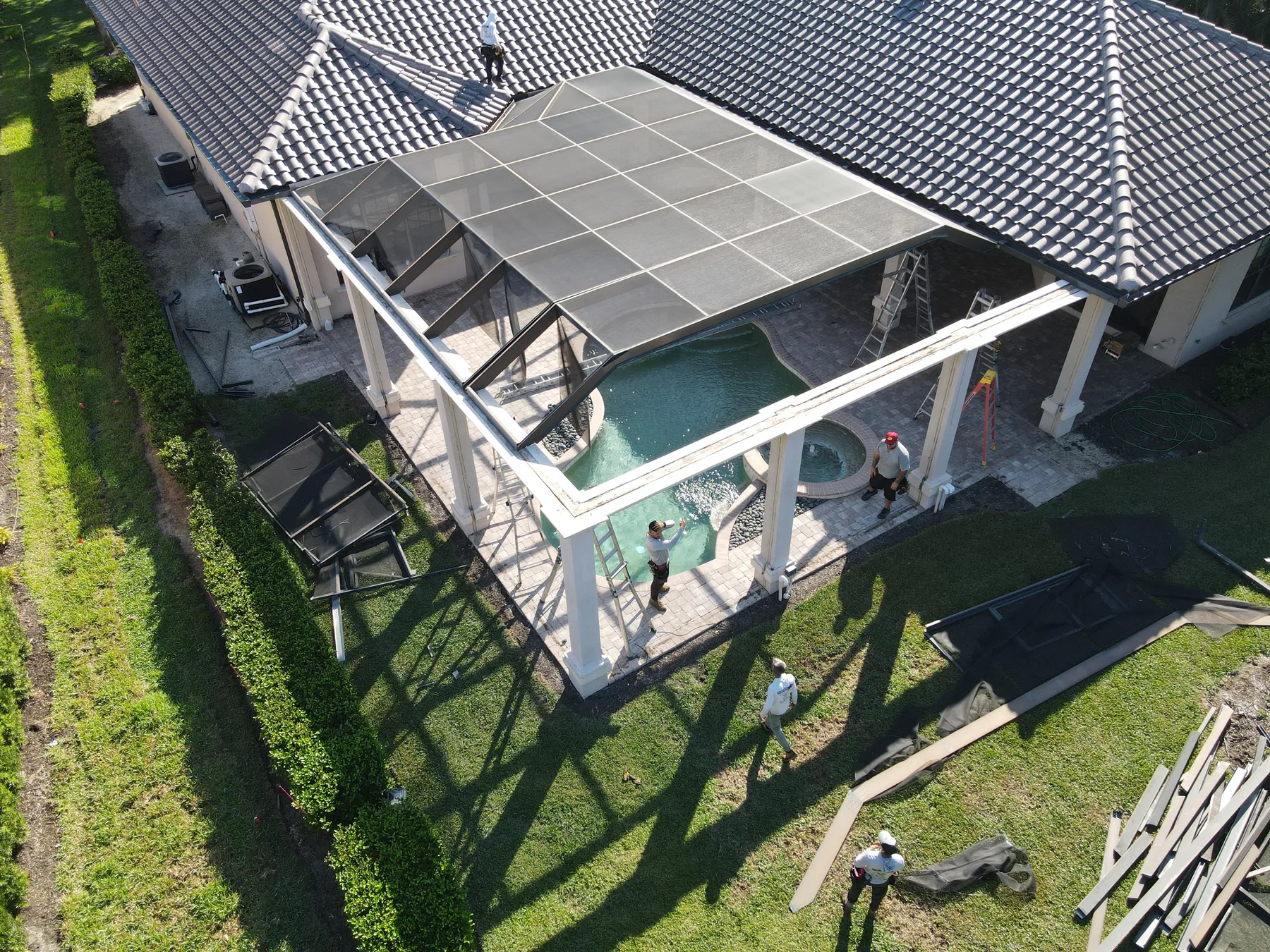
Quick Answer: If you want to know how to clean aluminum screen enclosure surfaces the right way, start with gentle cleaning, soft tools, and a rinse that removes dirt without stressing the frame or screening. Most homeowners can maintain an aluminum screen enclosure with a hose, a mild soap solution, a soft brush or microfiber cloth, and a careful approach that avoids abrasive scrubbing, harsh chemicals, and pressure washing too close to the screen or frame. In Florida, salt air, pollen, mildew, and storm debris can build up faster than many homeowners expect, so regular light cleaning is usually easier than waiting for a heavy layer of grime to form.
Why aluminum screen enclosures need regular cleaning
An aluminum screen enclosure does more than frame the space around a patio or pool. It also catches airborne dust, leaves, pollen, spider webs, mildew spores, and in coastal areas, salt residue. Over time, that buildup can make the enclosure look dull and can encourage staining on screens, rails, and fasteners.
Florida Gulf Coast homes often deal with a mix of humidity, heat, and frequent rain, which can leave damp residue on the structure. Even if the enclosure still functions well, a dirty frame and screen can block views and make the whole outdoor area feel less inviting. The good news is that routine cleaning is usually straightforward if you use the right methods.
If your enclosure has torn mesh, bent framing, or loose hardware, cleaning can help with appearance but will not solve structural issues. For repair needs, homeowners sometimes ask about lanai rescreening north port fl, but the best first step is still to evaluate whether the problem is dirt, damage, or both.
Gather the right cleaning supplies first
Before you begin, collect a few basic supplies so you can clean efficiently without damaging the enclosure:
- A garden hose with a spray nozzle
- Two buckets, if desired
- Mild dish soap or a gentle outdoor cleaner
- Soft-bristle brush or microfiber cloth
- Sponge for broader surfaces
- Extension pole with a soft brush, if needed for higher areas
- Towels or a squeegee for drying accessible surfaces
Avoid steel wool, stiff wire brushes, bleach-heavy mixes, and abrasive pads. These can scratch aluminum finishes, weaken screen fibers, or leave marks on coated surfaces. If you are dealing with black streaks, algae, or heavy mildew, start with the mildest cleaner first and only step up carefully if needed.
It is also wise to test any cleaner on a small, less visible section before using it on a large area. Different aluminum finishes and painted surfaces can react differently, especially on older enclosures.
Step-by-step method for cleaning the enclosure safely
The safest way to clean an aluminum screen enclosure is to work from top to bottom so loosened debris does not fall onto already cleaned areas.
Start by removing loose material. Use a dry brush, leaf blower on a low setting, or a gentle rinse to clear leaves, dust, and cobwebs from the frame and screen. This makes the washing step more effective and reduces rubbing against gritty debris.
Next, wet the enclosure with a hose. A light rinse helps soften dirt and reduces the risk of dragging grit across the surface. Do not use a high-pressure nozzle directly on the screen mesh or on joints and fasteners. Strong pressure can stretch mesh, force water into seams, or loosen vulnerable components.
Mix mild soap with water according to the product directions. Dip your microfiber cloth or soft brush into the solution and wash one section at a time. Focus on visible grime, corner joints, hand-touch areas, and rails where dirt tends to collect. On vertical screen panels, use light pressure and smooth motions rather than circular scrubbing that can stress the mesh.
For stubborn spots, let the soapy solution sit briefly before wiping again. Mildew or organic buildup may need a second pass, but patience usually works better than force. If the enclosure is around a pool, rinse carefully so soap does not enter the water in concentrated amounts.
After cleaning, rinse thoroughly with clean water. Soap left behind can attract dust and create streaks. If desired, dry accessible aluminum surfaces with a clean towel to reduce spotting, especially in areas where hard water can leave marks.
How to handle mildew, salt, and stubborn stains
Florida homeowners often notice three common cleaning issues: mildew, salt residue, and tree or landscape stains.
Mildew usually appears in shaded or damp areas. A mild soap wash may remove light mildew, but persistent spots sometimes need a cleaner specifically made for exterior mildew on painted or aluminum surfaces. Always read the label and avoid anything that can discolor coatings or harm nearby landscaping.
Salt residue is common closer to the Gulf. It may look like a chalky film or leave a dull finish on the frame. Regular rinsing is the best defense, because salt becomes harder to remove if it sits for too long.
Tree sap, pollen stains, and leaf tannins may require repeated gentle cleaning. In these cases, use more water and less scrubbing. If a stain does not budge, stop before you damage the finish. A professional cleaner or repair contractor may be able to advise whether the mark is surface buildup or a permanent finish issue.
For homeowners who also want a broader maintenance reference, this related guide on how to clean a pool screen enclosure guide can help organize a routine for the surrounding outdoor area.
What not to do when cleaning aluminum screen enclosures
The biggest mistakes are usually the simplest ones. Avoid pressure washing at close range, because the force can tear screens, bend slender framing pieces, and drive water into joints. Even if the enclosure appears sturdy, the screening material itself is much more delicate than a concrete patio or driveway.
Do not use strong solvents unless the product label specifically says it is safe for aluminum and screen materials. Some cleaners can dull paint, weaken seals, or leave streaks that are harder to remove than the original dirt.
Do not forget the hardware. Hinges, screws, fasteners, and door latches can collect grime too. Wipe them gently, then check for rust, looseness, or wear. Cleaning is a good time to notice small issues before they become larger repair needs.
If you see torn mesh, loose base track, warped members, or signs that storm damage affected the structure, cleaning alone will not fix the problem. At that point, a repair evaluation is the better next step.
How often should homeowners clean an aluminum screen enclosure?
There is no single schedule that fits every home. Frequency depends on tree cover, proximity to the coast, surrounding landscaping, and how much wind-blown debris reaches the enclosure.
A homeowner in a sheltered inland setting may only need regular light rinsing and periodic soap-and-water cleaning. A Gulf Coast property exposed to salt air, storms, or heavy pollen may need more frequent attention. The most practical approach is to rinse whenever you notice buildup and perform a deeper hand-cleaning before grime becomes noticeable from a distance.
Seasonal maintenance is especially helpful after windy weather, long rainy stretches, or the end of pollen season. If you keep a short checklist, you can also look for loose screens, clogged gutters nearby, or accumulation at the enclosure base while you clean.
When to call for help instead of DIY cleaning
DIY cleaning works well for routine maintenance, but there are times when it is smarter to stop and get help. Call a qualified professional if the enclosure has storm damage, obvious corrosion, broken panels, pulled-out fasteners, leaning sections, or other signs of structural concern.
If the issue involves electrical components, lighting, ceiling fans, or any mounted accessories, those items should be handled by the appropriate licensed professional. If you are uncertain whether a repair is cosmetic or structural, a site visit can clarify the difference. For cost questions, the real answer depends on the enclosure size, condition, access, materials, and any needed repairs, so ask for a site-specific written estimate rather than relying on guesswork.
In many cases, homeowners simply need a good cleaning plan and occasional maintenance. In others, the best solution may involve repairing screens, replacing damaged sections, or addressing wear before the next storm season.
Final Thoughts
Cleaning an aluminum screen enclosure does not have to be complicated. Use a soft-touch method, mild soap, a low-pressure rinse, and a top-to-bottom workflow to keep the structure looking good without causing avoidable damage. In Florida, where humidity, salt air, pollen, and storm debris can all shorten the time between cleanings, a steady maintenance routine is the easiest way to protect both appearance and function.
If your enclosure is more than just dirty, and you notice damage that goes beyond routine maintenance, it is worth having the issue evaluated before it grows into a bigger repair. For most homeowners, though, the answer to how to clean aluminum screen enclosure is simple: be gentle, be consistent, and use products that are safe for aluminum and screen materials.