
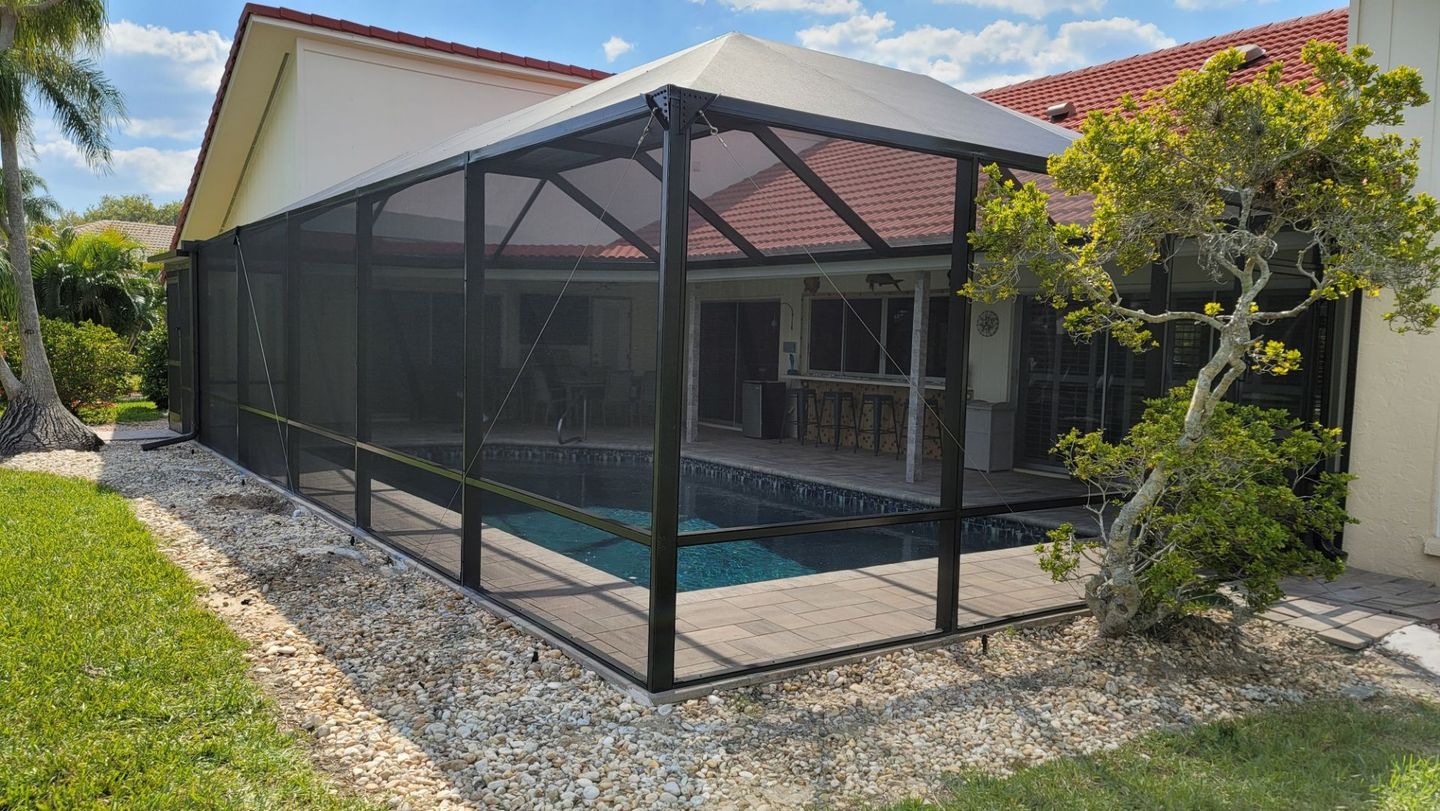
Quick Answer: If you want to know how to improve airflow in a screened porch, start by removing airflow blockers, increasing the openings where air can enter and exit, and making sure the porch design matches the way wind moves around your home. In Florida, especially along the Gulf Coast, screened porches can feel still and sticky when the screen panels, roofline, furniture layout, or surrounding landscape trap heat and block breezes. The goal is not just “more air,” but better cross-ventilation, less heat buildup, and a porch layout that stays comfortable through the hottest parts of the day.
Start with the Basics of Air Movement
Airflow in a screened porch depends on where air enters, where it escapes, and what gets in the way. Even a well-built screened space can feel stagnant if the openings are too limited or if the porch is set up like a windbreak instead of a pass-through space. The first thing to check is whether your porch has screened areas on multiple sides or if one side is mostly closed in by walls, furniture, or landscaping.
Cross-breeze is usually the most effective natural cooling method. If your porch only has one exposed side, air may come in but not move through the space efficiently. If there are multiple screened sides, keep in mind that airflow can still be blocked by heavy patio furniture, tall planters, or storage items placed too close to the openings.
On Gulf Coast properties, afternoon breezes often shift direction, so the best airflow setup is not always obvious from one season to the next. Observing when the porch feels most stuffy can help you identify whether the problem is wind direction, heat retention, or a physical blockage.
Keep the Screened Openings Clear
One of the simplest ways to improve airflow is to make sure nothing is obstructing the screened surfaces. Screened porches work best when the air can move freely across the enclosure. Large furniture pieces, decorative wall hangings, privacy curtains, and oversized planters can all reduce circulation if they sit directly in front of screen panels.
Try pulling seating away from the perimeter so air has room to move behind and around it. If you use outdoor rugs, make sure they are not trapping debris or creating a heavy visual barrier that also blocks the lower edge of the screen wall. Even the placement of a grill or storage bench can make a difference if it sits in the path of incoming air.
Landscaping outside the porch matters too. Dense hedges, close-planted shrubs, and tall barriers near the enclosure can slow natural breezes before they ever reach the screen. If the porch feels boxed in, trimming back vegetation around the structure may help more than adding fans alone.
Use Fans the Right Way
Ceiling fans and portable fans can make a screened porch feel much more comfortable, but only if they are used to move air purposefully. A fan does not create fresh air by itself; it circulates the air already in the porch and helps evaporation from your skin, which makes the space feel cooler.
If your porch has a ceiling fan, make sure it is sized appropriately for the space and mounted at the correct height. The blades should move air without wobbling, and the fan should be turned in the right direction for the season. In warm weather, the goal is usually a downward airflow that keeps air circulating through the occupied area.
Portable fans can help when the porch has one dead zone or when natural breezes are weak. Place them so they either pull air out of the porch or push air across the seating area, not just straight into a wall. A fan aimed toward an open side of the enclosure can help move warm air out.
If you are considering adding wiring, lighting, or a new ceiling fan location, work with a qualified professional. Electrical work should always be handled by the appropriate licensed contractor.
Reduce Heat Build-Up Inside the Porch
Airflow problems often feel worse when heat is trapped inside the enclosure. A screened porch with a dark floor, dark ceiling, or low roof can absorb and hold warmth, making the air feel heavier even when there is a breeze. Improving airflow and reducing heat gain work together.
Light-colored finishes can help the space feel less hot by reflecting more sunlight. If the porch gets strong direct sun, shade solutions such as awnings, pergolas, or other overhead features may reduce the amount of heat entering the space. That can make a noticeable difference in how the air feels, especially on the sunniest Gulf Coast afternoons.
Roof design also matters. A porch with little overhead ventilation can trap hot air near the ceiling. In some cases, improving the upper air exit path can help the whole structure breathe better. If you are evaluating structural changes, a screen enclosure contractor venice fl can help assess what is practical for your existing porch layout.
Keep in mind that some airflow fixes are visual while others are structural. For example, replacing heavy curtains with lighter solutions may help circulation a little, but changing the enclosure configuration can have a much bigger effect. The right approach depends on the porch’s shape, sun exposure, and how the home channels prevailing breezes.
Choose Screen Materials and Layouts That Support Ventilation
Screen selection can influence airflow more than many homeowners expect. Standard insect screen allows air to pass through, but the tighter or heavier the material, the more resistance it can create. If your porch has older, clogged, or damaged screen fabric, replacing it may restore better airflow immediately.
Dirty screens can also reduce ventilation. Pollen, dust, salt air residue, and mildew buildup can collect on the mesh and create a more closed-in feel. Regular cleaning helps keep the screen openings performing as intended. In coastal Florida, maintenance is especially important because salt and humidity can affect both the screen and the frame over time.
The layout of the enclosure matters as much as the material. Screens placed on only one or two sides may provide bug protection but limited ventilation. A more open configuration can offer better air exchange, though any changes should be reviewed for structural suitability and local requirements.
If your porch was enclosed primarily to keep insects out and reduce debris, airflow should still be part of the design conversation. A screened porch that is too sealed can become an uncomfortable hot box, while one that is too open may not meet your expectations for comfort or use.
Use Exterior Features to Help, Not Fight, the Breeze
The area around the porch can either support airflow or block it. A narrow side yard, dense shrubs, privacy fencing, or closely placed structures may limit the natural movement of air around the enclosure. Clearing away clutter and improving the open space around the porch can help breezes reach the screened area more easily.
In some homes, adding an awning or adjusting overhead shade can help by reducing solar gain without closing off the porch. A pergola or similar overhead feature may soften direct sun while still allowing air movement, which is one reason many homeowners like pairing shade with screen comfort.
Gutters, soffit, and fascia also play a role in keeping the porch envelope in good condition, since moisture issues can make a screened space feel less pleasant and can affect the surrounding structure. If airflow concerns are tied to dampness, staining, or recurring moisture problems, it is worth looking at the whole exterior system rather than only the screen itself.
For homeowners weighing upgrades, it can also help to think about long-term use. A porch that feels breezy and usable is more likely to be enjoyed regularly, and questions about resale often come up during renovation planning. If that is on your mind, this does a screened in porch add value guide is a useful next read.
When a Professional Evaluation Makes Sense
Not every airflow issue can be solved with furniture rearrangement or a fan. If the porch is unusually hot, stuffy, or difficult to use, there may be a design issue with the enclosure itself. Frame placement, screen panel size, roof overhang, sun exposure, and nearby obstructions can all affect how well air moves through the space.
A contractor experienced with aluminum and screen structures can look at the porch as a system and suggest practical improvements. That may include changing the screen layout, improving shade, repairing damaged components, or rethinking parts of the enclosure that are limiting ventilation. If the problem seems tied to structural changes, electrical additions, or anything beyond simple maintenance, the right licensed professional should evaluate it before work begins.
For cost-related planning, the biggest drivers are usually the scope of the change, the size and condition of the porch, the materials chosen, and whether the work involves repairs, replacements, or new features. A site-specific written estimate is the safest way to understand what your project may require without guessing.
Final Thoughts
Improving airflow in a screened porch usually comes down to a few practical moves: clear the openings, reduce heat buildup, use fans wisely, and make sure the enclosure design supports cross-breeze instead of blocking it. In Florida Gulf Coast conditions, where heat, humidity, salt air, and afternoon sun all work against comfort, small changes can make a noticeable difference. If your porch still feels stagnant after basic adjustments, the issue may be in the layout or condition of the structure itself, and a professional review can help you decide on the best next step.