
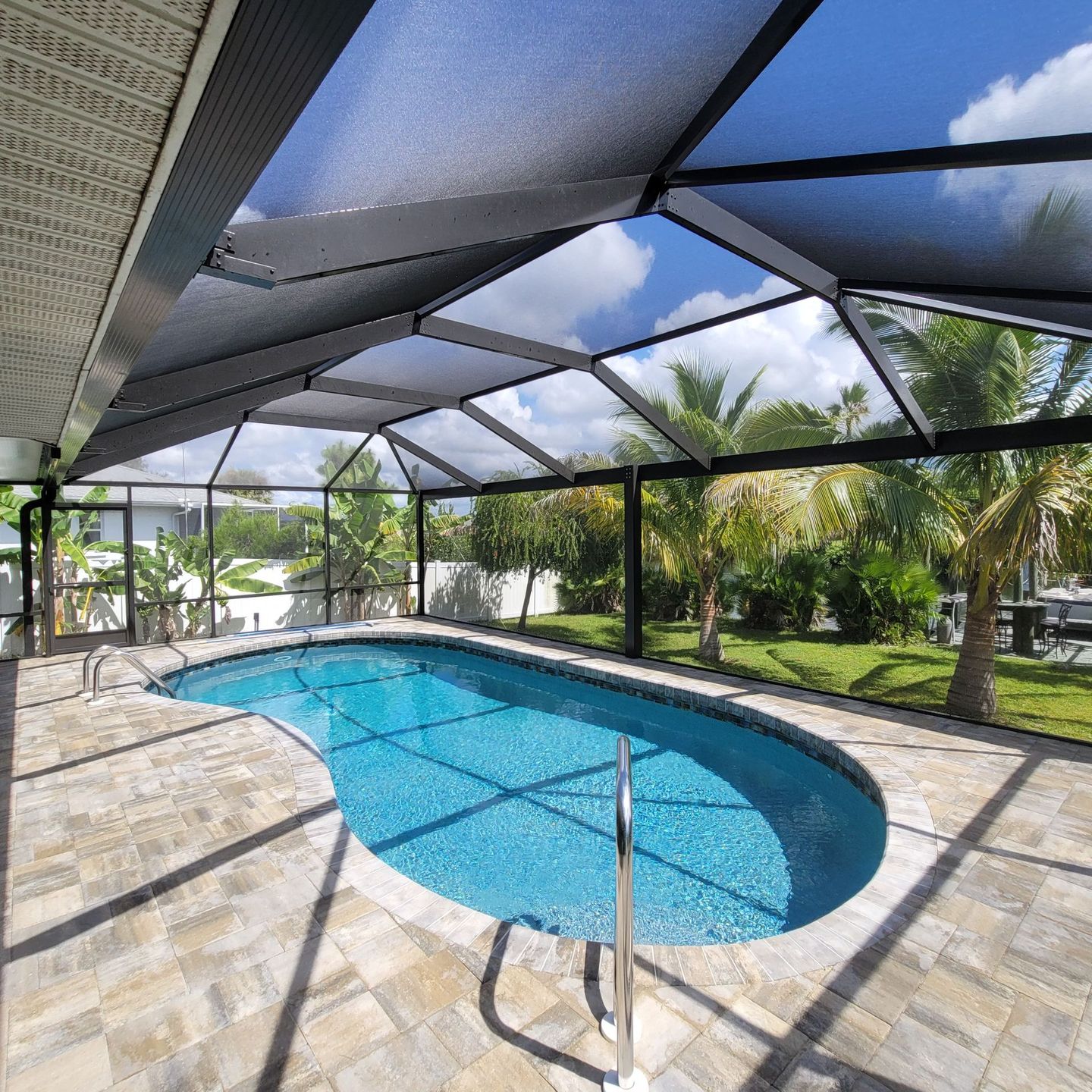
Quick Answer: how to keep bugs out of a screened porch starts with keeping the screen itself in good condition, sealing common entry points, and reducing the things that attract insects near the porch. In Florida’s Gulf Coast climate, where warm evenings and humidity can make mosquitoes, no-see-ums, and gnats especially active, a screened porch works best when it is maintained as a true barrier rather than treated as a set-it-and-forget-it feature. Small tears, loose spline, gaps around doors, damaged thresholds, and poor lighting choices can all let bugs in even when the porch “looks” fully screened.
Start with the Screen Itself
The screen fabric is the main line of defense, so its condition matters more than many homeowners realize. Even a small puncture can become a regular entry point for mosquitoes and other flying pests. Walk the porch slowly and look for holes, frayed edges, popped spline, pulled corners, and places where the mesh has loosened from the frame. If you can see daylight through a gap, insects can usually find it too.
Not all screens stop the same pests equally well. Standard screen mesh is often enough for larger insects, but smaller bugs can slip through if the mesh opening is too wide or if the fabric has stretched over time. In coastal and inland Gulf Coast areas, homeowners often notice that tiny biting insects show up at dusk and after rain. If that is happening, the screen type may need to be evaluated as part of a repair or replacement conversation.
The frame matters as much as the mesh. Bent mullions, warped corners, or loose fasteners can create tiny openings that are hard to spot from a distance. If your porch has repeated damage after storms or wind events, a professional inspection can help determine whether the issue is isolated to screen fabric or whether the enclosure needs structural attention. If you are already noticing wear in the enclosure, a local service such as screen enclosure repair north port fl may be a practical next step.
Seal the Places Bugs Slip Through
Many bug problems are not caused by the main screened wall at all. Insects often enter through the door, the sweep at the bottom of the door, gaps at the latch side, or spaces where the enclosure meets the house. A screened porch can have a perfect field of screen and still feel buggy if these transition points are open.
Check the porch door for proper closure. It should latch without having to be forced, and it should sit flush in the frame. If the door sags or rubs, it may not close tightly enough to keep pests out. Door sweeps and weatherstripping can help, but they need to match the door and threshold correctly. If the bottom edge leaves a visible gap, even a narrow one, bugs can come in with surprising ease.
Also inspect the perimeter where the porch connects to the home. Gaps around trim, utility penetrations, or framing joints can become insect highways. These are especially common after storms, settling, or long-term wear. Caulking and sealant can help in some situations, but the right fix depends on the specific opening and the materials involved. If the gap is part of a structural issue or water intrusion problem, it is better to address the cause rather than simply cover the symptom.
Reduce the Things That Attract Insects
A screened porch is a barrier, not a force field. If the area around it is attractive to bugs, they will gather near the screens and test every opening they can find. One of the simplest ways to reduce insect pressure is to cut back on the things that draw them in.
Standing water is a major one. In Florida, puddles, saucers under plants, clogged gutters, and slow-draining spots can all become mosquito breeding areas. Keep planters drained, check for water trapped in furniture or folded covers, and make sure nearby gutters and downspouts are moving water away from the porch area. Even a small persistent water source can keep mosquito activity high.
Lighting also matters. Bright white lights can attract flying insects and make evening use less comfortable. If you use porch lighting regularly, consider options that are less attractive to bugs and place lights so they illuminate the seating area without drawing insects directly to the screen line. Warm, shielded lighting usually creates a more comfortable atmosphere than harsh glare.
Landscaping around the porch can also affect bug activity. Dense shrubs touching the enclosure can trap moisture and create resting spots for insects. Overgrown plants near doors and edges can make it easier for bugs to hover close to entry points. Keeping vegetation trimmed back and allowing airflow around the porch can help reduce the pest pressure around the enclosure.
Keep the Porch Clean and Dry
Food residue, spills, pet bowls, and damp cushions can all make a screened porch more appealing to insects. Even if the screens are intact, ants, flies, and other pests may be drawn to crumbs or moisture sources inside the porch.
Sweep regularly, especially after outdoor meals or windy days that blow debris onto the floor. Wipe down tables and rinse sticky residue from rails or surfaces before it has a chance to linger. If you store cushions, rugs, or toys on the porch, keep them dry and check them for moisture buildup. Damp materials can attract insects and create odor problems as well.
If your porch gets a lot of rain splash or wind-driven moisture, it may need better drainage or better protection at the openings. A porch that stays damp longer than it should will usually have more bug activity than a drier, better-ventilated space. In coastal Florida, where humidity is already high, small improvements in drainage and airflow can make a noticeable difference in comfort.
Use the Right Repairs for the Problem
Not every bug issue calls for a full rescreening, but some do. A few tears can often be patched, while widespread wear, brittle screen fabric, or repeated separation from the frame may require replacement sections or a full screen upgrade. If bugs keep getting in after basic maintenance, it is worth asking whether the screen material is appropriate for the conditions and whether the enclosure has hidden gaps.
Sometimes the issue is with the enclosure hardware rather than the screen itself. Loose door hinges, damaged closers, worn latches, and bent frame members can all keep a porch from closing tightly. If the problem started after a storm, impacts, or ongoing wear, repair may involve more than one component.
Homeowners sometimes ask whether a screened porch can be upgraded to feel more comfortable without turning it into something it is not. That depends on the structure and the goals for the space. If you are also weighing long-term comfort and home-use decisions, this related guide on does a screened in porch add value guide may be useful for context.
Habits That Help on a Daily Basis
Simple habits can go a long way. Close the porch door promptly instead of leaving it propped open. Turn off lights when you do not need them. Keep the area free of food scraps. Check screens after storms or lawn maintenance. If you notice a sudden jump in bugs, look first for a new opening, moisture source, or landscaping change before assuming the whole porch has failed.
For many homeowners, the best results come from combining several small fixes rather than relying on one product or one treatment. A sealed door, intact screen, controlled lighting, and dry surroundings work together. If one piece slips, the others have to do more work.
It is also helpful to remember that some insects are more active at certain times of year and at certain times of day. In Florida, dusk and the period after rain can be especially challenging. If your porch is most comfortable earlier in the day and becomes buggy at night, that pattern can point to lighting, moisture, or nearby breeding conditions rather than a major enclosure failure.
Final Thoughts
The best answer to how to keep bugs out of a screened porch is to treat the porch as a complete system: good screen material, tight doors, sealed edges, reduced moisture, and smart maintenance. On the Florida Gulf Coast, where insect pressure can be intense, those details matter. If the problem is minor, a careful inspection and a few targeted repairs may solve it. If the porch has repeated damage, loose framing, or hard-to-find gaps, a professional evaluation can help identify the real source of the issue and the most appropriate repair path.