
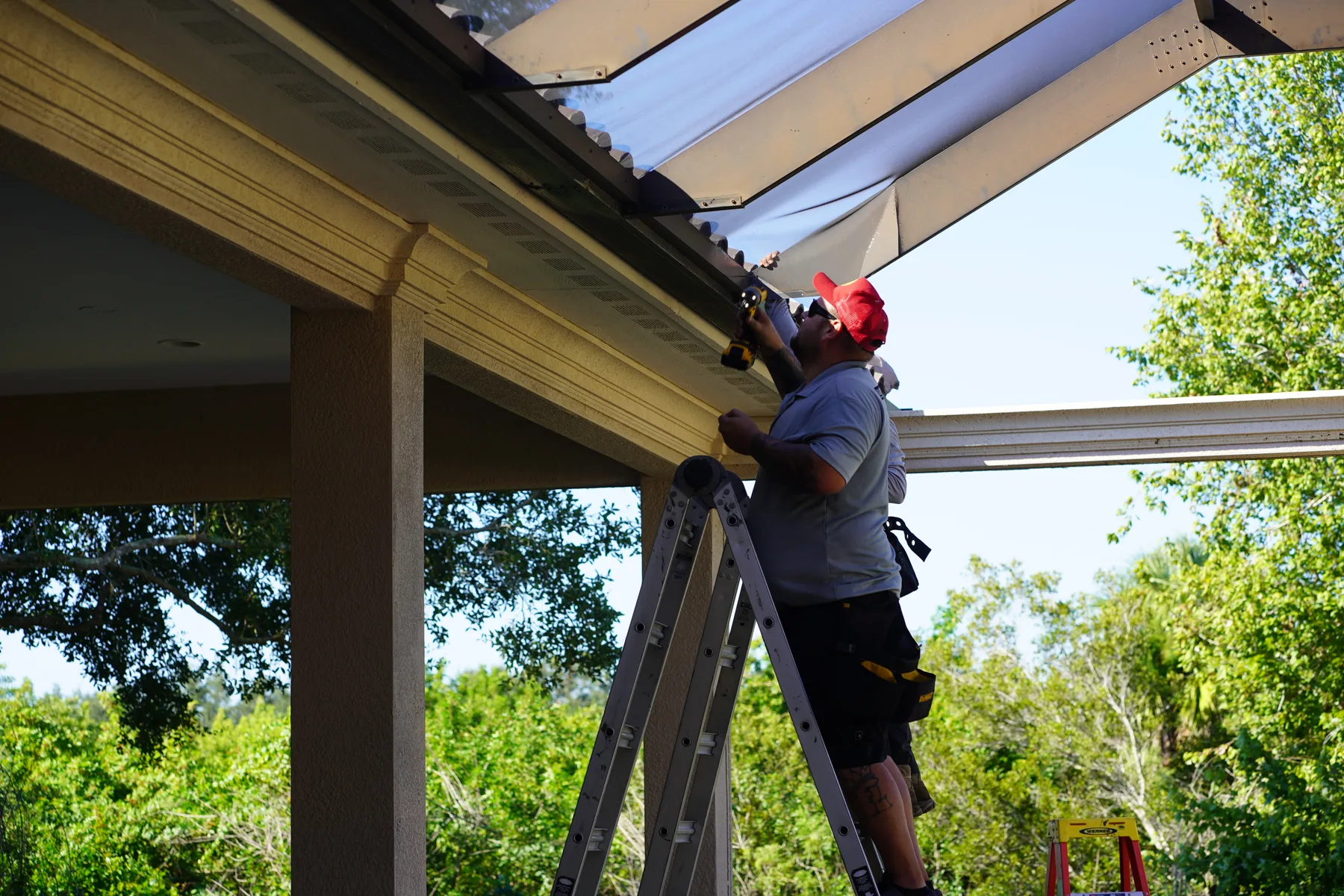
Quick Answer: how to maintain a pool cage in florida comes down to regular cleaning, frequent inspections, and quick repairs before small issues turn into larger ones. In Florida’s Gulf Coast climate, your enclosure deals with salt air, strong sun, heavy rain, wind, pollen, and storm debris, so maintenance is less about one big annual task and more about steady, seasonal care. A well-cared-for pool cage helps keep the area cleaner, screens in better shape, and the enclosure looking its best.
Start with a Routine Visual Inspection
The simplest way to maintain a pool cage is to walk around it regularly and look closely at the frame, screens, doors, hardware, and fasteners. Check for torn mesh, loose spline, bent frame members, squeaky hinges, missing screws, and signs that a door is not closing correctly. Look at the bottom track and corners where leaves, sand, and moisture can collect.
Pay attention to spots where the frame meets the house, around entry doors, and near the roof panels or top rails. Those areas often show the first signs of wear because they get the most movement from wind and weather. If you see dark streaks, chalky residue on the aluminum, or corrosion around screws, it is a sign the enclosure needs attention.
After storms, do an extra walk-through. Even if the cage looks fine from a distance, small punctures, popped spline, or loose hardware can be easy to miss until the next windy day makes them worse.
Keep the Frame and Screens Clean
Regular cleaning is one of the best ways to extend the life of an enclosure. Dirt, pollen, salt spray, and mildew can build up on both the aluminum and the screen mesh. A gentle rinse with a garden hose can remove loose debris before it settles into corners or stains the surface. For heavier buildup, use mild soap and water with a soft brush or cloth. Avoid abrasive pads and harsh cleaners that can damage the finish or screen material.
If your home is closer to the coast, salt exposure can be a bigger concern. In those settings, rinsing the cage more often can help reduce buildup and protect the finish. In shaded areas, moisture and organic debris can encourage mildew, so watch for spots where leaves collect on top rails or in gutter lines.
Keep shrubs and tree limbs trimmed back from the structure. Overgrown vegetation can rub against the screen, drop debris onto the enclosure, and make it harder to inspect the frame. It also helps reduce the chance of branches puncturing the screen during windy weather.
Check Doors, Hinges, Latches, and Fasteners
Doors are one of the most frequently used parts of a pool cage, so they deserve extra attention. Make sure the door opens and closes smoothly, the latch catches securely, and the self-closing hardware works as intended. If the door drags, sticks, or swings open on its own, the hinges or closer may need adjustment.
Fasteners should be checked for looseness, rust staining, or missing heads. On Florida enclosures, hardware can wear faster because of humidity and salt air. If you notice rust on screws, a technician may recommend replacing corroded fasteners with more suitable materials for your environment. A loose screw or bracket may seem minor, but over time it can create rattling, movement, or stress on surrounding parts.
If you are unsure whether a part is a simple maintenance item or a repair issue, it is wise to have a professional take a look. For homeowners comparing local service options, aluminum contractor north port fl is a useful internal reference for finding the type of contractor that handles this kind of work.
Watch for Screen Damage Before It Spreads
Small screen holes often start with a snag, a pet scratch, or a piece of storm debris. If you notice a tiny tear, handle it early. In some cases, one damaged panel can be repaired before the opening grows or starts to pull on neighboring sections. Once the mesh begins to separate, the repair can become more involved.
Also watch for screens that look loose, wavy, or pulled out of the groove. That can happen when spline wears down, frame sections shift slightly, or a panel takes a hit from wind or debris. A loose screen is more vulnerable to tearing because it has less tension.
If the enclosure has multiple damaged panels or the screen material is aging throughout the cage, rescreening may be the more practical solution. If you are wondering about timing and what that work involves, how long does it take to rescreen a pool cage guide can help frame the conversation, but the exact schedule depends on the size and condition of the enclosure.
Manage Gutters, Drainage, and Debris Buildup
Many pool cages are affected by the same water and debris issues that impact the rest of the home exterior. If your enclosure connects to gutters or sits near roof runoff, keep those areas clear so water does not overflow into the cage or pool area. Overflow can stain the frame, leave debris on the deck, and create extra moisture around the enclosure.
Watch the base of the structure after rain. Standing water near posts or along the slab edge can attract more dirt and grime and may accelerate wear on nearby materials. While aluminum itself does not rust like steel, connected hardware and fasteners can still be affected by repeated moisture exposure.
Clear away palm fronds, seed pods, twigs, and leaves before they pile up. Organic debris trapped in corners or on roof sections can hold moisture and leave stains if it sits too long. A little routine cleanup goes a long way in keeping the enclosure looking neat.
Seasonal Care for Florida Weather
Florida homeowners benefit from thinking about maintenance by season rather than waiting for visible damage. Before storm season, inspect the cage closely, test the doors, and check for loose panels or hardware. After a period of strong wind or heavy rain, inspect again for fresh tears, loose fasteners, or frame movement.
During the hotter months, sun exposure can make older screen material more brittle and can fade finishes over time. That is one reason regular inspections matter even when there has not been a storm. Wear often shows up slowly through discoloration, minor sagging, or small mechanical issues with doors and latches.
In the cooler, drier months, it is still worth keeping the enclosure clean because pollen, dust, and landscape debris can accumulate quickly. In Gulf Coast communities, wind-driven salt and moisture can make even a recently cleaned cage look dirty again sooner than expected.
Know When a Repair Is Better Than DIY
Some pool cage maintenance tasks are simple for a homeowner, like rinsing the frame, clearing debris, or lubricating basic moving parts if recommended by the manufacturer or installer. But other problems are better left to a qualified professional, especially if they involve structural members, roof sections, extensive screen replacement, or damaged doors and hardware that affect how the enclosure functions.
If you see bent aluminum, separation at joints, repeated screen blowouts, or signs that the enclosure is shifting, that is not the time for guesswork. A professional can assess whether the issue is isolated or part of a broader maintenance problem. This is also the right time to ask for a site-specific written estimate, since repair scope depends on the enclosure size, the extent of wear, and the condition of the existing materials.
For homeowners, maintenance costs are influenced by the number of damaged panels, the condition of the frame, hardware replacement needs, access to the enclosure, and whether the work is a minor repair or a larger restoration. Because every cage is different, the most reliable approach is an on-site evaluation rather than a generic price guess.
Final Thoughts
Maintaining a pool cage in Florida is mostly about staying ahead of small problems. Clean it regularly, inspect it often, clear debris after storms, and pay attention to doors, screens, and fasteners before minor wear turns into avoidable repairs. Florida’s Gulf Coast climate is tough on outdoor structures, so a steady maintenance habit matters more than occasional deep cleaning.
If your enclosure needs repair, rescreening, or a closer look from a professional, the best next step is a thorough inspection and a written estimate based on your specific cage and conditions. With routine care, your pool area can stay safer, cleaner, and more enjoyable throughout the year.