
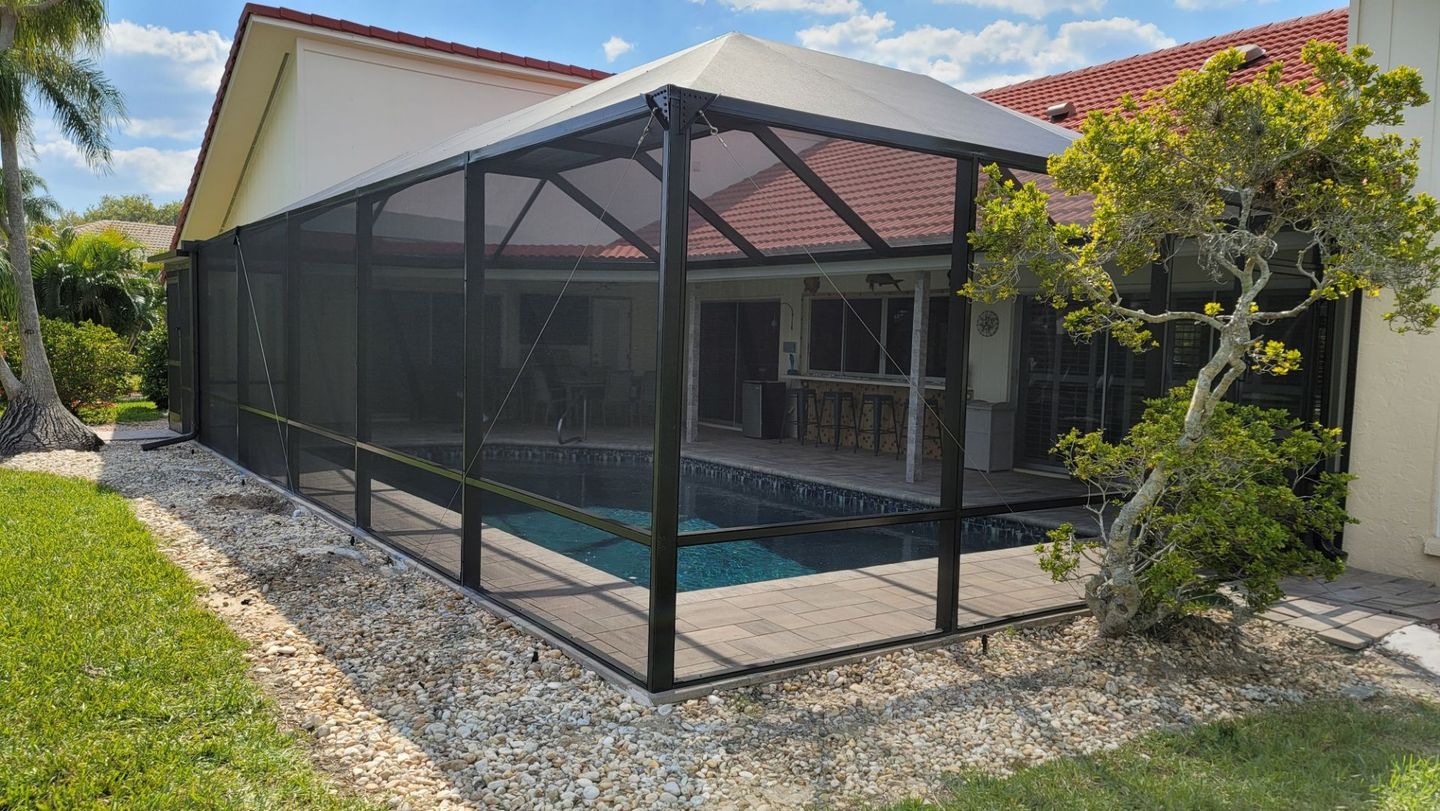
Quick Answer: If you want to know how to make a screened porch more private, the best approach is usually to combine visual screening, layout changes, and a few subtle design upgrades so the space feels secluded without blocking airflow or making the porch dark. In Florida, that balance matters even more because screened porches are often used year-round, and privacy solutions need to hold up to sun, salt air, wind, and frequent use. The good news is that you do not need a full remodel to make a big difference.
Start with the View You Want to Block
Before adding anything, stand inside the porch and look outward in the times of day you use it most. Privacy needs are not all the same. Maybe neighbors can see directly in from one side, or maybe the main issue is a walkway, pool, or second-story window nearby. Identifying the exact sightline helps you choose a solution that works without overdoing it.
If the concern is mostly about one exposed side, a targeted fix is often better than enclosing the whole porch visually. For example, a privacy screen or shade panel on just the problem side can preserve the open feel while reducing direct views. If the porch faces a busy street or a neighboring yard with taller windows, you may need a layered approach with both screening and soft landscaping.
This is also where it helps to think about how the porch is used. A reading corner, dining area, or outdoor TV spot may need different privacy treatment than a plant-filled sitting area. The goal is not total seclusion; it is comfort.
Use Privacy Screens Without Making the Porch Feel Closed In
One of the most effective ways to make a screened porch more private is to add an extra layer inside or outside the existing screen walls. Privacy screens come in a range of materials and openness levels, so you can choose how much visibility you want to reduce.
Common options include:
- Decorative privacy mesh or shade screen materials that reduce visibility while still allowing air movement
- Roll-down privacy panels for flexible coverage when you want it
- Fixed screen sections with a tighter visual pattern for specific walls
- Tinted or patterned screening products that soften the view in and out
If your porch is in a windy part of the Florida Gulf Coast, durability matters. Materials should be appropriate for outdoor exposure, especially near salt air and moisture. A screened porch privacy upgrade should also be attached in a way that does not interfere with door operation, screen door swings, or drainage at the base of the structure.
A custom-fit approach usually looks better than a one-size-fits-all panel. If you are considering a more permanent upgrade or a new screened enclosure layout, it can be helpful to speak with a contractor familiar with Florida porch and screen structures. For example, homeowners researching screen room installation north port fl often want to compare privacy options with airflow, visibility, and maintenance in mind.
Add Layered Landscaping for Natural Privacy
Plants can be a very attractive way to add privacy around a screened porch, especially when you want the space to feel softer and more relaxed. Since Florida homes often use porches to connect indoor and outdoor living, landscaping can help the porch feel sheltered without making it feel boxed in.
Good privacy landscaping ideas include:
- Tall container plants placed outside the porch perimeter
- Shrubs or hedges positioned to block lower-level sightlines
- Ornamental grasses for a looser, more natural screen
- Trellised vines if you want a softer visual barrier
The advantage of plants is that they can break up views without creating a solid wall. They also pair well with a screened porch because the screen already handles insects while the greenery adds visual privacy.
Keep in mind that plants need maintenance, irrigation, and enough light to stay healthy. In a Gulf Coast climate, choose species that suit local sun, wind, and moisture conditions. Also consider mature size, not just the look at planting time. A plant that seems small now may eventually crowd the porch or interfere with screen panels.
Container arrangements are especially useful if you want flexibility. You can move pots around seasonally or rearrange them for gatherings. That makes them a smart option when you want privacy only part of the time.
Use Outdoor Furnishings and Layout to Control Sightlines
Furniture placement can do more for privacy than many homeowners expect. A screened porch often feels exposed because seating is lined up along the open edges, where it is easy to see through from outside. Repositioning the layout can help create a more intimate feel right away.
Try these strategies:
- Place taller furniture, such as a sofa or storage bench, along the most visible side
- Use high-backed chairs to create a subtle visual barrier
- Group seating toward the center of the porch instead of the edges
- Add a console table, shelving unit, or decorative storage piece where appropriate
- Hang outdoor curtains only if the porch design can support them safely and neatly
The key is to create layers. A sofa, a plant, and a small table together can interrupt a clear line of sight far better than any one item alone.
Also, think about lighting. Bright interior light at night can turn a porch into a silhouette from the outside. Softer, layered lighting tends to feel more private. If you are considering added electrical fixtures, ask a licensed professional to handle any work that involves wiring or fixture placement.
Upgrade the Screen Design for Better Privacy and Comfort
Sometimes the best answer is not adding something to the porch, but improving the porch itself. Screen type, panel placement, and framing details all affect how open or private a porch feels.
Possible improvements include:
- Replacing worn or loose screen panels that create more visibility than intended
- Using different screen materials in selective areas for a more enclosed feel
- Adding lower opaque or semi-opaque sections where sightlines are strongest
- Adjusting panel design around seating zones or doorways
If the porch is older, repairs may also improve privacy simply by restoring the original screen tension and fit. Loose or damaged screening can leave gaps, warped impressions, or sagging areas that make the porch feel less protected. A cleaner, tighter enclosure can make the entire space feel more settled and private.
This is also where homeowners sometimes consider whether an upgraded screened porch could change how the home is perceived. For general homeowner curiosity, does a screened in porch add value guide is a useful topic to explore, but privacy improvements should still be guided first by how you actually use the space.
Make Privacy Work with Florida Weather and Daily Use
In Florida, privacy features need to stand up to more than just appearance. Sun exposure can fade fabrics and materials, moisture can affect finishes, and coastal wind can make lightweight add-ons frustrating if they are not securely installed. That is why the best privacy solution is usually one that fits both the porch design and the local climate.
A few practical Florida-specific considerations:
- Choose outdoor-rated materials that resist weathering
- Make sure anything added does not trap too much heat or reduce airflow too much
- Avoid blocking emergency exits or making doors harder to use
- Confirm that any structural attachment is suitable for the porch framing
If the privacy upgrade involves structural changes, electrical work, or other specialty items, it is smart to involve the right licensed professional or local authority as needed. That is especially true for anything beyond simple décor or freestanding furnishings.
Final Thoughts
The most effective way to make a screened porch more private is to match the solution to the problem. If the issue is a direct neighbor view, a privacy screen may be enough. If the porch feels exposed from multiple angles, layering plants, furniture, and screening details can create a much more comfortable retreat. For Florida homeowners, the best choices are the ones that preserve airflow, handle the weather, and suit how the porch is used day to day.
If you want the porch to feel more secluded without losing the open-air experience, start with the sightlines, then build from there. A thoughtful mix of screening, landscaping, and layout changes can transform the space into a much quieter and more comfortable part of the home.