
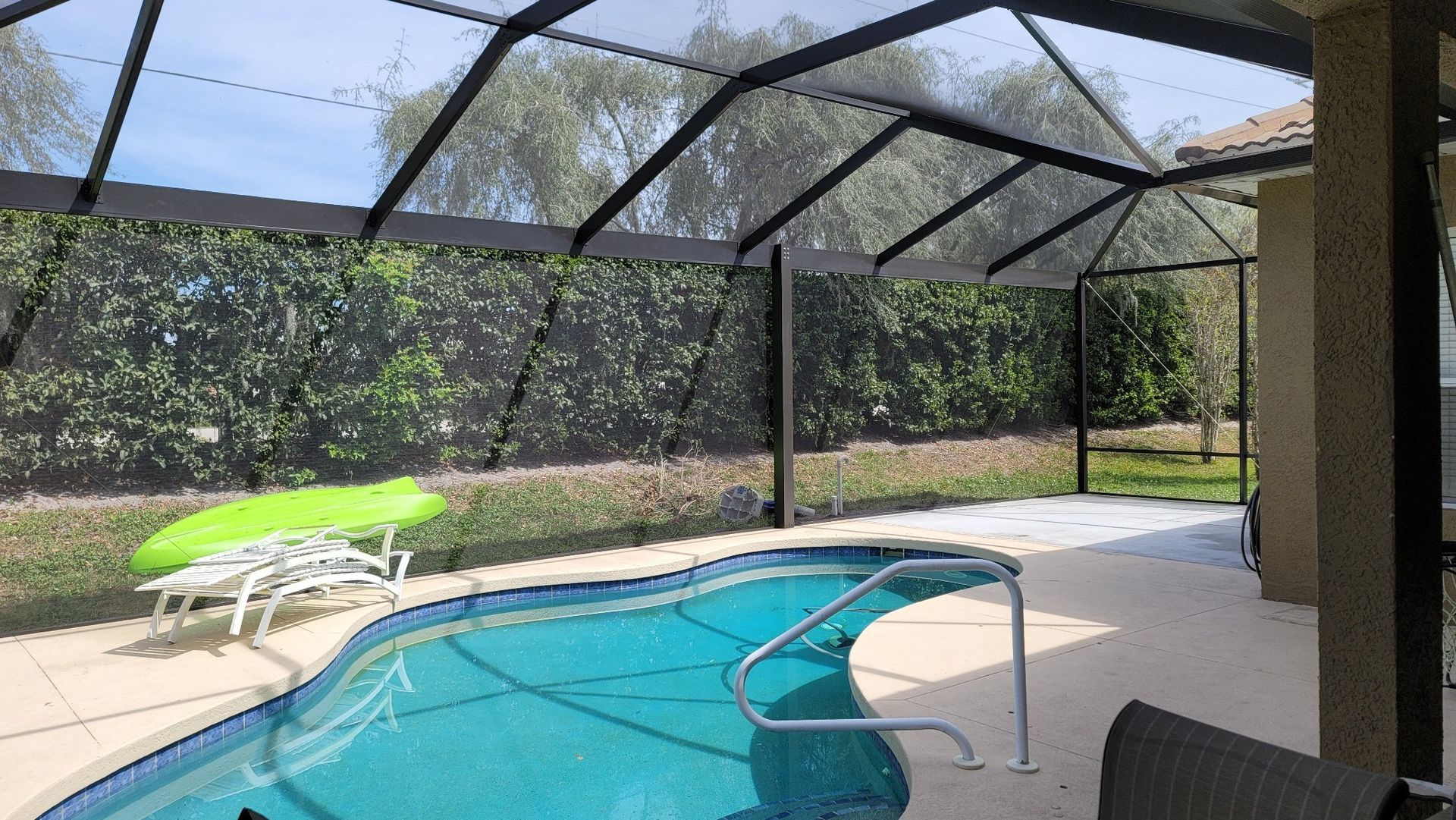
Quick Answer: When homeowners ask how to prepare a screen enclosure for a storm, the safest approach is to clear loose items, inspect the structure, secure doors and screens, and have any weak hardware or damaged panels addressed before wind and rain arrive. In Florida’s Gulf Coast climate, that preparation matters because afternoon storms, tropical systems, and flying debris can stress an enclosure quickly, especially if the screen room or pool cage already has wear, loose fasteners, or aging sealants. The goal is not to “harden” the enclosure in one afternoon, but to reduce hazards, prevent avoidable damage, and make sure the structure is ready to shed wind more safely.
Start With a Careful Walkthrough
Before a storm is anywhere near the forecast cone, walk the entire enclosure inside and out if you can do so safely. Look for torn screen mesh, bent framing, loose spline, missing screws, corroded hardware, separated corner joints, and gaps where insects or debris can enter. On the Gulf Coast, salt air, strong sun, and daily humidity can age aluminum components faster than many homeowners expect, so small issues can become bigger problems when wind pressure rises.
Pay special attention to the roof panels, door frames, latch points, and the areas where the enclosure ties into the house. If you notice shifting, sagging, or visible damage, do not wait until a storm warning to sort it out. Some issues are cosmetic, but others may signal structural wear that should be reviewed by a qualified enclosure professional. If you need local help with screening or aluminum repairs, a screen enclosure contractor punta gorda fl can evaluate the condition of the enclosure and recommend appropriate repairs.
Remove Loose Items and Reduce Windborne Debris
Anything inside the enclosure that can move in wind should be secured or brought indoors. Chairs, cushions, side tables, planters, toys, pool tools, umbrellas, grills, and decor can all become projectiles or can strike the screen from the inside. Even lightweight objects can tear mesh or damage frames if they shift during gusty weather.
Also clear the area around the enclosure. Trim branches that hang over the roofline if they are obviously close enough to cause damage, and move potted plants, loose garden tools, and lightweight yard items away from the perimeter. If the enclosure sits near an active pool deck, check for floating toys or inflatables that could blow into the structure or the pool equipment area.
If you use your screen enclosure for pets, consider whether the setup is storm-ready for their safety too. A purpose-built barrier can help in day-to-day use, and this pet resistant screen for pool enclosure guide may be helpful if your enclosure routinely has to withstand extra wear from animals.
Secure Doors, Latches, and Access Points
Storm prep is not just about the screen panels themselves. Doors are often the first places where wind exploits a weakness. Make sure every enclosure door closes fully and latches properly. Replace missing screws in latches, handles, and closers before storm season if you see wear. If a door swings freely, sticks, or won’t stay closed, that should be corrected before bad weather arrives.
If your enclosure has self-closing hardware, confirm that it still works. If not, the door may blow open during a storm and create a point of pressure change that stresses the rest of the structure. Some homeowners also keep a closer eye on childproof or pet gates inside the enclosure, since those can rattle or break loose when winds pick up.
For sliding or multi-access openings, make sure tracks are clean and that doors are fully seated in their channels. Do not rely on improvised cords, temporary blocks, or household hardware to “reinforce” doors unless a licensed professional has specifically recommended that method for your structure.
Protect the Enclosure From Water and Flying Debris
Rain alone is not usually the biggest threat; it is wind-driven rain and debris. Make sure gutters, downspouts, and drainage paths around the enclosure are clear so water does not back up toward the structure or pool deck. Clogged drainage can lead to pooling water, slick surfaces, and added stress on the enclosure base and nearby fascia.
Look up at the roofline and nearby trees. If branches, loose patio panels, or unstable decorative items could strike the enclosure, address those risks ahead of time. In storm conditions, even a small object can puncture screen mesh or dent aluminum members. This is especially true in coastal areas where wind gusts can change direction quickly.
Do not tape the screen mesh in an attempt to “hold it together.” Tape generally does not solve the underlying issue and can leave residue or cause more tearing later. If a panel is already damaged, the better move is to have it repaired before the storm season intensifies.
Know What Not to Do
Homeowners sometimes try to overcorrect before a storm by adding straps, boards, plastic sheeting, or makeshift reinforcements. Those tactics can create new problems if they trap wind, overload the frame, or damage the finish. A screen enclosure is designed as a specific aluminum and mesh system, and it should be treated that way.
Do not climb onto the roof panels or attempt repairs in unsafe weather. Avoid using extension ladders in wind or rain unless the task is minor, safe, and well within your ability. If the enclosure already has structural damage, loose members, or compromised connections, that is the time to stop and call a professional rather than improvising.
It is also a good idea not to store chemicals, sharp tools, or heavy equipment inside the enclosure during storm season. If water enters the space, those items can shift or spill, making cleanup more difficult after the weather passes.
Address Damage Before Storm Season, Not During It
The best storm preparation happens well before a named system is approaching. If you already know the enclosure has torn screening, corrosion, loose fasteners, or an aging door system, schedule repairs early. Many homeowners wait until a forecast becomes urgent, but by then, contractor schedules tighten and the window for safe work narrows.
A pre-storm inspection can identify small issues that are easy to miss from the ground. That may include worn spline, failing sealant at the house connection, deteriorated screws, or a frame that no longer sits square. The fix depends on the condition of the enclosure, which is why a site-specific written estimate is often the right next step for repair work. Cost is driven by the size of the enclosure, the extent of damage, the type of screen or hardware needed, access conditions, and whether any framing repairs are involved.
If you are unsure whether your enclosure needs repair, replacement of certain components, or just routine maintenance, a local specialist can help you sort that out without guesswork. The important thing is to address known weak points before the weather gives them a test.
After the Storm: Inspect Before Reopening the Space
Once conditions are safe, inspect the enclosure before using it again. Look for torn mesh, bent rails, damaged doors, loose fasteners, standing water, and any signs that branches or debris hit the structure. If the frame appears shifted, do not force doors open or continue using the enclosure as normal until it has been checked.
Clean debris carefully and dry wet surfaces to reduce slipping. If the enclosure has sustained damage, take photos for your records and arrange repairs promptly. Even if the damage looks minor, hidden stress points can worsen over time if ignored.
Final Thoughts
Preparing a screen enclosure for a storm comes down to simple, practical steps: remove loose items, check the frame and screens, secure doors, clear drainage, and fix known problems before bad weather arrives. For Florida Gulf Coast homeowners, this routine is especially important because coastal wind, rain, and salt exposure can make small weaknesses more serious. If your enclosure already shows wear, it is smarter to have it reviewed than to wait and hope it holds together. A careful inspection and timely repair can help your outdoor space stay safer and easier to restore after storm season.