
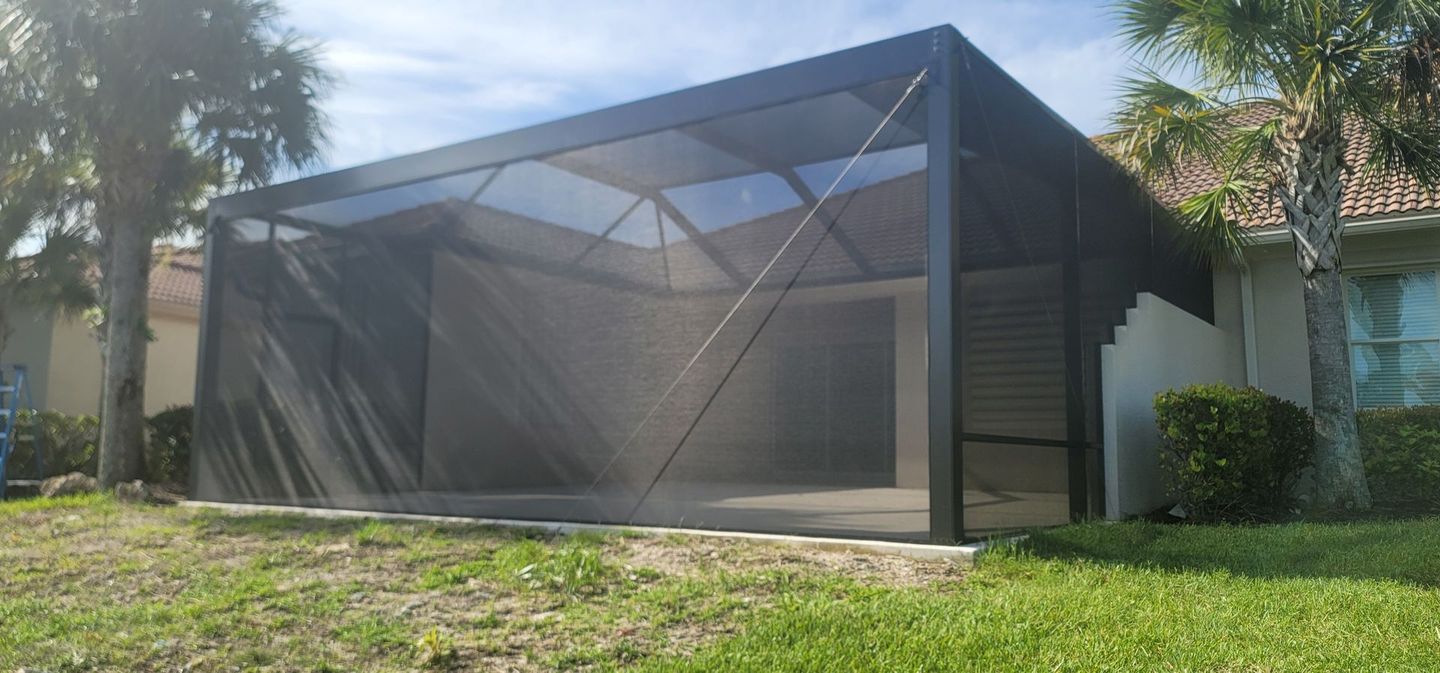
Quick Answer: A pet resistant screen for pool enclosure is a reinforced screening option designed to better handle scratching, pushing, and the everyday wear pets can cause around a lanai or pool cage. It is not “pet proof,” but it can be a smart upgrade for homeowners who want more durability than standard fiberglass screen without changing the look of the enclosure too much. In Florida, where pool enclosures see sun, humidity, wind, salt air, and constant use, the right screen choice depends on how your pets behave, where the damage is happening, and how the frame and fasteners are holding up overall.
What Pet Resistant Screen Actually Does
Pet resistant screen is made to be tougher than standard insect screen. The goal is to stand up better to nails, paws, leaning, nose pressure, and repeated contact at the lower sections of a cage or around doors. It is commonly chosen for households with dogs that pace the perimeter, greet people at the screen, or scratch at the enclosure when they spot wildlife or hear activity outside.
That said, stronger screen does not mean indestructible. A determined dog can still tear or puncture it, especially if the animal jumps into the mesh with force or claws at one spot over and over. The real benefit is usually improved resistance and longer service life compared with lighter screen materials.
For homeowners comparing options, it helps to understand that a pet resistant screen for pool enclosure is often part of a broader durability conversation. If the enclosure also has loose spline, bent framing members, worn door hardware, or damaged kick plate areas, replacing only the screen may not solve the underlying issue.
Where It Helps Most Around a Pool Cage
The most common problem areas are usually the lower panels, screen doors, and sections near corners or steps. Dogs tend to focus on these spots because they are within easy reach and often tied to daily routines like coming and going, waiting for family members, or watching activity in the yard.
Pet-resistant mesh can be especially useful when:
- A dog scratches at the screen near a door
- Pets jump up against lower panels to look outside
- A cat climbs or bats at the mesh from inside the enclosure area
- The family wants added durability in a high-traffic pool and patio space
- The home has a busy backyard where people, pets, and outdoor furniture all share the same area
In coastal and Gulf Coast settings, there is also the added reality of sun exposure and moisture. Those conditions can make weaker materials age faster. If you are near the water or in a neighborhood with strong afternoon sun, a sturdier screen may be worth considering as part of a practical maintenance plan. For homeowners looking at enclosure services in the area, screen enclosure north port fl is a helpful place to start when thinking about repair or replacement options.
How Pet Resistant Screen Compares With Other Screen Types
Not every screen labeled “strong” is meant for the same purpose. Homeowners often hear terms like pet screen, no-see-um screen, fiberglass screen, and polyester-based products, but these materials are not interchangeable.
Standard fiberglass screen is a common choice for general use because it is lightweight and allows good airflow and visibility. It is often appropriate for upper walls or places where pets do not make contact. Pet resistant materials, by contrast, are designed to better withstand abuse from animals and heavy use.
Compared with standard screen, a pet resistant option may be:
- Thicker and more abrasion-resistant
- Better suited to lower panel replacement
- Less likely to fail from repeated light contact
- More appropriate where pets routinely test the mesh
It is important to match the screen to the situation. A homeowner with a small dog that occasionally brushes the enclosure may not need the same material that a large, energetic dog would require. Likewise, a screen that is better for pet resistance may not be the best choice for every opening if the family also wants maximum airflow or the lightest possible appearance.
If you are deciding among screen types, it may help to read a broader comparison such as what is the best screen for a pool enclosure guide, then narrow the decision based on pets, exposure, and how the enclosure is used day to day.
Signs Your Enclosure Needs More Than a Screen Swap
Sometimes a homeowner starts with a torn panel and assumes a simple re-screen is enough. In some cases, that is true. But if the same spots keep failing, the screen may be telling you something else about the enclosure.
Look for these signs that a more complete repair conversation may be needed:
- Repeated tears at the same height or along the same frame bay
- Loose or brittle spline that no longer holds tension well
- Door closers or hinges that allow pets to push through openings too easily
- Bent or out-of-square frame members
- Corrosion or wear around fasteners and corner connections
- Damage from furniture movement, pool equipment, or frequent gate traffic
A pet resistant screen for pool enclosure can help, but it will not correct structural issues, improper door alignment, or problems caused by aging hardware. If the frame is compromised, replacing only the mesh may lead to another failure sooner than expected.
For Florida homeowners, especially in coastal environments, it is reasonable to ask whether the enclosure should be inspected as a system. Sun, humidity, salt exposure, and storm-season wear can all affect how long repairs last. A qualified contractor can help determine whether you need selective replacement, partial rescreening, or a larger repair approach.
What Affects the Cost of a Pet Resistant Screen Project
Cost depends on more than just the screen material. The final written estimate is usually shaped by the size of the enclosure, the number of panels to be replaced, access to the work area, the condition of the frame, and whether doors or damaged trim components also need attention.
Other cost drivers may include:
- The type of screen selected
- Whether only lower panels or the full enclosure will be replaced
- The amount of labor needed to remove old material and reset spline
- Whether the frame needs minor repair before screening begins
- The complexity of the enclosure layout, such as angles, roof pitch, or special openings
Because every pool cage is a little different, a site-specific written estimate is the best way to understand scope and make an informed decision. That is especially true when pets are involved, since a repair plan can change depending on the size and behavior of the animal and the areas most exposed to wear.
Choosing the Right Setup for Your Home
The best setup is not always the toughest screen possible. It is the combination of screen type, frame condition, and practical use that makes the biggest difference. A homeowner with a calm pet may only need reinforced panels near the door and ground level. A household with an active dog may benefit from more extensive lower-panel upgrades and a closer look at latches, door closers, and any weak points around the enclosure.
Think through these questions before deciding:
- Where do the pets make contact most often?
- Is the damage from scratching, jumping, or leaning?
- Are the panels failing in one area or throughout the enclosure?
- Does the door need better closing hardware or alignment?
- Is the frame otherwise in good condition?
In many cases, a targeted repair approach works well. You may not need every panel changed. A contractor familiar with pool cages can often recommend where pet-resistant material makes the most sense and where standard screening is still adequate.
Final Thoughts
A pet resistant screen for pool enclosure can be a practical upgrade for Florida homeowners who want better durability around dogs, cats, and busy outdoor living areas. It is most effective when used thoughtfully, especially in lower panels and other high-contact spots. Just remember that screen choice is only one part of the solution. If the enclosure has worn hardware, damaged framing, or recurring failures, the underlying issue should be addressed too.
If your pool cage is showing signs of pet damage, the safest next step is a professional evaluation and a site-specific written estimate. That way, you can compare repair options based on your enclosure’s condition, your pets’ habits, and the way you actually use the space.