
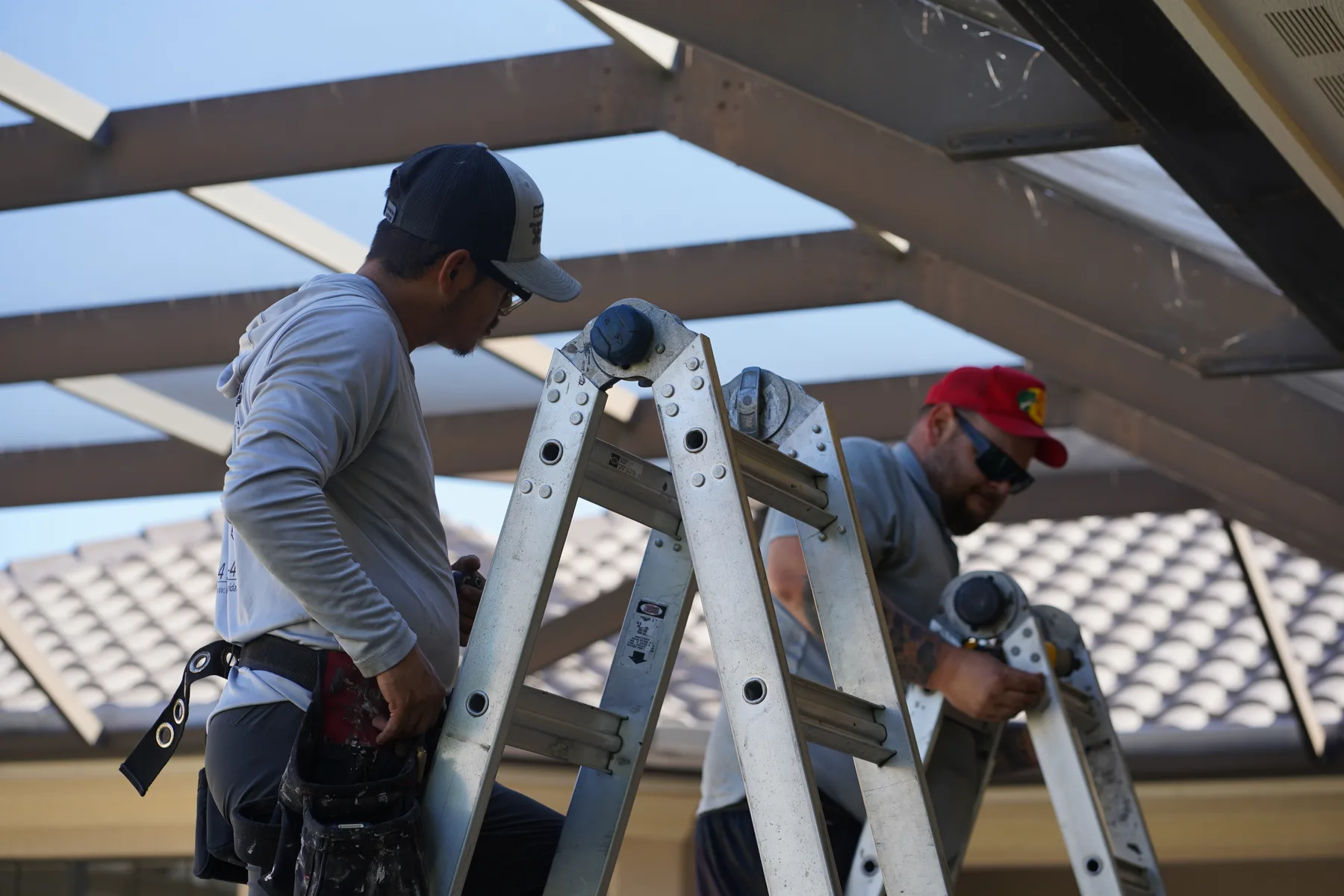
Quick Answer: How to prevent pool cage corrosion starts with routine cleaning, fast attention to damaged coatings, and reducing the conditions that let moisture and salt sit on aluminum, fasteners, and hardware. For Florida Gulf Coast homeowners, the main goal is to keep your enclosure dry, clean, and properly maintained so small issues do not become bigger repairs.
What Causes Pool Cage Corrosion
Pool cages are built to live outdoors, so some weathering is normal. Corrosion becomes a problem when aluminum, screws, anchors, brackets, or other metal parts are exposed to a steady mix of moisture, salt air, pool chemicals, and trapped debris. On the Gulf Coast, that salt-laden air can speed up wear, especially on homes closer to the water or exposed to wind carrying fine salt spray.
Chemical exposure also matters. Chlorine and other pool-treatment products can contribute to corrosion when they linger on the frame or hardware. If runoff, splash-out, or overspray repeatedly hits the enclosure, the finish can break down faster. Dirt, leaves, and pollen can hold moisture against the metal, creating a damp surface that keeps corrosion active longer.
Some corrosion starts where the protective finish has been scratched or chipped. Once bare metal is exposed, oxidation can spread if it is not cleaned and protected. That is why a small nick in the finish, a loose fastener, or a worn connector should not be ignored.
Regular Cleaning Prevents Buildup
The simplest way to prevent pool cage corrosion is also one of the most effective: rinse and clean the enclosure regularly. A gentle rinse with fresh water helps remove salt, dust, and chemical residue before they settle into seams and corners. In coastal Florida, this kind of maintenance is especially helpful after windy days, storms, or periods of heavy pollen.
A soft brush and mild soap can be used for routine cleaning when needed. Focus on areas where buildup tends to collect, such as lower rails, corners, joints, and around fasteners. Avoid harsh cleaners or abrasive tools that can scratch the protective coating. Scratches create entry points for moisture and can shorten the life of the finish.
It also helps to keep vegetation trimmed away from the enclosure. Shrubs, vines, and overhanging trees can trap moisture, drop debris, and limit airflow. Better airflow lets the frame dry more quickly after rain or cleaning. Less trapped moisture means less opportunity for corrosion to take hold.
If you are looking for help with an enclosure inspection or maintenance planning, an outdoor living contractor north port fl can help you evaluate the condition of the structure and identify areas that need attention.
Watch the Finish, Fasteners, and Joints
Corrosion often starts in the small details. Inspect the frame regularly for peeling coating, white oxidation on aluminum, rust stains around screws, and loose or discolored hardware. Even if the cage looks fine from a distance, the most vulnerable spots are often where different materials meet or where water tends to collect.
Pay close attention to:
- Screw heads and connectors
- Base plates and anchor points
- Door frames and latches
- Screen spline areas near metal framing
- Roof-to-wall intersections and corners
- Any place where the finish has been chipped, scraped, or worn thin
Fasteners are particularly important because some are more corrosion-resistant than others. When hardware begins to rust, it can stain nearby surfaces and weaken the connection over time. If you notice repeated rusting in one area, that is a sign the part may need replacement by a qualified professional.
Seams and joints deserve attention too. If debris collects there, it can hold moisture against the metal. Cleaning those areas during routine maintenance can reduce the chance of corrosion spreading under the surface.
Protect the Enclosure From Chemicals and Pool Splash-Out
Pool water chemistry affects more than the water itself. When chlorinated water splashes onto the enclosure repeatedly, it can leave behind residue that slowly breaks down the finish. This is especially true if pool chemicals are added near the cage and dust or spray reaches the frame.
To reduce exposure:
- Add chemicals carefully according to product instructions
- Avoid letting chemical powder drift onto the cage
- Rinse the area if pool water or treatment products splatter onto framing
- Keep pool maintenance equipment from scraping against the enclosure
If your pool equipment, skimmer, or automatic cleaner is causing repeated splash-out or contact with the frame, it may be worth adjusting placement or operation. The goal is to keep corrosive residue from sitting on the enclosure long enough to do damage.
Storm season also matters on the Florida Gulf Coast. After heavy rain or wind-driven salt spray, a fresh-water rinse can help remove contaminants before they dry on the metal. That extra step is simple, but it can make a real difference over time.
Repair Damage Early Before It Spreads
Small areas of corrosion are easier to manage than widespread damage. If you spot chipped paint, oxidation, or a rusty fastener, address it promptly. Cleaning the area and stopping the source of moisture can slow further deterioration. In some cases, a worn component may need to be replaced rather than patched.
Do not wait for visible sagging, loose framing, or screen damage to investigate. Corrosion can weaken hidden connections before the problem becomes obvious. If you are not sure whether the issue is cosmetic or structural, a professional inspection is the safer choice.
It is also smart to schedule attention after major storms, especially if the enclosure took flying debris, salt exposure, or impact. Even minor dents or scratches can become corrosion points later if they are left untreated.
For homeowners trying to understand maintenance timing alongside repairs, how long does it take to rescreen a pool cage guide can help set expectations for related enclosure work.
When to Call a Professional
Some maintenance tasks are straightforward, but others require a trained eye. Call a professional if you see widespread white oxidation, rusted hardware that keeps returning, cracked or separated joints, bent framing, or any sign that the structure is no longer secure. If corrosion has affected multiple parts of the cage, a contractor can help determine whether repairs are localized or more extensive.
This is also the right time to ask questions about replacement hardware, finish touch-ups, and whether specific components can be repaired without disturbing the rest of the enclosure. For project-specific structural concerns, it is best to rely on a qualified contractor or the appropriate licensed professional. If your question involves electrical components, HVAC equipment, fire safety, manufactured-home issues, or permitting, direct those items to the proper specialist or local authority.
A site-specific written estimate is the best way to understand the scope of work, because the cost drivers can vary based on the amount of corrosion, the condition of the framing, access to damaged areas, hardware replacement needs, and whether screen panels or other parts must be removed to complete repairs. No two enclosures age the same way, so an on-site evaluation matters more than a general price guess.
Final Thoughts
Preventing pool cage corrosion is mostly about consistent, practical upkeep: rinse the enclosure, keep it clean, check hardware, protect the finish, and repair damage early. On the Florida Gulf Coast, salt air and frequent moisture make that routine especially important. If you stay ahead of buildup and minor wear, your enclosure is more likely to remain attractive and functional for longer. When corrosion is already showing up, a professional inspection can help you decide the next step with confidence.