
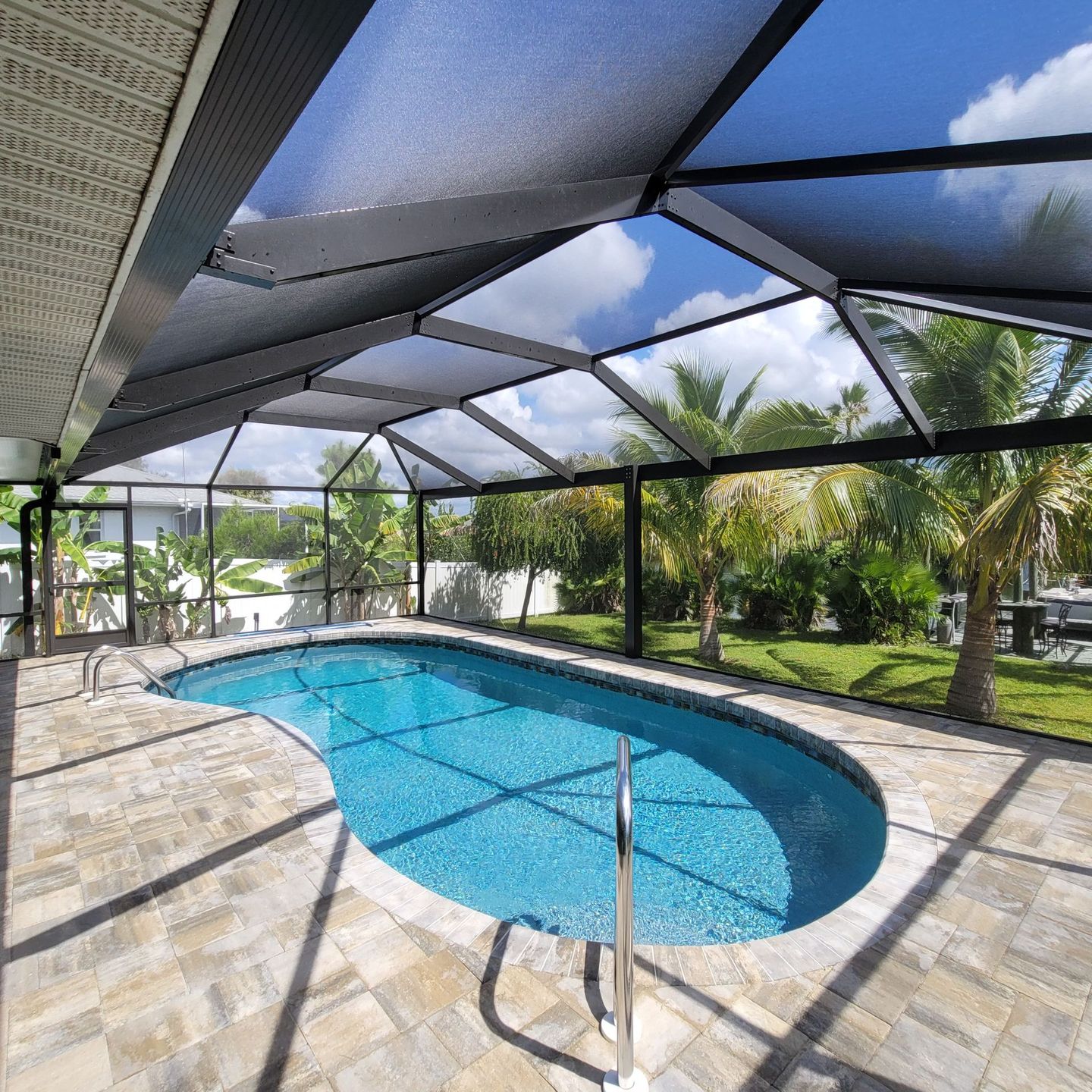
Quick Answer: If you want to know how to protect patio furniture in a screened porch, the main goals are to keep moisture, sun, salt air, and everyday wear from breaking down the materials. A screened porch already gives you a strong layer of protection, but Florida Gulf Coast conditions can still be hard on cushions, metal frames, wicker, and fabrics. The best approach is to choose weather-smart materials, use fitted covers when needed, keep the area clean and dry, and store the most delicate pieces during long periods of humidity or storms.
Start with the Right Furniture Materials
The easiest way to protect patio furniture in a screened porch is to begin with furniture that is built for outdoor use. Not all patio pieces handle heat and humidity the same way. In a coastal Florida environment, metal frames, synthetic wicker, and outdoor-rated fabrics usually perform better than indoor-style furniture or pieces with unfinished wood surfaces.
Look for powder-coated aluminum frames, resin wicker, and cushions made with outdoor fabrics that resist fading and mildew. Aluminum is especially useful in coastal areas because it is lightweight and does not rust the way untreated steel can. That does not mean it never needs care, but it usually holds up better in humid, salty conditions.
If you already own furniture that was not designed for the outdoors, a screened porch can help extend its life, but it will not make it weatherproof. Upholstery can still absorb humidity, wood can swell or crack, and metal hardware can corrode over time. When in doubt, use the porch for semi-protected furniture only if you are comfortable doing routine upkeep.
Use Covers the Smart Way
Covers are one of the simplest tools for protecting patio furniture in a screened porch, but they work best when used correctly. A cover should fit the piece well without trapping too much moisture. If a cover is too loose, wind can shift it around and let dust, pollen, and damp air inside. If it is too tight and non-breathable, it can trap condensation and create mildew problems.
Choose covers made for outdoor furniture and look for materials that balance water resistance with breathability. In a screened porch, you may not need to cover every item every day. Many homeowners reserve covers for long absences, storm season, or when furniture is not being used for several days.
It also helps to lift cushions off the seat and let them dry fully before covering them. If a cushion feels even slightly damp, covering it can hold in moisture and create a musty smell. For the same reason, never cover furniture that has been cleaned but not fully dried.
Keep Moisture Under Control
Humidity is one of the biggest threats to patio furniture in a screened porch, especially along the Florida Gulf Coast. Even though the screen blocks direct rain, moisture can still come in through open sides, damp floors, and humid air that lingers after storms or overnight.
To help protect furniture, make sure the porch stays as dry as possible. Sweep away leaves, dirt, and standing water. If the floor tends to stay damp after rain, use mats or furniture feet that keep legs from sitting directly in moisture. That small detail can help prevent rust marks, wood staining, and wicking into cushion bottoms.
It is also wise to inspect the porch for leaks, clogged gutters, or splashback issues that may be affecting the space. If water is repeatedly reaching the porch, furniture protection starts with solving that moisture source. In some cases, people exploring screened lanai north port fl are really looking for ways to improve comfort and reduce wear inside the enclosure, and moisture management is part of that conversation.
For cushions and pillows, use dry storage when possible. A deck box, bench with storage, or indoor closet can keep softer items in better shape during long humid stretches or hurricane season. Even breathable outdoor cushions benefit from being moved inside occasionally so they can fully dry and air out.
Manage Sun, Salt, and Airflow
A screened porch reduces direct sun exposure, but it does not eliminate UV damage. Sunlight can still fade fabrics and dry out synthetic materials over time. If part of the porch gets stronger afternoon sun, rotate cushions and reposition furniture so one side does not take all the wear.
Salt air is another Florida-specific issue. Homes closer to the coast may notice faster corrosion on hardware, zippers, snaps, and metal furniture joints. Rinsing furniture occasionally with fresh water can help remove salt buildup, but always dry it afterward. Pay close attention to bolts, screws, and exposed hardware, since those parts often show wear before the larger frame does.
Airflow matters too. A screened porch should allow breezes to move through the space, but too little airflow can let humidity settle around furniture. Arrange pieces so air can circulate behind and beneath them. Avoid pushing everything tightly against walls if that creates a damp pocket.
If the porch has ceiling fans, use them as needed to keep air moving. Better circulation can help cushions dry faster and reduce the chance of mildew. Just avoid assuming that moving air alone solves moisture issues; it helps, but it is not a substitute for cleaning and drying.
Clean Regularly and Fix Small Problems Early
Routine cleaning is one of the best ways to protect patio furniture in a screened porch. Dust, pollen, sand, and organic debris can all collect in seams and fabric folds. Over time, that buildup can hold moisture and shorten the life of the furniture.
Wipe frames with a soft cloth and mild soap and water as needed. For cushions, follow the manufacturer’s cleaning instructions if available. Avoid harsh chemicals unless the label specifically allows them, because strong cleaners can damage coatings, fade fabric, or weaken stitching. Let everything dry thoroughly before putting cushions back in place.
Inspect furniture for early signs of trouble: loose screws, rust spots, fraying straps, cracked wicker, split seams, or mildewed cushion undersides. Small repairs are easier and cheaper to address than a full replacement, and catching damage early helps the furniture last longer.
This is also where homeowners often start thinking about the porch itself. If the structure is letting in too much debris or moisture, the furniture will show it. A well-maintained enclosure often makes a noticeable difference in how long outdoor pieces stay attractive and usable. For homeowners wondering how enclosure features affect the overall space, does a screened in porch add value guide can be a helpful starting point for understanding the broader home-improvement picture.
Choose Placement with Daily Use in Mind
Where you place the furniture matters almost as much as what you buy. Put delicate items away from screened openings where wind-driven rain, blowing dust, or extra sunlight can reach them. Keep seating far enough from traffic paths that people are not constantly bumping it or dragging it across the floor.
If you have a dining set on the porch, use placemats and seat cushions that can be taken inside easily. If you have a lounge area, choose pieces that are easy to move so you can rearrange them before a storm or during cleaning. Light, modular furniture is often easier to maintain because you can shift it without strain.
For homes in hurricane-prone parts of Florida, portability is a practical advantage. If a storm is approaching, furniture that can be moved inside quickly is much easier to protect than bulky pieces that are hard to handle. Even when a screened porch is enclosed, loose items can still be damaged by wind, water intrusion, or debris.
When to Consider Replacing or Upgrading Pieces
Sometimes the best way to protect patio furniture in a screened porch is to replace items that are no longer a good fit. If cushions stay damp even after cleaning, if frames keep corroding, or if the fabric has become brittle from sun exposure, ongoing patchwork may not be worth it.
That does not mean every worn item needs to be thrown out right away. A replacement cushion set, new protective cover, or rust-resistant hardware upgrade may be enough. But if the structure of the furniture itself is failing, a newer outdoor-rated piece may save time and frustration.
If you are comparing options, focus on material quality, ease of cleaning, and how well the item suits your porch conditions. A screened porch can be a comfortable extension of the home, but only if the furniture inside it is chosen and cared for with the local climate in mind.
Final Thoughts
Protecting patio furniture in a screened porch is mostly about consistency: choose durable materials, keep moisture under control, use covers wisely, clean regularly, and move or store vulnerable items when weather turns rough. In Florida Gulf Coast conditions, humidity, salt air, and intense sun can still affect furniture even behind screens, so a little routine care goes a long way. If your porch itself is contributing to dampness, debris, or drainage concerns, addressing those issues can help protect everything inside the space and keep it looking good for longer.