
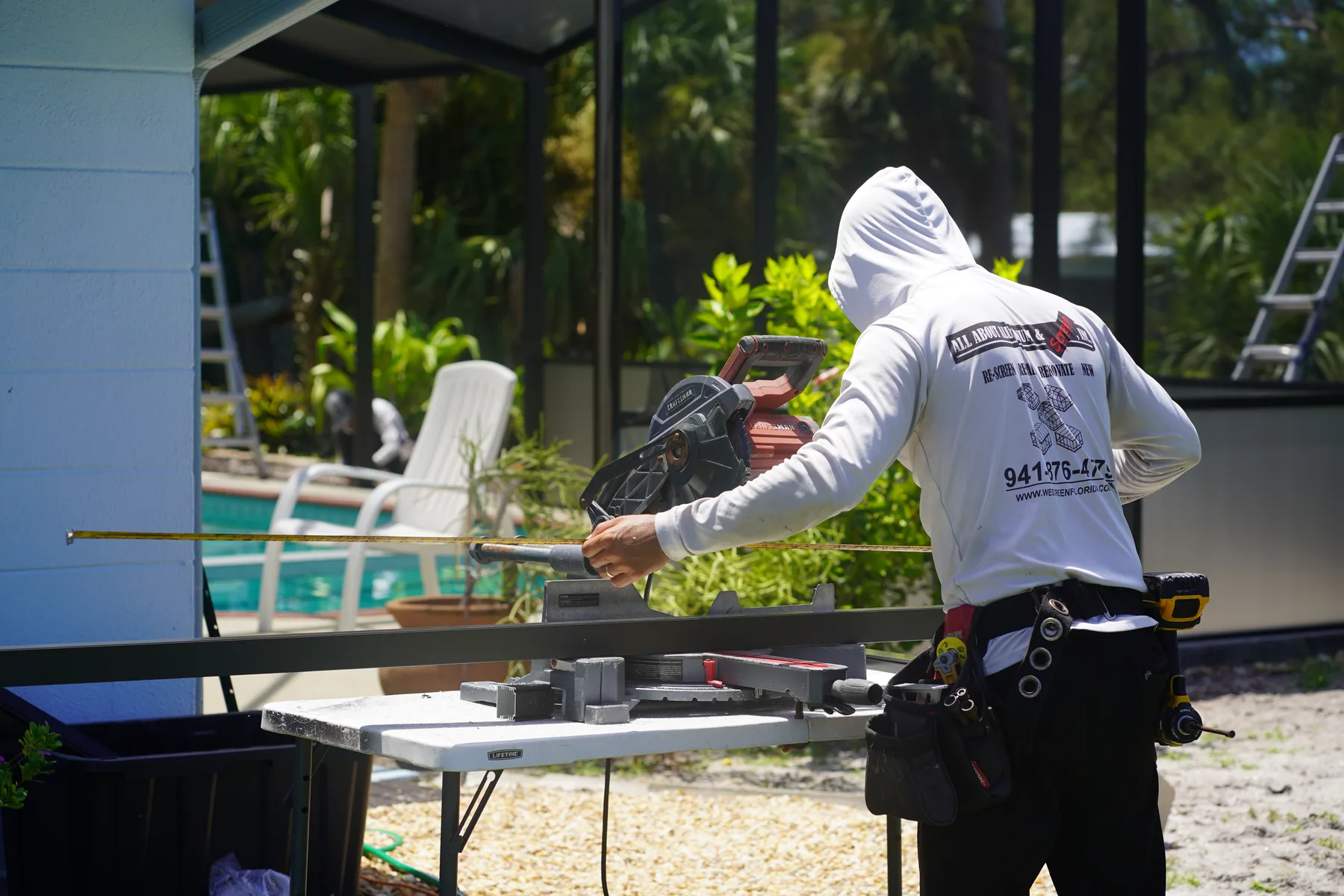
Quick Answer: how to repair a screened in porch usually starts with finding out whether the problem is just torn screen mesh, loose spline, damaged screen frame, failing fasteners, or larger structural wear in the porch enclosure. Small repairs can often be handled by replacing the screen fabric and spline in one panel, but if the porch has bent aluminum framing, rotted wood framing, sagging roof connections, or recurring storm damage, the repair may need a more complete enclosure evaluation. In Florida’s Gulf Coast climate, sun, humidity, wind, and salt air can all shorten the life of porch screening, so the best repair is the one that addresses both the visible tear and the cause behind it.
Start by Identifying What Actually Needs Repair
Before you replace anything, inspect the screened porch carefully from top to bottom. A tear in the mesh is the most obvious issue, but it is not the only one that matters. Look for:
- Holes or rips in the screen fabric
- Loose or missing spline around the frame
- Warped, bent, or loose screen frame sections
- Rusted or corroded fasteners
- Gaps where pests can enter around corners or trim
- Damaged door closers, hinges, or latch hardware
- Water-related wear near the base or along framing connections
If the porch is attached to a home in a coastal Florida area, corrosion can show up faster than homeowners expect. Airborne salt, heavy rain, and strong sun can dry out or weaken some materials over time. That does not mean every porch needs a full rebuild, but it does mean a careful inspection is worth the time.
If you are trying to decide between patching and replacing, ask whether the damage is isolated or widespread. One torn panel is a straightforward repair. Multiple damaged sections, loose framing, or repeated screen failure suggest a broader issue that should be addressed before the same problem returns.
Common Screen Porch Repair Methods
The right fix depends on the type of damage. For many homeowners, the first question is whether they can patch the porch or need to replace an entire screen panel.
Replacing a Torn Screen Panel
If the mesh is torn but the frame is intact, the usual repair is to remove the old spline and screen, cut a new screen piece to fit, and roll it into the frame with fresh spline. This is the most common repair for a screened porch panel. The process sounds simple, but a clean result depends on getting the mesh tension right. Too loose, and the screen sags. Too tight, and the frame may distort.
The replacement material matters too. Standard fiberglass screen is common, but some homeowners choose stronger or specialty options for better durability or better visibility. If insects are a major concern, no see um screen north port fl is one material type homeowners often ask about for finer insect protection in Florida conditions.
Repairing Loose or Damaged Spline
The spline is the flexible strip that holds the screen in the frame channel. If the spline dries out, shrinks, or pops loose, the screen can come out even if the mesh itself is still usable. In that case, replacing the spline may solve the problem without replacing the entire panel. This is especially useful when the fabric is still in good condition and the frame is not bent.
Fixing Bent or Loose Frames
If the screen frame itself is warped or loose, a simple mesh replacement will not hold for long. Frames can bend from impact, poor installation, storms, or long-term wear. Sometimes the frame can be resecured or adjusted. Other times the damaged section must be replaced. On aluminum screen enclosures, structural alignment is important because even a slight shift can affect how the panel fits into the opening.
Addressing Hardware and Access Points
A screened porch is not just mesh and framing. Doors, hinges, closers, catches, and trim all contribute to the enclosure’s function. If pests are getting in, the problem may be a worn door sweep, a failing latch, or a gap at the threshold rather than the screen field itself. Replacing hardware can make a big difference in how well the porch performs.
When a Patch Is Enough and When It Is Not
Homeowners often want the fastest fix, but the least expensive repair is not always the one that lasts. A small patch may be acceptable when:
- The damage is minor and limited to one panel
- The frame is straight and secure
- The rest of the screen material is still sound
- The porch structure shows no signs of movement or corrosion
A patch is usually not enough when:
- Multiple panels have tears or loose spline
- The screen keeps coming out of the frame
- The framing is bent, corroded, or separating
- There is visible storm damage
- Doors and panels no longer align properly
Patching can also be a short-term solution if you need to keep insects out while planning a larger repair. But if the porch is older, it may be more efficient to replace several panels at once instead of making repeated service calls for the same underlying issue.
For homeowners comparing repair strategies, it can help to think in terms of the enclosure system rather than the screen alone. A porch with good framing but damaged mesh needs a different repair than one with settling, loose connections, or weather-related wear.
DIY Repair or Professional Help?
Some screened porch repairs are manageable for a handy homeowner, especially single-panel screen replacement. If you have the right tools, a steady hand, and a porch panel that is easy to access, this type of work can be a reasonable weekend project. Still, many people find that the challenge is not cutting the screen but getting a smooth, tight finish that looks right and lasts.
Professional repair is often the better choice when:
- The porch is tall or difficult to reach
- Multiple panels need attention
- The frame is bent or loose
- The door or enclosure hardware needs adjustment
- The damage appears to involve the porch structure, not just the screen
- You want a repair that matches the existing enclosure cleanly
Florida Gulf Coast homeowners should also consider weather exposure. Strong sun can make aging materials brittle, and storm season can reveal weaknesses that were not obvious before. A qualified screen enclosure contractor can often tell whether the visible damage is isolated or part of a larger wear pattern.
If you are planning a broader enclosure project, it can also help to review related planning content such as our how to build a screened in porch under a deck guide, especially if you are comparing repair versus replacement options.
What Affects the Cost of Repair?
The cost of repairing a screened porch depends on several factors, and it is a mistake to assume that every porch repair is similar. Important cost drivers include:
- Number of damaged panels
- Screen material selected
- Condition of the spline and frame
- Height and accessibility of the porch
- Whether hardware needs replacement
- Whether framing repairs are needed in addition to screening
- Whether storm or corrosion damage has spread beyond the obvious tear
A small screen replacement is usually much simpler than a repair involving frame work, door hardware, or repeated panel failures. Because every porch has different dimensions, access conditions, and material wear, a site-specific written estimate is the best way to understand the scope of the work. That estimate should reflect the actual condition of the enclosure after an on-site inspection rather than a generic assumption.
Avoid guessing at repair scope based only on one visible tear. Two porches that look similar from a distance can require very different levels of labor once the panels are removed and the framing is inspected.
How to Help a Repaired Porch Last Longer
Once the porch is repaired, a few maintenance habits can help extend the life of the enclosure.
- Rinse away dirt, pollen, and salt buildup as appropriate for your setting
- Check door closers and latches so doors do not slam against screens
- Trim back plants that press against the mesh
- Inspect corners and base tracks after storms
- Look for early signs of loose spline or sagging screen before a small issue grows
- Replace worn sections promptly instead of waiting for a larger failure
In coastal and near-coastal areas, regular visual checks are especially helpful. Small corrosion spots or loose fasteners can turn into bigger repair needs if left alone through another wet season or storm cycle.
Final Thoughts
A screened porch repair can be as simple as replacing a torn panel or as involved as correcting loose framing, worn hardware, or weather-related damage. The best first step is to inspect the porch carefully and identify whether the issue is limited to the screen itself or part of a broader enclosure problem. For many homeowners, the goal is not just to cover a hole, but to restore a porch that looks neat, keeps insects out, and holds up well in Florida conditions. If the damage is more than a minor panel tear, a professional inspection and written estimate can help you choose the most practical repair path.