
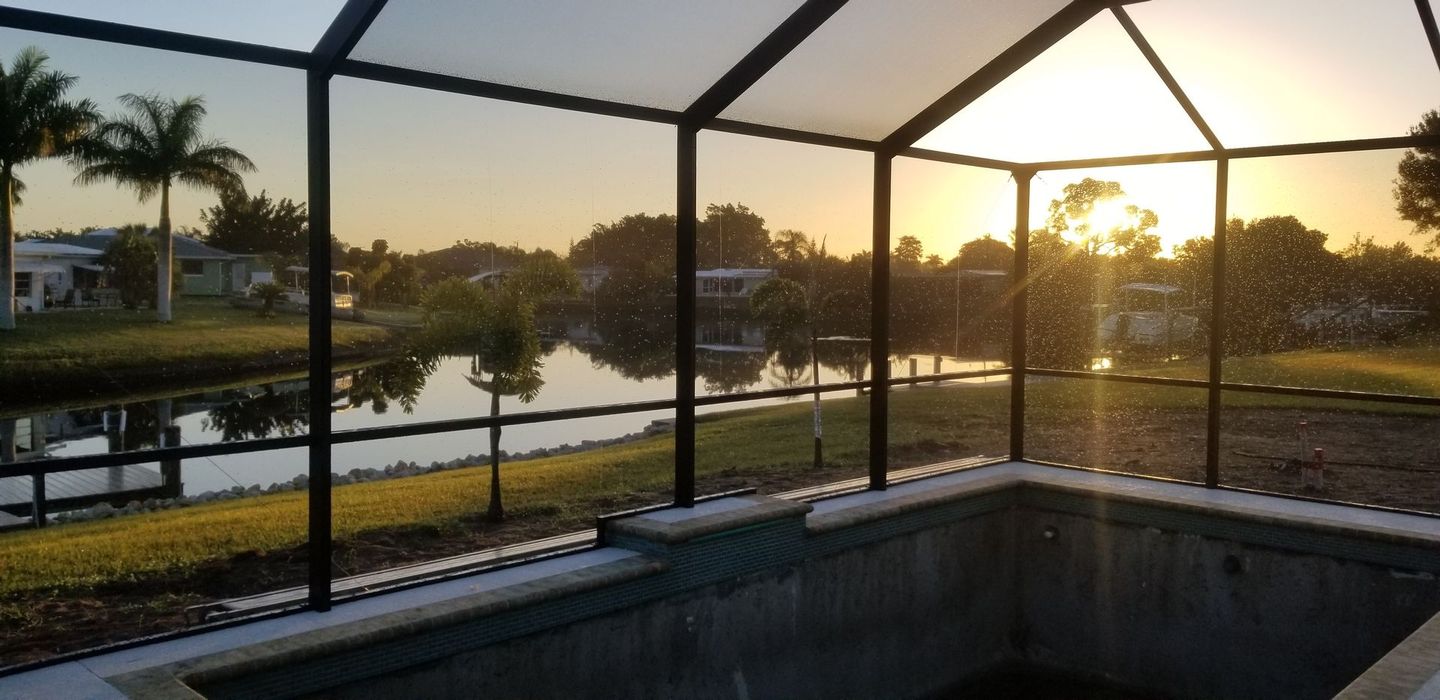
Quick Answer: what is the best screen for a pool enclosure depends on your priorities, but for most Florida homeowners the best screen balances visibility, airflow, durability, and insect control. If you want a straightforward answer, no single mesh is best for every pool cage. The right choice usually comes down to how much wind exposure you have, how often you want to clean it, whether you care more about keeping out tiny insects or preserving the view, and how long you expect the enclosure material to last in a coastal climate.
What “best” really means for a pool enclosure screen
When homeowners ask about the best screen for a pool enclosure, they are usually trying to solve one of a few problems. Some want to keep out mosquitoes and no-see-ums. Others want a clearer view of the pool and backyard. Some need a stronger material because their enclosure takes more wear from sun, salt air, wind, pets, or nearby trees. In Florida, especially along the Gulf Coast, those concerns are not theoretical. Heat, humidity, salt exposure, and storm-season conditions can all influence how long a screen performs and how much maintenance it needs.
The “best” screen is the one that fits your enclosure and your goals. For one homeowner, that may be a tighter mesh that helps with tiny insects. For another, it may be a higher-visibility mesh that opens up the view and improves airflow. For another, it may be a premium product chosen for better durability in a harsher environment. The key is matching the screen to the space rather than assuming one product solves everything.
The main screen types homeowners compare
Most pool enclosure screens fall into a few common categories, and each has tradeoffs.
Standard fiberglass screen is the familiar option for many pool cages. It is widely used because it offers a good balance of visibility, airflow, and insect protection. For many homeowners, this is the baseline choice when they want a practical, reliable screen without overcomplicating the project. It is also a common replacement material when an enclosure needs routine rescreening.
No-see-um screen has a tighter weave designed to block smaller insects. This can be a strong choice in areas where tiny biting insects are a bigger concern, especially near water, mangroves, canals, or vegetation. The tradeoff is that tighter mesh can reduce airflow and slightly soften the view compared with more open screen types. If your main complaint is tiny bugs getting through, this may be the best screen for a pool enclosure in your setting.
Polyester screen is often chosen by homeowners who want added toughness. It can be a good fit where durability matters and where the enclosure sees heavy use or more exposure to the elements. Depending on the exact product, polyester options may offer better resistance to stretching or everyday wear than basic fiberglass. That said, the right product still depends on the frame, the opening size, and the manufacturer’s recommendations.
High-visibility screen is designed to make the screen less noticeable from inside the enclosure. If your priority is preserving the view of the pool, landscaping, or water beyond the cage, this category is worth considering. High-visibility products can improve the visual experience, though homeowners should understand that increased openness in the screen can mean a different balance of insect protection and durability.
How to choose the best screen for your pool enclosure
The smartest way to choose is to start with the conditions around your home. In Florida, especially on the Gulf Coast, a pool enclosure may face more sun exposure, more humidity, and more airborne salt than an inland property. That can influence how a screen ages over time. If your enclosure is near the coast, near a retention pond, or surrounded by dense landscaping, you may have different needs than a home in a more open subdivision.
Here are the main factors homeowners should think through:
First, consider insect pressure. If no-see-ums are the main issue, a tighter mesh may be worth the tradeoff in airflow. If standard mosquitoes are the bigger problem, a more open screen may still work well and give you a clearer view.
Second, think about visibility. Some people want their pool cage to disappear as much as possible from the inside. Others care more about utility than sightlines. If you spend a lot of time on the lanai and want a more open feel, that should influence the choice.
Third, evaluate durability. A screen that performs well in a calm, protected backyard may not be the best option for a more exposed property. Trees, pets, children, pool equipment access, and frequent use all matter. Better durability can sometimes be worth choosing even if it costs more upfront, but the right decision is still site-specific.
Fourth, consider maintenance. Any screen will collect dirt, pollen, and debris over time. Some homeowners prefer a material that makes regular cleaning easier, while others are comfortable with more frequent upkeep. If you are planning a refresh, you may also find it helpful to review how to clean a pool screen enclosure guide before deciding on the screen type.
Florida Gulf Coast conditions that can affect your choice
Florida Gulf Coast homeowners often have to think a little differently than homeowners in milder climates. Sun exposure is intense, afternoon storms are common, and salt air can be a factor near the coast. Those conditions do not automatically rule out any particular screen, but they do make quality and fit more important.
If your pool enclosure is in a coastal neighborhood, you may want to prioritize materials known for better long-term performance rather than selecting only by upfront appearance. If your yard has a lot of landscaping around the cage, a tighter mesh can help with insects but may collect more debris. If your property catches strong breezes, airflow and how the enclosure handles wind become part of the decision as well.
This is also where a local contractor’s experience can matter. A screen enclosure contractor north port fl can help you compare practical options based on your layout, your exposure, and the way your enclosure is actually used. That kind of local guidance is often more useful than a generic “best” label because the best screen for one home may not be the best screen for the next one down the street.
Common mistakes homeowners make when picking a screen
One common mistake is choosing the tightest screen available without thinking about airflow or visibility. A denser weave may block tiny insects better, but it can also make the enclosure feel less open. Another mistake is choosing only by price and not considering how the screen will behave over time in sun, moisture, and salt exposure.
A third mistake is assuming the screen alone will solve every problem. If you have torn spline areas, loose framing components, damaged fasteners, or wear in the enclosure itself, replacing the mesh alone may not be enough. Sometimes the best result comes from a repair plan that addresses more than just the screen material.
Homeowners also sometimes overlook their lifestyle. If you have pets that lean on the screen, kids who use the enclosure heavily, or landscaping that constantly sheds debris, durability and maintenance become more important. The best screen is not always the one with the highest marketing claim; it is the one that fits your actual day-to-day use.
Cost considerations without the guesswork
Screen choice affects cost, but there is no universal number that makes sense for every project. Material type, enclosure size, accessibility, frame condition, labor, and any related repairs can all affect the final price. A tighter or more specialized screen may cost more than standard material, and a larger or more complicated enclosure will usually require more labor.
Because every pool enclosure is different, the most accurate approach is to request a site-specific written estimate. That gives you a chance to compare the screen options, understand what is included, and see whether any additional repairs are needed before the new screen is installed. If you are comparing proposals, ask what screen type is being quoted and whether the estimate reflects your enclosure’s exact size and condition.
Final Thoughts
The best screen for a pool enclosure is the one that matches your priorities: insect control, visibility, durability, airflow, and the realities of your Florida Gulf Coast environment. For many homeowners, standard fiberglass is a practical all-around choice. If no-see-ums are a major problem, a tighter mesh may be worth it. If durability or view is your main concern, another product may be a better fit.
If you are unsure which option makes the most sense, start by identifying your biggest problem with the current enclosure and then compare screen types based on that need. A local professional can help you weigh the tradeoffs and choose a material that fits your home, your use patterns, and your budget without overpromising what any one screen can do.