
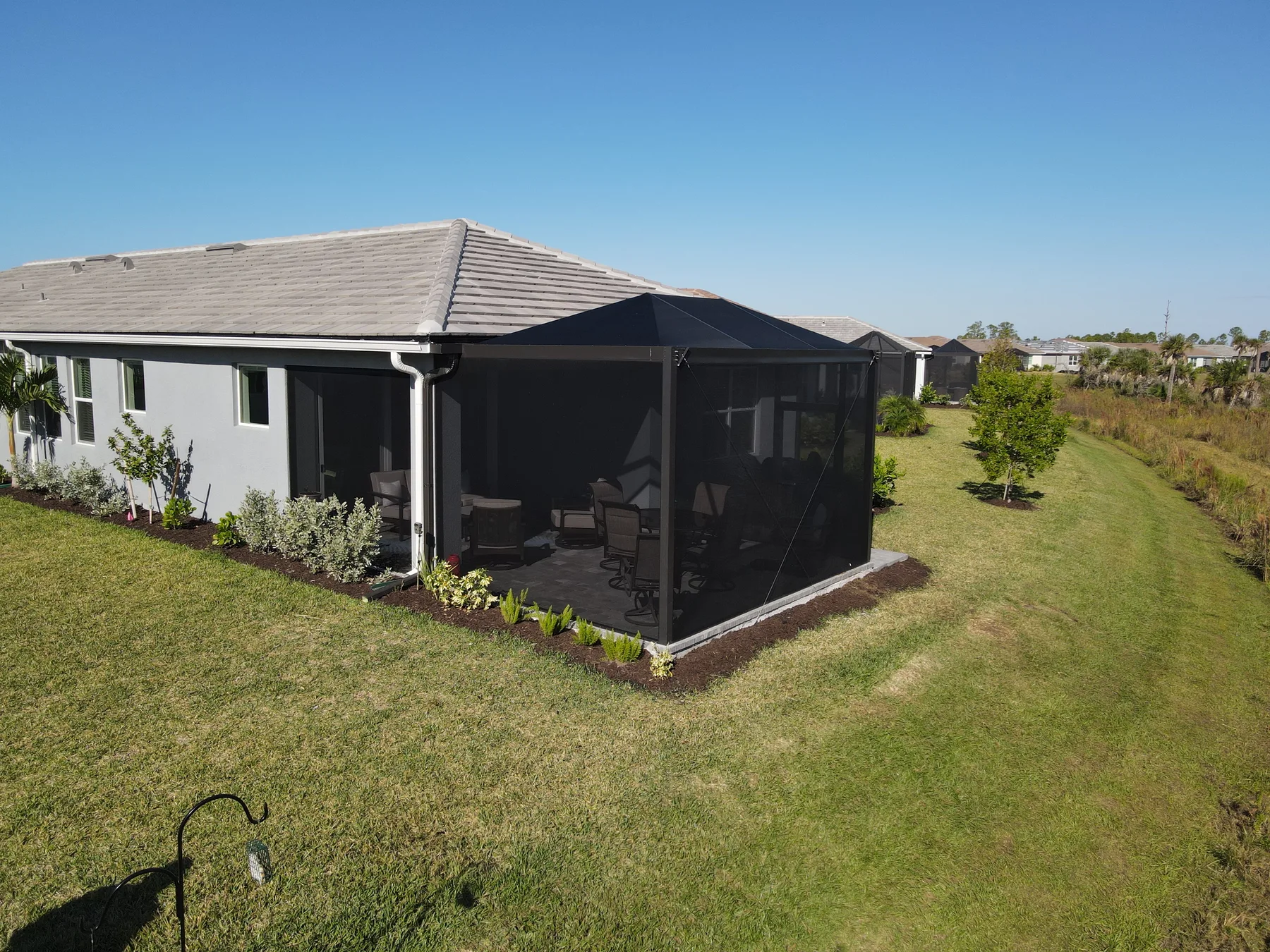
Quick Answer: The retractable screen vs fixed screen decision usually comes down to how you use the space, how much protection you want, and whether you prefer flexibility or simplicity. A fixed screen system stays in place all the time, while a retractable screen can be opened or closed as needed. For many Florida homeowners, the right choice depends on sun exposure, wind, insect pressure, visibility, and how often you want to switch between an open-air feel and a screened enclosure.
What a Fixed Screen Does Best
A fixed screen is the straightforward option. Once installed, it stays in position and continuously helps block insects, leaf litter, and some wind-blown debris. Because it is always deployed, it works well for homeowners who want a consistent barrier without having to think about opening or closing anything.
Fixed screens are often a practical fit for pool cages, lanais, patios, and porches where the goal is reliable day-to-day use. If your main priority is keeping bugs out while preserving airflow, a fixed screen usually delivers that with minimal effort. It also tends to be easier to understand and maintain because there are fewer moving parts.
For Florida Gulf Coast homes, fixed screening can be especially helpful in spaces that are used frequently during the warm, humid months. It provides a dependable layer between your outdoor living area and the insects that are common in this climate. If you are considering a fully screened outdoor room, a screened lanai north port fl is one example of the kind of project where a fixed approach may make sense.
Where Retractable Screens Stand Out
Retractable screens are designed for flexibility. They can be extended when you want protection and retracted when you want a more open view or unrestricted access. That makes them appealing for homeowners who like to switch between screened and open-air use depending on weather, time of day, or personal preference.
A retractable screen is often a good choice for entrances, patios, and outdoor sitting areas where visual openness matters. It can preserve a cleaner line of sight when not in use, which some homeowners prefer over a permanent screen panel. This is especially attractive for spaces that serve multiple purposes, such as entertaining, relaxing, or moving furniture in and out more often.
If you want a deeper overview of how these systems work, this what is a retractable patio screen guide may help you understand the basics before you compare options.
Retractable Screen vs Fixed Screen: Practical Differences
When comparing retractable screen vs fixed screen, think beyond appearance and focus on daily use.
A fixed screen is better when you want:
- Constant insect protection
- Less day-to-day operation
- A simple, traditional screened space
- Fewer components involved in normal use
A retractable screen is better when you want:
- The ability to open the space fully at times
- A less permanent visual presence
- More control over airflow and shade
- A versatile setup for changing weather or activities
In other words, fixed screening is usually about consistency, while retractable screening is about adaptability. Neither is automatically better; the right choice depends on how you live.
In Florida, another factor is how the outdoor area is exposed to sun, rain, and breezes. A screened opening that faces strong afternoon sun may benefit from the ability to close off glare at certain times. On the other hand, a space that already feels enclosed and private may not need the extra flexibility of a retractable system.
Maintenance, Durability, and Everyday Use
Maintenance expectations are another major difference.
Fixed screens generally have fewer moving parts, so there is less to operate and fewer pieces that can wear out from regular use. That does not mean they are maintenance-free, but the routine tends to be simple: keep the screens clean, watch for tears or loose sections, and inspect framing and fasteners as needed.
Retractable screens add mechanisms, tracks, or operating components that need to stay aligned and functional. That extra functionality can be very convenient, but it also means there is more to consider over time. Dirt, weather exposure, and frequent use can affect how smoothly the system performs.
For homeowners who want a low-fuss solution, fixed screen systems often feel easier. For homeowners who value the option to “hide” the screen when not needed, the additional care of a retractable system may be worth it.
Also think about how the space is used. If children, pets, or frequent foot traffic pass through the area, a fixed screen may be more forgiving because it stays in one position. If the opening is more controlled and used in a deliberate way, retractable screens can offer a nice balance of convenience and flexibility.
Appearance and View Considerations
Visual impact often decides the retractable screen vs fixed screen question more than anything else.
Fixed screens create a consistent look. For some homeowners, that is exactly what they want. The screened area feels finished and defined all the time. If your outdoor space is meant to function like an extension of the house, that steady appearance can be a benefit.
Retractable screens, by contrast, are often chosen because they are less visually dominant when not in use. This can be helpful when the view is a major feature of the property, such as a backyard garden, water view, or landscaped patio. When retracted, the system can make the opening feel larger and more connected to the outdoors.
That said, the “best” appearance is subjective. Some homeowners prefer the continuous framed look of a fixed screen because it feels neat and familiar. Others want the option to clear the opening for gatherings or quieter evenings. Think about whether your priority is the most open view possible or the most consistently screened environment.
Climate, Wind, and Florida Gulf Coast Realities
Florida Gulf Coast conditions can influence the decision in a very practical way. Heat, humidity, salt air, insects, and seasonal storms all affect outdoor structures. While both fixed and retractable screens can be useful in this environment, each has tradeoffs.
Fixed screens may be a better fit where you want a continuous barrier against insects and blowing debris. They are often the simpler option for spaces that remain screened most of the time. Retractable screens may be better suited to protected openings where you want more control over exposure and can operate the screen as conditions change.
It is important to remember that any screened opening is only one part of an outdoor structure. Framing, anchoring, existing structure condition, and location all matter. If you are trying to decide on a setup for a coastal-area home, site conditions should be reviewed carefully by a qualified professional familiar with outdoor enclosure work. The best choice in one yard may not be the best choice in another, especially where wind exposure and salt air are factors.
Cost Drivers and Installation Planning
When homeowners ask about cost, the most useful answer is that price depends on the project details rather than the screen type alone. Several factors can influence a final estimate:
- Size of the opening or enclosure
- Existing framing condition
- Whether the project is a new installation or a replacement
- Material and hardware selections
- Complexity of the opening, corners, or transitions
- Access to the work area
- Whether repairs or prep work are needed first
Retractable systems often involve more hardware and setup complexity than fixed screens, while fixed systems may be simpler to install depending on the structure. But there is no reliable way to price either option without seeing the space. For that reason, a site-specific written estimate is the right next step when you are seriously comparing options.
If you are weighing a budget decision, focus first on the features you truly need. A fixed screen may be the more straightforward choice if your goal is reliable coverage. A retractable screen may be worth considering if flexibility and openness are more important than keeping the screen visible at all times.
Which One Is Better for Most Homeowners?
There is no universal winner in the retractable screen vs fixed screen comparison. The best choice depends on how you want to use the space.
Choose fixed screens if you want a dependable, always-ready enclosure that supports everyday screened living with minimal effort. Choose retractable screens if you want more versatility and like the option to transform the space from screened to open.
For many homeowners, the decision becomes easier after answering three questions:
- Do you want the screen in place all the time?
- Is the view or openness more important than simplicity?
- How often would you realistically use the retractable feature?
If the answer to the first question is yes, fixed screens are often the better fit. If the answer to the second or third question is yes, retractable screens may be worth the added complexity.
Final Thoughts
The retractable screen vs fixed screen choice is really a lifestyle decision. Fixed screens give you steady protection and a simple routine. Retractable screens give you flexibility and a more open feel when you want it. For Florida Gulf Coast homeowners, the right answer usually depends on how the outdoor space is used, how much exposure it gets, and whether convenience or versatility matters more.
If you are still undecided, start by identifying how often you want the area screened versus open. Then request a written estimate based on your specific structure, since the details of the opening and existing conditions will shape both the design and the scope of work.