
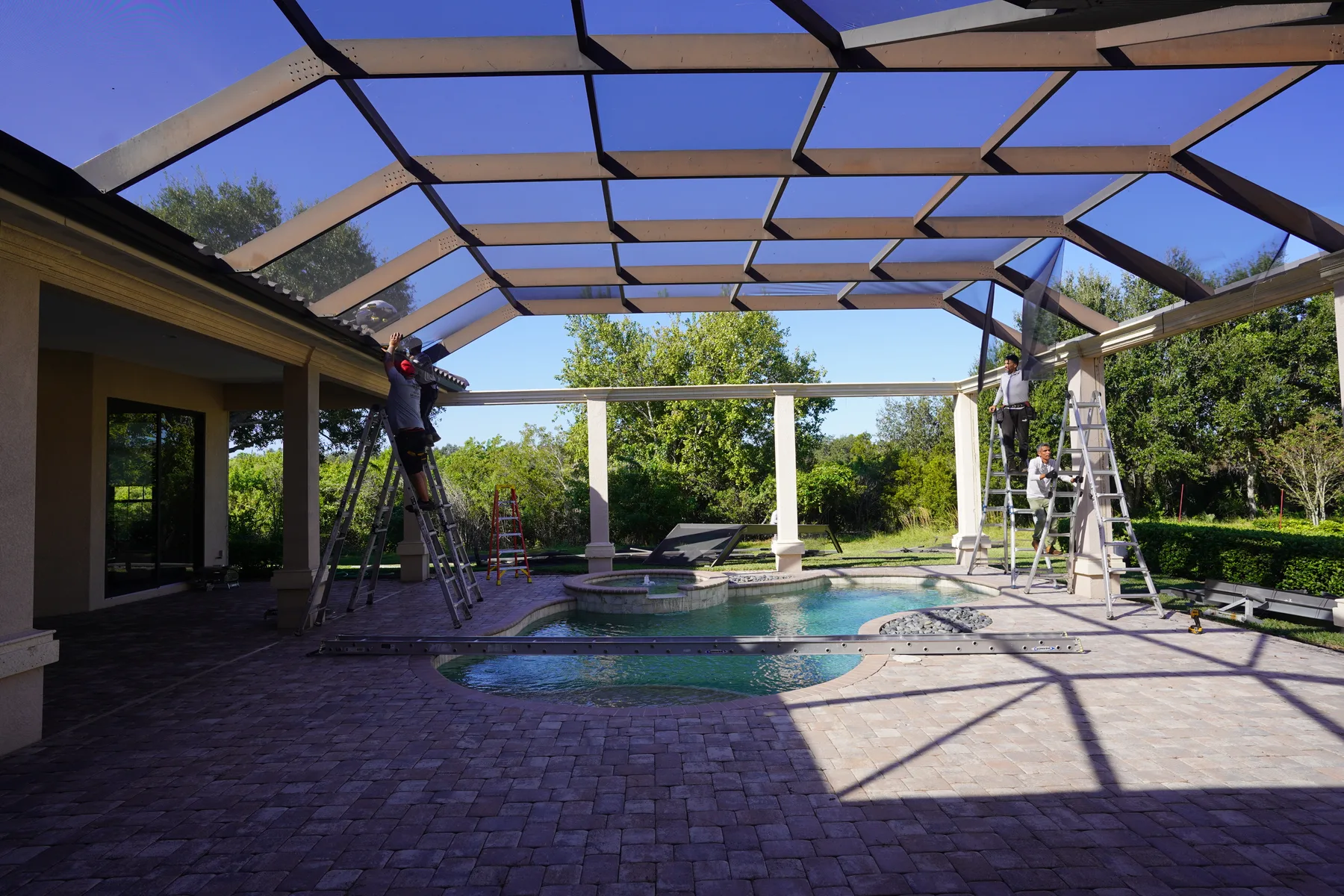
Quick Answer: A retractable patio screen is a movable screening system that can be pulled into place when you want shade, privacy, and insect protection, then retracted out of the way when you want a more open patio experience. In simple terms, it is a flexible screen solution designed to help homeowners enjoy outdoor spaces more comfortably without making the area feel permanently enclosed. For Florida homeowners, especially along the Gulf Coast, a retractable patio screen can be a practical way to manage sun, glare, windblown debris, and pests while keeping views and airflow more adaptable than a fixed screen wall.
What a Retractable Patio Screen Does
A retractable patio screen is built to extend across an opening when needed and roll, slide, or fold back into a compact housing when not in use. The exact design can vary, but the basic purpose stays the same: give you control over how open or protected your patio feels at different times of day or during different seasons.
Compared with a permanent screen enclosure, a retractable system is more flexible. On a mild evening, you may want the screen down to keep mosquitoes out. On a breezy afternoon, you may want to open the space fully and enjoy an unobstructed view. That adaptability is what makes retractable screens appealing to homeowners who want outdoor comfort without a fully fixed look.
These systems are often used on patios, lanais, covered outdoor sitting areas, and other spaces where people want intermittent protection. If you are also considering a more permanent screened area, it may help to review a can you screen in an existing patio guide to understand how fixed and retractable approaches differ.
How Retractable Patio Screens Work
Most retractable patio screens use a track, housing, or guide system that supports movement across the opening. Depending on the product, the screen may be operated manually or with a motorized control. Manual versions are typically pulled into place by hand, while motorized systems may use a wall switch, remote, or smart-home style control.
The screen material is usually designed to be durable, lightweight, and suitable for outdoor exposure. Homeowners often choose screen types based on their goals. Some want insect protection above all. Others want a tighter weave for more sun filtering or daytime privacy. In coastal Florida, homeowners often think about how the screen will hold up to humidity, salt air, and frequent use, which is why product quality and proper installation matter.
A retractable screen is not the same thing as a fixed panel or a structural wall. It is best understood as a dynamic shade-and-screening feature that works with the existing patio or enclosure. That means it can add comfort without changing the space into a conditioned room or a fully enclosed living area.
Common Reasons Homeowners Choose One
Homeowners choose retractable patio screens for several practical reasons. One of the biggest is flexibility. You can use the screen only when you need it, then open the area back up when you do not.
Another reason is comfort. Retractable screens can help make a patio feel more usable by reducing insect intrusion and cutting some direct glare or heat from the sun. In Florida, where evenings can bring mosquitoes and afternoons can feel intense, that flexibility can make a big difference in how often people use their outdoor space.
Aesthetics also matter. Some homeowners prefer the cleaner look of a screen that disappears when not in use, rather than a permanent screened wall that is always visible. For properties where preserving the view is important, retractable systems can feel less visually heavy than fixed enclosures.
Privacy can be another advantage. Depending on the screen material and the direction of the patio, the screen may help create a more secluded seating area for dining, reading, or casual gathering.
If you are exploring enclosure options for a home in the region, a company that handles screen rooms and related outdoor structure work, such as lanai enclosure north port fl, may be able to explain whether a retractable screen fits your patio layout and daily routine.
Where Retractable Screens Make the Most Sense
Retractable patio screens are often a good fit for covered patios, lanais, and outdoor seating areas with openings that homeowners want to close off temporarily. They are especially useful where you want versatility rather than a permanent fully screened look.
They can work well on spaces that already have a roof structure, columns, or framing that can support the screen system. In some homes, retractable screens are installed on one side of a patio to block sun or insects at a specific angle. In others, they are used across larger openings to create a more controlled outdoor environment.
In the Florida Gulf Coast region, wind, weather exposure, and moisture are always important considerations. A retractable screen should be matched to the space it is protecting, and the hardware should be appropriate for outdoor conditions. If a patio has unusual dimensions, a large opening, or an existing structure that needs repair first, those details can affect whether a retractable setup is the best choice.
Homeowners should also remember that a retractable screen is not a substitute for structural repair. If the patio frame, roof members, or support components need attention, those issues should be addressed before adding screening. A qualified professional can evaluate whether the existing structure is suitable for the system you want.
Cost Drivers and Planning Considerations
When homeowners ask about cost, the honest answer is that the price depends on several site-specific factors. The size of the opening, the type of screen material, whether the system is manual or motorized, how the screen mounts, and the condition of the existing patio all influence the final estimate.
Installation complexity also matters. A straightforward opening with good access may be simpler than a patio with irregular dimensions, obstructions, or existing damage. If there is electrical work involved for a motorized screen, that may need to be handled by the appropriate licensed professional. Likewise, if the project affects structure, drainage, or storm-related components, those details should be reviewed carefully before work begins.
Because of those variables, a site visit and written estimate are the best way to understand the real scope of the project. A written estimate can account for your exact opening, material preferences, labor needs, and any conditions that should be corrected first. That is much more useful than trying to rely on generic pricing.
Retractable Screens Versus Fixed Screen Enclosures
A retractable patio screen and a fixed screen enclosure solve different problems. A fixed enclosure is always in place and generally offers constant screening of the area. A retractable system gives you the ability to open or close the space on demand.
For some homeowners, a fixed enclosure makes more sense because they want continuous protection and a more defined outdoor room. For others, a retractable screen is the better choice because they want the option to preserve openness and views when weather and insects are not an issue.
The right choice often depends on how you use the patio. If you host gatherings, relax outside in the evening, or want a spot that transitions easily between open-air and screened use, retractable screens can be appealing. If your goal is a more permanent screened living area, a fixed system may be more practical.
The decision is not just about appearance. It is also about function, maintenance, and how the space fits your household routines. In a climate like Florida’s, that can mean balancing sun exposure, airflow, pest control, and ease of use.
Maintenance and Care Basics
Like most outdoor components, retractable patio screens benefit from regular care. Keeping the tracks, housing, and screen surface free of dirt and debris can help the system operate more smoothly. It is also wise to use the screen according to the manufacturer’s instructions, especially during strong wind or stormy conditions.
Homeowners should inspect the screen periodically for wear, loose hardware, or movement issues. If the screen begins to stick, sag, or retract unevenly, it may need adjustment or service. In coastal areas, the environment can be harder on outdoor hardware, so routine attention is especially helpful.
Proper care is not complicated, but it matters. A well-maintained retractable screen is more likely to stay functional and continue providing the comfort and convenience homeowners wanted in the first place.
Final Thoughts
So, what is a retractable patio screen? It is a flexible outdoor screening system that lets you open or close your patio space as needed, offering a practical mix of comfort, airflow, privacy, and insect protection. For homeowners who want more control over how they use a patio, it can be a smart middle ground between a completely open space and a permanently screened enclosure.
If you are considering one for a Florida Gulf Coast home, think first about how you use the space, what kind of exposure it gets, and whether the existing structure is ready for the project. A site-specific written estimate is the best way to confirm fit, materials, and installation needs before moving forward.