
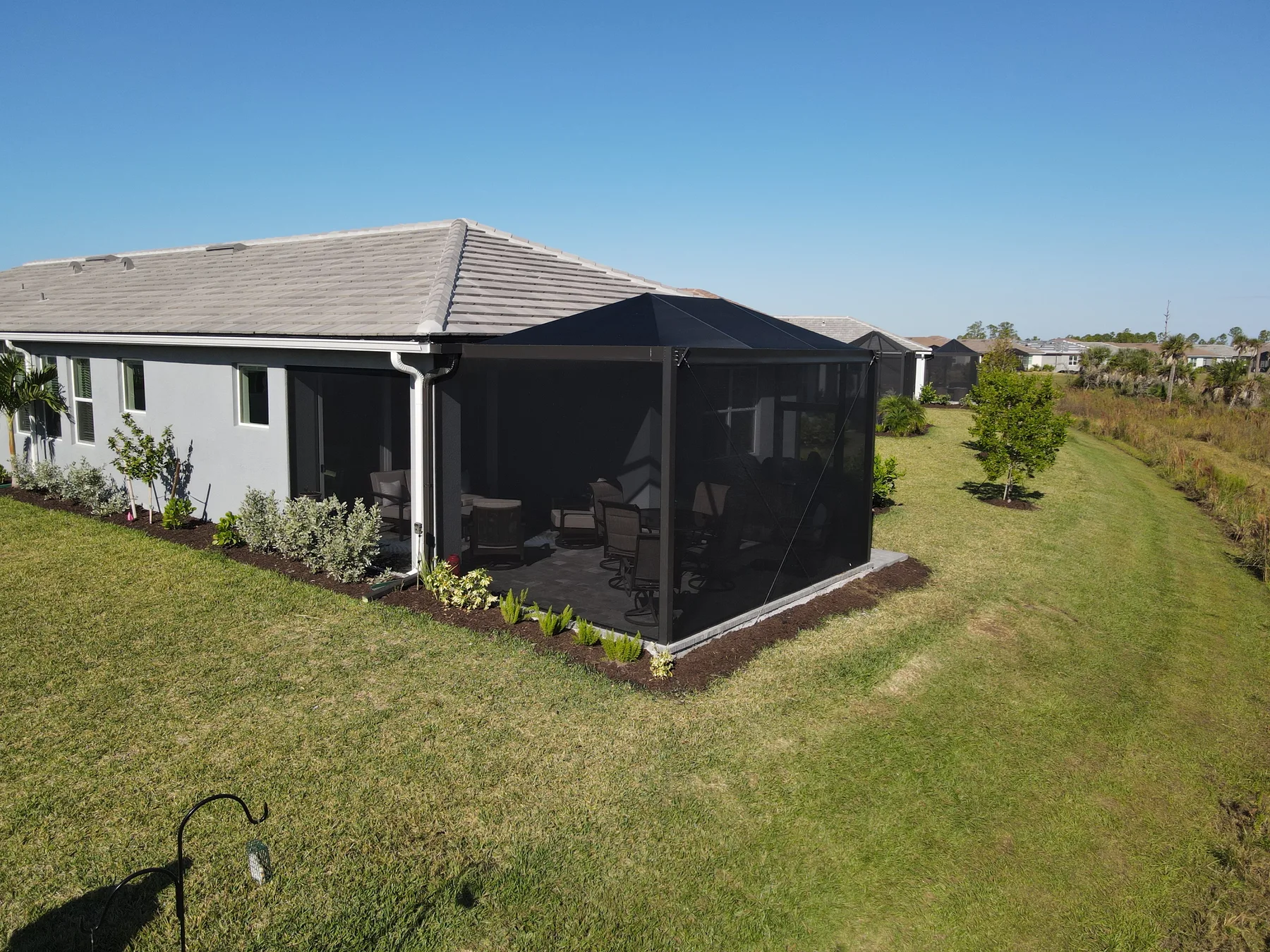
Quick Answer: If you’re wondering what to do when a hurricane damages a pool cage, start with safety first, document the damage, and have the structure evaluated before anyone uses the pool area again. In Florida’s Gulf Coast communities, windborne debris, torn screen panels, bent aluminum members, loose fasteners, and damaged doors or hardware are all common after a storm. Even if the cage only looks “a little off,” hidden structural damage can make the enclosure unsafe. If you need help after the storm, an outdoor living contractor north port fl can assess repair options, and this can a pool cage withstand a hurricane guide can help set expectations for storm performance.
Put Safety First Before You Step Inside
After a hurricane, don’t rush into the pool area just because the screen enclosure is still standing. Broken aluminum framing, sharp screen edges, loose screws, and twisted door parts can create hazards you may not notice right away. If any section is leaning, separated from the house, or visibly bowed, keep people and pets away until it’s inspected.
Also check for hazards around the cage, not just on it. Storm debris, downed limbs, loose lanai furniture, and displaced pavers can become trip hazards. If flooding occurred, standing water may hide broken glass, metal fragments, or electrical concerns near outlets, lights, or equipment. If you see sparking, a damaged fixture, or water intrusion at any electrical component, stop and contact a licensed electrician.
If the enclosure is attached to your home, look for signs of movement where the cage meets the structure. Separated connections, cracked stucco around attachment points, or damaged fascia can indicate the storm affected more than the screen panels.
Document the Damage Before Cleanup
Before removing debris or making temporary fixes, take clear photos and short videos from several angles. Capture the full enclosure, close-ups of bent frames, ripped screen sections, damaged doors, torn spline, fastener issues, and any impact points from branches or debris. If there are damaged gutters, soffit, or fascia nearby, include those too, since storm damage often extends beyond the pool cage itself.
Good documentation helps you remember what happened after cleanup begins and gives a repair contractor a clearer picture of what needs attention. Make notes about what you saw during the storm, such as whether a branch struck the cage, whether wind lifted panels, or whether a door was forced open. That information can help determine whether the issue is mainly cosmetic or structural.
If your insurer needs details, keep your photos organized by area: roof panels, wall panels, doors, anchor points, and surrounding exterior features. You do not need to diagnose the problem yourself; you only need to preserve the evidence before conditions change.
Decide Whether It’s a Screen Repair or a Structural Issue
A hurricane can damage a pool cage in several different ways. Some are straightforward screen repairs, while others require frame replacement, reinforcement, or door and hardware work. Torn screen mesh alone may be a simpler fix, but bent beams, twisted posts, broken welds, pulled anchors, and damaged connectors are more serious concerns.
Homeowners often assume that if the enclosure is still upright, it is safe to keep using. That is not always true. Aluminum members can be stressed without visibly collapsing, and damaged fasteners may no longer hold the structure as intended. If the cage shook violently during the storm, received impact from debris, or now rattles differently in the wind, a professional inspection is a smart next step.
This is especially important when the enclosure connects to a roofline or includes a large roof span. Even if only one side looks damaged, nearby components may have shifted. A qualified contractor can tell you whether you’re looking at localized screen replacement, door repairs, or a broader structural repair plan.
Handle Temporary Protection the Right Way
If conditions are safe and you need to reduce further exposure before a repair visit, use temporary measures carefully. Secure loose screen material so it doesn’t flap and tear farther. Move lightweight furniture and loose objects out of the enclosure if they could strike damaged framing during another windy day. If debris is resting on the cage, do not climb onto the structure to remove it.
Avoid makeshift fixes that could create new problems. Do not drill random fasteners into the frame, use adhesives in place of structural hardware, or pull at bent members trying to straighten them by hand. Those actions can worsen the damage or make a future repair more complicated.
If a door no longer latches, keep it tied or secured so children and pets don’t wander through a compromised opening. If the screen has been torn near the pool deck and small animals can enter, consider short-term barriers at the deck access points until proper repairs are completed.
What a Repair Contractor Typically Looks For
A pool cage repair inspection usually starts with the visible damage, but it should also include a closer look at how the enclosure is behaving as a system. The contractor may check posts, roof members, wall sections, anchors, door hardware, kick plates, spline tracks, and fasteners for looseness, bending, or separation. They may also inspect adjoining areas such as gutters, soffit, fascia, and attachment points to the home.
On Florida’s Gulf Coast, storm damage often comes from a mix of strong wind and flying debris, so the most obvious tear is not always the most important problem. A small branch impact can bruise a frame member or loosen connections even when the screen tear seems minor. That is why a site visit matters more than guesswork.
If you’re comparing repair options, ask for a written scope that explains what will be replaced, repaired, or reused. For example, you may only need re-screening, but if the frame is distorted, the contractor should say so plainly. A written estimate also helps you compare options without relying on assumptions.
Understanding Cost Drivers Without Guessing at Prices
Homeowners often want a quick answer about cost, but hurricane damage to a pool cage can vary too much for a one-size-fits-all number. The main cost drivers are the extent of screen loss, the amount of frame damage, the condition of doors and hardware, whether attachments to the home were affected, and whether the repair requires specialty parts or more involved labor.
Accessibility also matters. A repair that’s easy to reach is different from one involving higher roof sections, extensive debris removal, or damage spread across multiple sides of the enclosure. Matching existing materials and restoring alignment can also affect the scope.
Because of that variation, the best approach is to get a site-specific written estimate after an inspection. That estimate should clearly separate emergency stabilization, screen replacement, structural repairs, and any related exterior work so you know exactly what is being addressed.
When to Call for Professional Help
Call for help promptly if the cage is leaning, partially detached, visibly bent, or has any roof-section damage. You should also get a professional involved if doors no longer close properly, anchors appear pulled, or the damage involves the house connection area. If your enclosure is older or has taken repeated storm hits, a repair professional can help you decide whether selective repairs make sense or whether broader restoration is needed.
If you’re unsure whether the problem is minor, err on the side of inspection. A pool cage may look passable after a storm and still be unsafe for regular use. That is particularly true when hurricane-force winds, heavy rain, and flying debris have all been part of the event.
Final Thoughts
Knowing what to do when a hurricane damages a pool cage is mostly about staying safe, documenting the damage, and getting a qualified evaluation before you resume normal use. Focus first on hazards, then on photos and notes, and then on a proper inspection that distinguishes screen-only damage from structural concerns. For Florida Gulf Coast homeowners, acting carefully after the storm can help prevent bigger problems later and make the repair process much clearer.